Ardour is a free and open-source digital audio workstation built for recording, editing, mixing and mastering. It is aimed at musicians, engineers and producers who want a serious desktop audio environment without locking the project to a proprietary subscription.
Get the current Ardour release from the official website
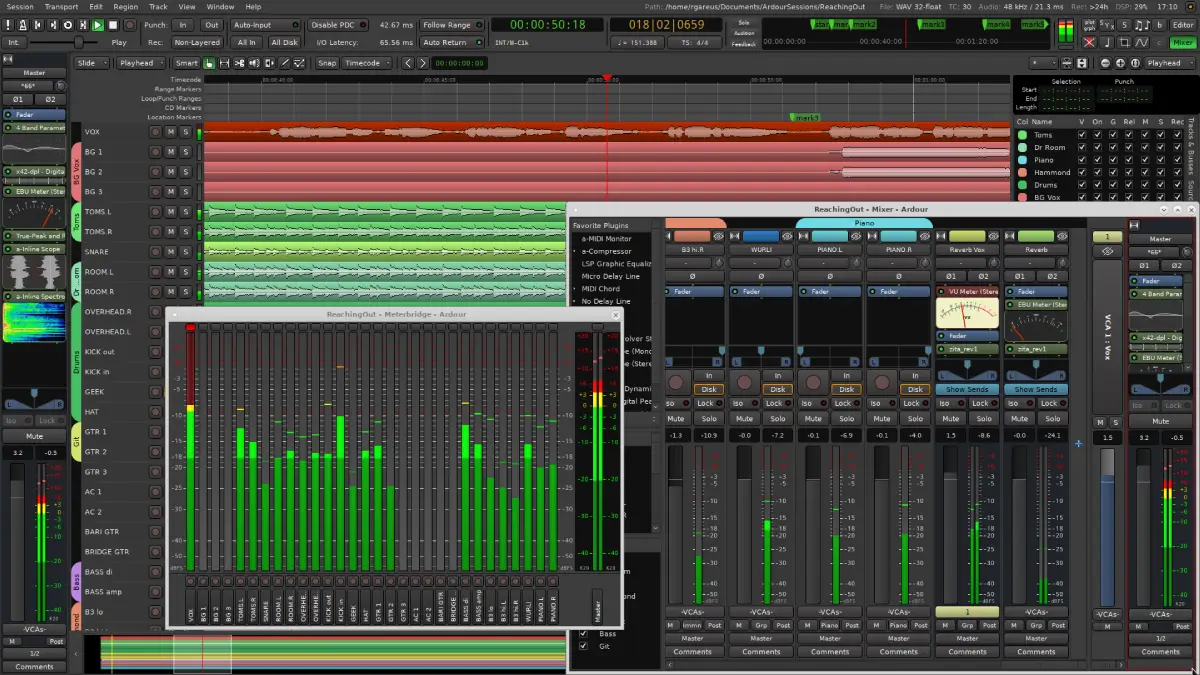
A DAW Built Around Audio
Ardour puts multitrack recording, waveform editing, routing, buses and mixing in one production environment. This makes it well suited to projects where recording and post-recording work matter as much as MIDI sequencing.
The editor allows producers to work through longer sessions, arrange takes and refine a performance before moving into the mix. The mixer then provides a conventional console-style view of tracks, buses and signal routing.
Recording and editing workflow
For vocals, guitars, instruments and live recordings, Ardour offers the kind of timeline-first workflow that makes comping, editing and arrangement practical. Producers can keep recorded material organized, make non-destructive edits and move from a rough take to a structured session without changing applications.
Mixing and routing
Ardour is particularly interesting for users who like to understand where audio is going. Tracks can feed buses and processing chains, allowing a project to be structured around groups such as drums, vocals, guitars or effects. That becomes useful as sessions grow and a simple collection of inserts turns into a proper mix architecture.
The same approach works for mastering sessions and stereo projects where careful routing and gain staging are more important than a large collection of built-in instruments.
Who should use Ardour?
- Recording musicians: track vocals and instruments in a dedicated audio workstation.
- Mix engineers: organize buses, inserts and routing in a familiar console workflow.
- Sound designers: edit and arrange longer recordings without relying on a subscription DAW.
- Independent producers: keep a complete project inside open-source software.
Open source is the important part
Ardour is distributed under the GNU General Public License. That matters for users who value software transparency, community development and the ability to use a professional audio workstation without depending entirely on a closed commercial ecosystem.
Platforms
Ardour provides builds for Linux, macOS and Windows. The exact package and installation method depends on the operating system, so use the official Ardour download page for the current release and platform-specific instructions.
Official tutorials
Explore official Ardour tutorials and feature videos.
Why it is worth trying
Ardour is not a stripped-down toy pretending to be a DAW. Its strongest argument is the depth of its audio workflow: recording, editing, routing and mixing remain central to the application. Producers coming from a commercial workstation may need time to learn its interface, but users who value control and open-source software get a capable production environment in return.
Final Verdict
For recording and mix-focused production, Ardour remains one of the most interesting free and open-source DAWs available. Its strength is not a giant list of flashy instruments, but a serious audio workflow that can carry a real project from recording to final mix.