

Spotify Strengthens Artist Verification as AI Personas Raise New Questions
Spotify is moving deeper into the authenticity debate with the launch of Verified by Spotify, a new badge designed to help listeners identify real artist profiles more clearly. In a streaming landscape increasingly affected by AI-generated music, fake profiles and synthetic personas, this move feels less like a simple platform update and more like a signal of where the industry is heading. The idea is straightforward: Spotify wants to give fans more confidence that the artist profile they are visiting represents a real creative identity. To do that, the platform is adding new context around artists, including release activity, concert…

AI Becomes the Biggest Issue in Music Streaming as Tidal and Deezer Tighten Their Rules
Artificial intelligence is no longer a side conversation in the music industry. It has become one of the central issues shaping the future of streaming platforms, royalty distribution, artist visibility and listener trust. What once looked like a creative experiment has quickly turned into a structural challenge for the entire recorded music economy. The latest moves from Tidal and Deezer show that music streaming is entering a new phase. Platforms are no longer treating AI-generated music as a distant technological curiosity. They are starting to classify it, label it, restrict it, remove it from recommendations and, in some cases, exclude…

Paid Music Streaming Subscribers Near One Billion as Global Market Enters a New Phase
Paid music streaming subscribers are now moving close to the one billion mark worldwide, signaling a major turning point for the global music business. New market estimates put the number of global music streaming subscribers at 921.6 million at the end of 2025, up 10.1% year over year, while Spotify continues to lead the sector with 293 million Premium subscribers reported in the first quarter of 2026.The milestone matters because streaming is no longer simply the future of recorded music. It is the center of the industry. For platforms, labels, publishers, independent artists and managers, the question is no longer…

Suno Spark and the Indie Artist Trap: When “Support” Starts Looking Like Control
Suno has found a clever new door into the independent music scene. Not through the back rooms of major-label licensing, not through the usual Silicon Valley sermons about disruption, but through something much softer, warmer and harder to criticize: artist support. Its Spark program is presented as an incubator for independent artists, a package of grants, mentorship, marketing help and creative resources designed to help unsigned musicians grow. On paper, it sounds like the kind of opportunity many artists spend years chasing. Money, visibility, platform support, industry access, all wrapped in the language of empowerment. But read the fine print…

SoundCloud Sessions: SoundCloud and Twitch Launch a New Live Performance Series for Emerging DJs
SoundCloud Sessions is the latest move in the fast-changing race to connect music streaming, live performance and creator-led discovery. SoundCloud and Twitch have teamed up to launch a recurring performance series designed to give emerging DJs a bigger digital stage, starting with an all-day DJ event on Twitch today. The partnership brings together SoundCloud’s role as a discovery platform for independent music with Twitch’s live streaming community, giving DJs a way to perform in real time, reach new listeners and drive fans back to their SoundCloud profiles. For artists trying to build visibility outside traditional playlists, the move points to…
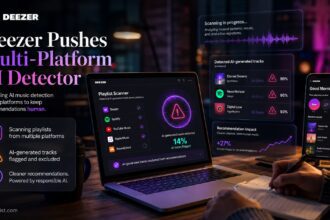
Deezer AI Music Detector Puts Streaming Platforms Under Pressure Over Synthetic Music
Deezer AI Music Detector is becoming one of the most visible moves in the streaming industry’s fight against synthetic music, as the French platform pushes a free tool that allows users to scan playlists and identify tracks detected as fully AI-generated. The feature arrives at a critical moment for artists, labels, curators, distributors, and listeners, with Deezer saying it now receives nearly 75,000 AI-generated tracks every day, representing around 44% of all new daily music deliveries. The launch gives Deezer a sharper role in a debate that is quickly reshaping digital music: how should streaming platforms handle AI-generated content, and…

Jamendo Nvidia AI Lawsuit Escalates the Fight Over Music, Data, and Generative Audio
The Jamendo Nvidia AI lawsuit has opened a new front in the fast-growing legal battle over artificial intelligence and music rights, with the Luxembourg-based music platform accusing Nvidia of using copyrighted audio files and metadata from its catalog to train AI audio systems without permission. The case places independent musicians, music platforms, AI developers, and rights holders at the center of a dispute that could help define how copyrighted music is treated in the next phase of generative audio. At issue is not only whether sound recordings were allegedly copied, but whether the descriptive data attached to music, including tags…

YouTube AI Labels Are Changing the Rules for Music Videos
YouTube is tightening its approach to AI-generated video by automatically applying labels to realistic content created or meaningfully altered with artificial intelligence, even when creators do not disclose it themselves. For the music industry, the update lands at a crucial moment: a song can be fully human, while its video, artist visual, promotional content or digital avatar may be partly or entirely AI-generated. The new YouTube AI labels are designed to make synthetic media more visible to viewers and reduce confusion around photorealistic content that could be mistaken for real people, real performances, real places or real events. For artists,…

Deezer AI Detector: The Fight Against Fake Music Starts for Real
Deezer is turning the battle against AI-generated music into a public test of trust. The French streaming platform has launched a free AI music detector that allows listeners to scan playlists from major streaming services and identify tracks likely to be fully generated by artificial intelligence. The move places Deezer at the center of one of the most urgent debates in digital music: how platforms, artists, labels and curators can protect human creativity when synthetic tracks are flooding streaming ecosystems at industrial scale. For listeners, the tool offers a clearer view of what is inside their playlists. For the music…
