
Apple Music enters 2026 with a clear strategic shift: moving beyond a static listening library toward a deeply personalized, interactive ecosystem. With AI-generated playlists, live event integration on artist profiles, and enhanced widgets and visual customization, the platform is closing the discovery gap with Spotify while leveraging Apple’s design DNA to create a more immersive music experience.
- AI Playlists: “Playlist Playground” and the Prompt Era
- Live Events on Artist Profiles: Streaming Meets the Stage
- Widgets & Visual Customization: Music as a Living Interface
- Apple vs. Spotify: Closing the Discovery Gap
- What This Means for Artists and Curators
- The Bigger Picture: Streaming as an Immersive Ecosystem
- AUDIARTIST
This evolution signals a broader industry transition — from passive streaming to dynamic, context-aware listening.
AI Playlists: “Playlist Playground” and the Prompt Era
The introduction of Playlist Playground marks Apple Music’s most significant step into generative AI. Users can now create playlists using natural language prompts, transforming discovery into a conversational process.
How it works
Listeners can request playlists using prompts such as:
- “Afro house for sunset on a Mediterranean beach”
- “Focus music without vocals for deep work”
- “90s dance classics with female vocals”
The AI interprets mood, context, tempo, and genre to generate a curated playlist in seconds.
Why it matters
This feature reshapes discovery in three key ways:
1. Intent-driven listening
Users no longer browse — they describe what they want.
2. Long-tail exposure
AI playlists surface lesser-known tracks that match context, benefiting independent artists.
3. Emotional metadata becomes critical
Mood, atmosphere, and usage context now influence algorithmic visibility as much as genre.
For artists and labels, this signals a new optimization frontier: tagging music for situations, not just styles.
Live Events on Artist Profiles: Streaming Meets the Stage
Apple Music now integrates live event listings directly on artist profiles, allowing fans to discover concerts, livestreams, and appearances without leaving the platform.
Key features
- Upcoming tour dates displayed on artist pages
- Integration with Apple Maps and ticketing partners
- Notifications for nearby events based on user location
- Support for livestream premieres and virtual concerts
Strategic impact
Bridging digital and physical engagement
Streaming becomes a gateway to real-world experiences, reinforcing fan loyalty.
Revenue diversification
Artists gain a direct channel to promote ticket sales and exclusive events.
Local scene amplification
Geolocation features help fans discover concerts in their region, strengthening local music ecosystems.
Apple is effectively turning artist profiles into mini-hubs for fan engagement — a model that aligns with the industry’s shift toward direct-to-fan relationships.
Widgets & Visual Customization: Music as a Living Interface
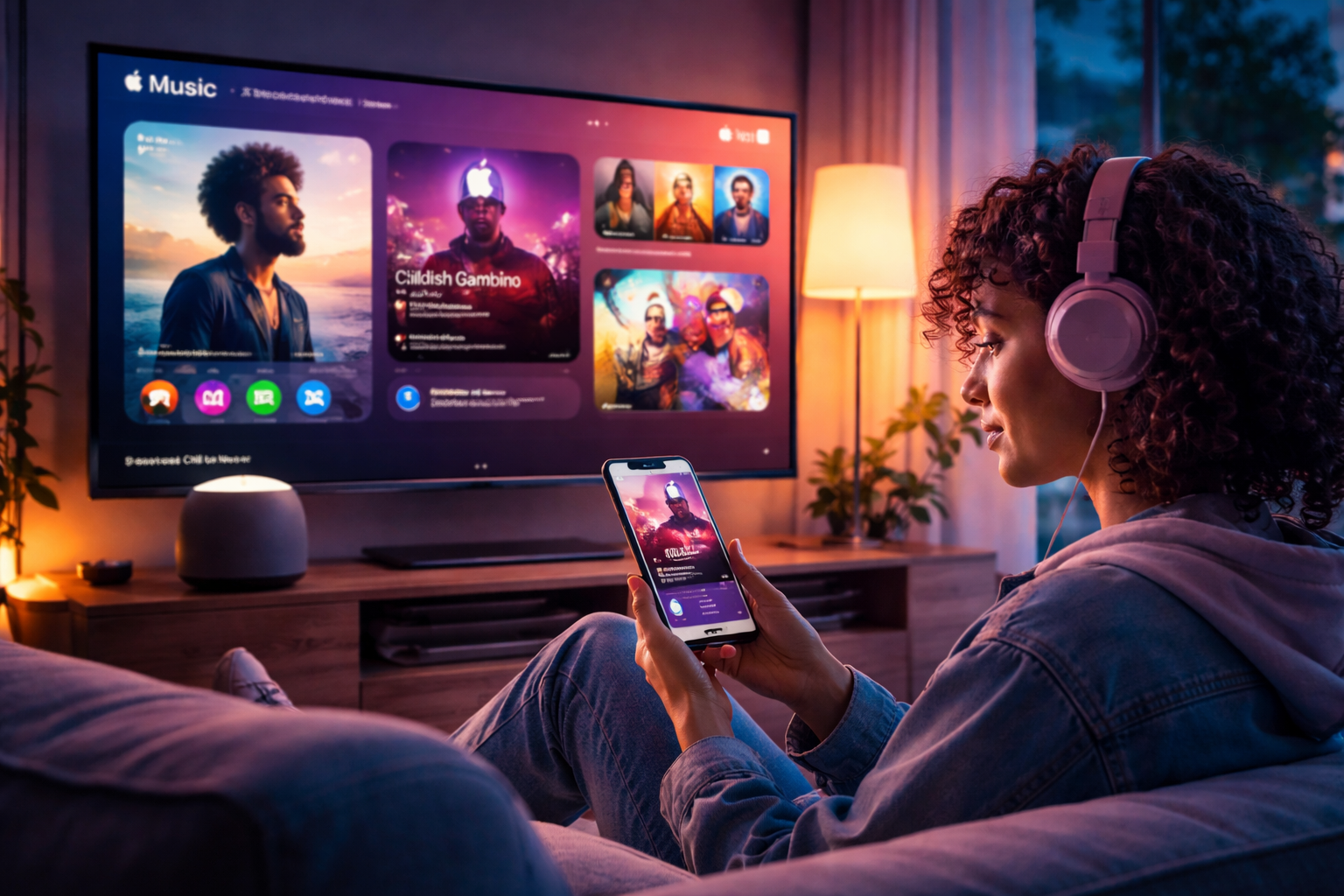
Apple’s latest updates extend beyond sound into visual identity. New widgets and personalization options allow users to reshape how music integrates into their daily digital environment.
What’s new
- Dynamic lock-screen widgets showing currently playing tracks
- Customizable artwork displays and color themes
- Smart stacks that surface playlists based on time, location, or activity
- Interactive playback controls embedded across iOS and macOS
Why it matters
Music becomes ambient
Instead of opening an app, users encounter music throughout their device ecosystem.
Contextual listening
Morning routines, workouts, and travel trigger tailored playlist suggestions.
Visual branding opportunity
Striking cover art and cohesive visual identity become more important for artist recognition.
Apple’s strength has always been interface design. By embedding music into the operating system’s visual fabric, it transforms listening into an always-present experience.
Apple vs. Spotify: Closing the Discovery Gap
For years, Spotify dominated algorithmic discovery, while Apple Music excelled in curation and audio quality. With these updates, Apple narrows that gap.
Where Apple catches up
- AI-driven playlist generation
- Context-aware recommendations
- Enhanced discovery via widgets and prompts
Where Apple differentiates
- Deep OS integration
- Superior visual and UX design
- Strong ecosystem synergy (Maps, Calendar, Apple TV, Vision Pro)
Rather than copying Spotify, Apple is reframing discovery as part of a broader lifestyle interface.
What This Means for Artists and Curators
Opportunities
- Greater exposure through AI-generated playlists
- Direct promotion of live events within the streaming environment
- Increased importance of visual branding and artwork
New optimization priorities
- Mood and context metadata
- Geo-targeted promotion for live shows
- Cohesive visual identity across releases
Risks to consider
- Algorithmic opacity increases competition
- Prompt-driven discovery may favor well-described content
- Visual presentation becomes a competitive factor
Success on Apple Music in 2026 will depend not only on sound, but on context, storytelling, and design.
The Bigger Picture: Streaming as an Immersive Ecosystem
Apple Music’s 2026 evolution reflects a broader industry trajectory: streaming platforms are transforming into experiential ecosystems that blend AI, real-world engagement, and ambient computing.
Music is no longer just played — it is surfaced, suggested, contextualized, and lived.
And in Apple’s world, it is also beautifully designed.