
From static notes to melodic motion — without spending a cent.
Arpeggios are the heartbeat of countless genres — from trance to synthwave, pop to cinematic scores. But a lifeless arp is just a metronome. What makes an arpeggio breathe, evolve, and pull you in is the way it moves: in rhythm, in texture, in tone. The good news? You don’t need expensive gear or complex sequencers to achieve this. Just the right free plugins, a bit of creativity, and an ear for motion.
Let’s explore how to build dynamic, expressive arpeggios using only free tools.
🎹 1. Use a MIDI Arpeggiator (Free & Flexible)
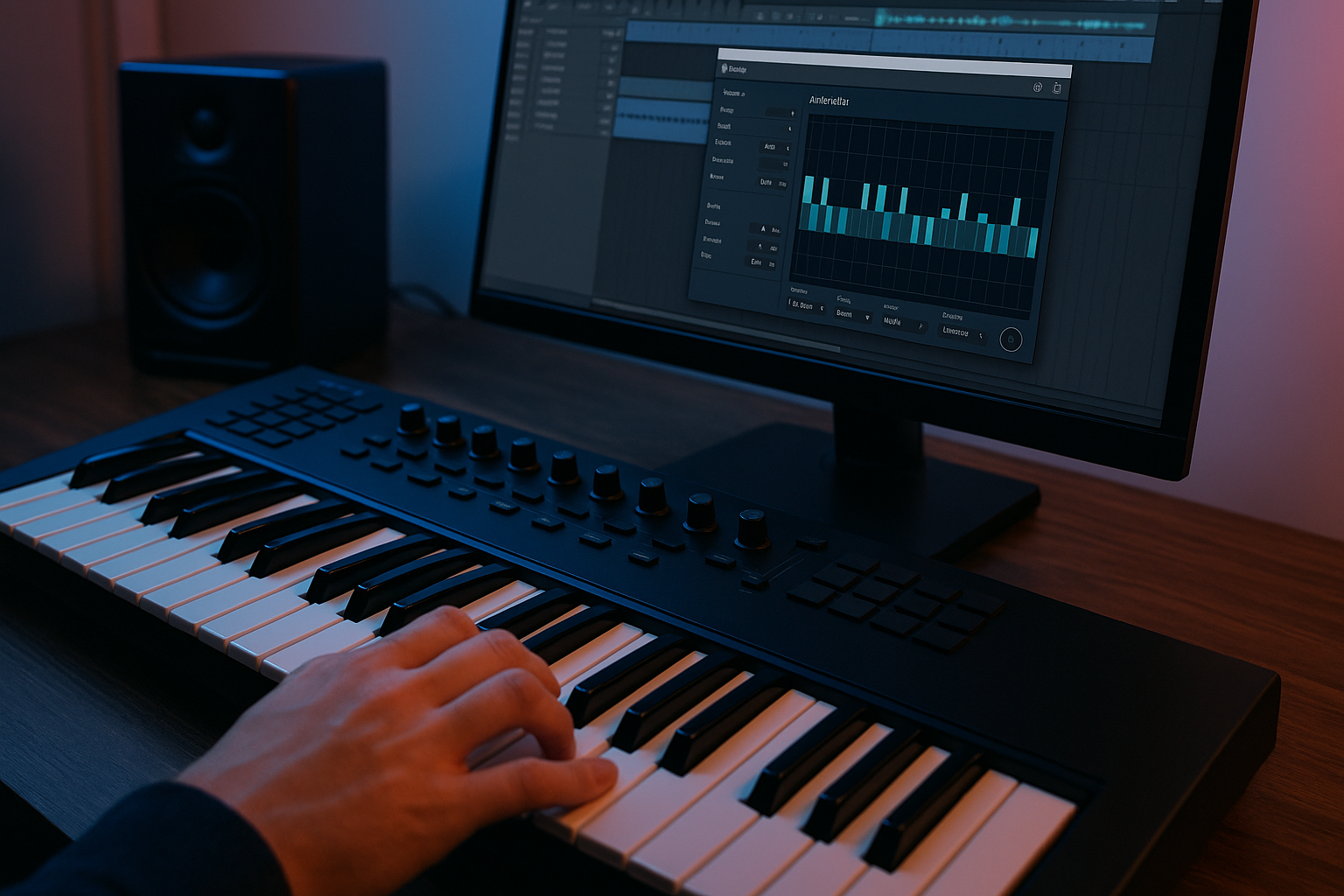
Start by turning your held chords into evolving melodies with a MIDI arp plugin.
Recommended Tools:
- 🔗 HY-Plugins HY-RPE2 Free
A powerful step sequencer and arpeggiator in one. Great for rhythmic complexity. - 🔗 BlueARP
Legendary free arpeggiator VST — velocity, gate, scale, and groove control.
💡 Sync the arp to your project tempo. Experiment with octaves, swing, and gate length for groove.
🎶 2. Choose a Sound That Responds to Motion
Dynamic arps need sound sources that react to velocity, filters, and modulation. Avoid static waveforms. Use synths that support:
- Envelope shaping
- Filter movement
- LFO modulation
Free Synths to Use:
- 🔗 Vital – Best free wavetable synth with visual feedback
- 🔗 Surge XT – Multi-engine, modulation-rich
- 🔗 Tyrell N6 by u-he – Analog-style synth, great for warm arps
🌫️ 3. Modulate Parameters for Evolving Texture
Static arpeggios get boring fast. Use LFOs, velocity variations, filter sweeps, and automation to bring movement.
Creative Moves:
- Modulate filter cutoff per step
- Use an LFO on pan or stereo width
- Automate delay time or feedback subtly during the loop
- Vary velocity per note for expressive phrasing
Free Modulation Tools:
- 🔗 Flux Mini 2 – Draw rhythmic modulation curves
- 🔗 TAL-Filter-2 – Sync’d filter modulation
- 🔗 PanCake 2 – Dynamic auto-panner
🎛️ 4. Layer & Split Across Octaves
To make an arp feel alive, layer different synths or split voices across the frequency spectrum.
Example Layer:
- Layer 1: Bright top-end arp with fast attack
- Layer 2: Midrange pluck for melodic depth
- Layer 3: Low-end filtered bass arp (less busy)
💡 Pan layers L/R slightly, and use EQ to give each layer space.
🔄 5. Add FX for Space & Pulse
Arpeggios love delay and reverb. Use FX with tempo sync for space and groove.
Free FX:
- 🔗 Baby Comeback – Delay with ducking
- 🔗 Valhalla Supermassive – Epic ambient reverb
- 🔗 TAL-Chorus-LX – Juno-style stereo width
📈 Bonus: Arps Beyond EDM
Dynamic arps aren’t just for dance music. Try them in:
- Lo-fi: Filtered arps with wow/flutter
- Trap: Dark, detuned arps with reverse reverb
- Cinematic: Layered strings or piano-based arps for tension
- Afro-fusion: Triplet arps over swung rhythms
Final Word
An arpeggio is more than a sequence of notes — it’s a story in motion. With the right free tools and creative intent, you can turn a single chord into a hypnotic journey, an emotional hook, or a pulsing backbone to your track.
So hold a chord… and let it run.