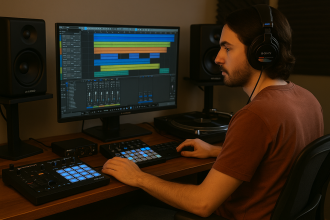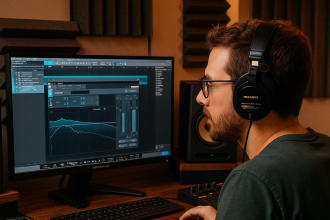


Every producer knows the moment: a tight 8-bar loop is playing, the groove feels right, and for a few seconds it sounds like a finished track. Then reality hits. The loop repeats, the energy stalls, and the project never evolves beyond its initial spark. The difference between a sketch and a real production lies in arrangement—the art of shaping time, space, and dynamics so a listener stays engaged from the first bar to the last.
- From 8 Bars to a Complete Track: Building Structure That Flows
- The Art of “Less but Better”: Arranging Without Overcrowding
- Beginner Drum Foundations: Kick, Snare, and Hi-Hats That Hit Without Overpowering
- Swing & Groove: Making Beats Feel Human Without Randomization
- Bass Foundations: Five Simple Approaches for a Clear and Powerful Low End
- When a Beat Becomes a Production
- AUDIARTIST
This guide explores how beginners can transform simple loops into complete tracks, arrange with intention, craft impactful drums, build natural groove, and design basslines that support the mix without overwhelming it.
From 8 Bars to a Complete Track: Building Structure That Flows
A loop becomes a track when it tells a story through progression. Instead of copying and pasting endlessly, think in sections: introduction, build, drop or main section, breakdown, and outro. Each section should evolve, even subtly.
Start by muting elements. An intro might feature only pads and percussion, allowing the listener to ease into the atmosphere. When the drums and bass enter, the contrast creates impact without adding new sounds. A breakdown can remove the kick and bass entirely, giving space before the energy returns.
Automation is the beginner’s secret weapon. Filter sweeps, reverb sends, and volume fades introduce movement without cluttering the arrangement. A simple low-pass filter opening over eight bars can transform a static loop into a dynamic build.
The goal is not complexity—it is contrast. Energy rises and falls, and listeners stay engaged because the track breathes.
The Art of “Less but Better”: Arranging Without Overcrowding
One of the most common beginner mistakes is adding layers to compensate for perceived emptiness. In reality, clarity comes from restraint. Each sound should serve a purpose: rhythm, harmony, texture, or emphasis.
If two elements perform the same role, choose the stronger one. A dense pad and a busy piano part may sound impressive solo, but together they compete for the same frequencies and attention. Muting one often improves the entire mix.
Silence is equally powerful. A brief pause before a drop creates anticipation. A single bar without drums can make their return feel heavier. Professional productions rely on these moments of restraint to shape emotional impact.
Arranging with intention means asking a simple question for every element: does this add value, or just volume?
Beginner Drum Foundations: Kick, Snare, and Hi-Hats That Hit Without Overpowering
Drums define the physical energy of a track. For beginners, the challenge is achieving punch without harshness or imbalance.
The kick should anchor the low end. Choose a sample with a clear fundamental frequency and minimal muddiness. If the kick feels weak, resist the urge to boost bass excessively—this often creates boom rather than punch. Instead, carve space by reducing low frequencies in other instruments.
The snare or clap provides the backbeat. A subtle transient shaper or light compression can enhance its snap without making it brittle. Layering is effective, but only when each layer contributes something distinct, such as body and attack.
Hi-hats bring motion and detail. Velocity variation is key. Slight differences in volume prevent mechanical repetition and create a more natural rhythm. Even small adjustments can transform static patterns into expressive grooves.
Balance matters more than loudness. A drum kit that sits cohesively in the mix will feel powerful, even at moderate levels.
Swing & Groove: Making Beats Feel Human Without Randomization
Groove is not randomness—it is intentional imperfection. Beginners often rely on “humanize” functions that scatter timing and velocity unpredictably. The result can feel sloppy rather than musical.
True swing comes from consistent micro-timing shifts. Delaying every second hi-hat slightly creates a laid-back feel. Nudging percussion forward introduces urgency. The key is subtlety; shifts of just a few milliseconds can reshape the groove.
Listening to genres known for groove—house, hip-hop, funk—reveals that swing is often pattern-based rather than random. Repetition with variation gives the rhythm identity.
Groove also emerges from interaction. A bassline that locks with the kick, or percussion that answers the snare, creates rhythmic conversation. When elements respond to each other, the beat feels alive.
Bass Foundations: Five Simple Approaches for a Clear and Powerful Low End
The low end defines weight and stability. Beginners often struggle with muddy bass because multiple elements compete for the same space. Clarity comes from deliberate choices.
A sustained sub-bass works well for atmospheric tracks, providing continuous depth. In rhythmic genres, short, punchy bass notes leave room for the kick to breathe. Sidechain compression—lightly ducking the bass when the kick hits—can enhance separation without audible pumping.
Harmonic layering adds presence. A pure sub may sound powerful on large systems but disappear on small speakers. Adding a subtle midrange layer ensures translation across devices.
EQ is essential. Cutting unnecessary low frequencies from non-bass instruments prevents buildup and preserves headroom. A clean low end is less about boosting bass and more about removing what does not belong.
Finally, monitoring at low volume reveals balance issues quickly. If the bass overwhelms at quiet levels, it will dominate everywhere.
When a Beat Becomes a Production
The transition from loop to track is not defined by complexity but by intention. A complete production guides the listener through evolving energy, balanced elements, and purposeful silence. Drums hit with clarity, bass supports without crowding, and groove invites movement without chaos.
For beginners, mastering these fundamentals unlocks a powerful realization: professional-sounding music is not built from endless layers or expensive tools. It emerges from thoughtful arrangement, disciplined restraint, and an ear trained to value space as much as sound.
When those elements align, a simple loop no longer repeats—it progresses, breathes, and becomes a track worth replaying.