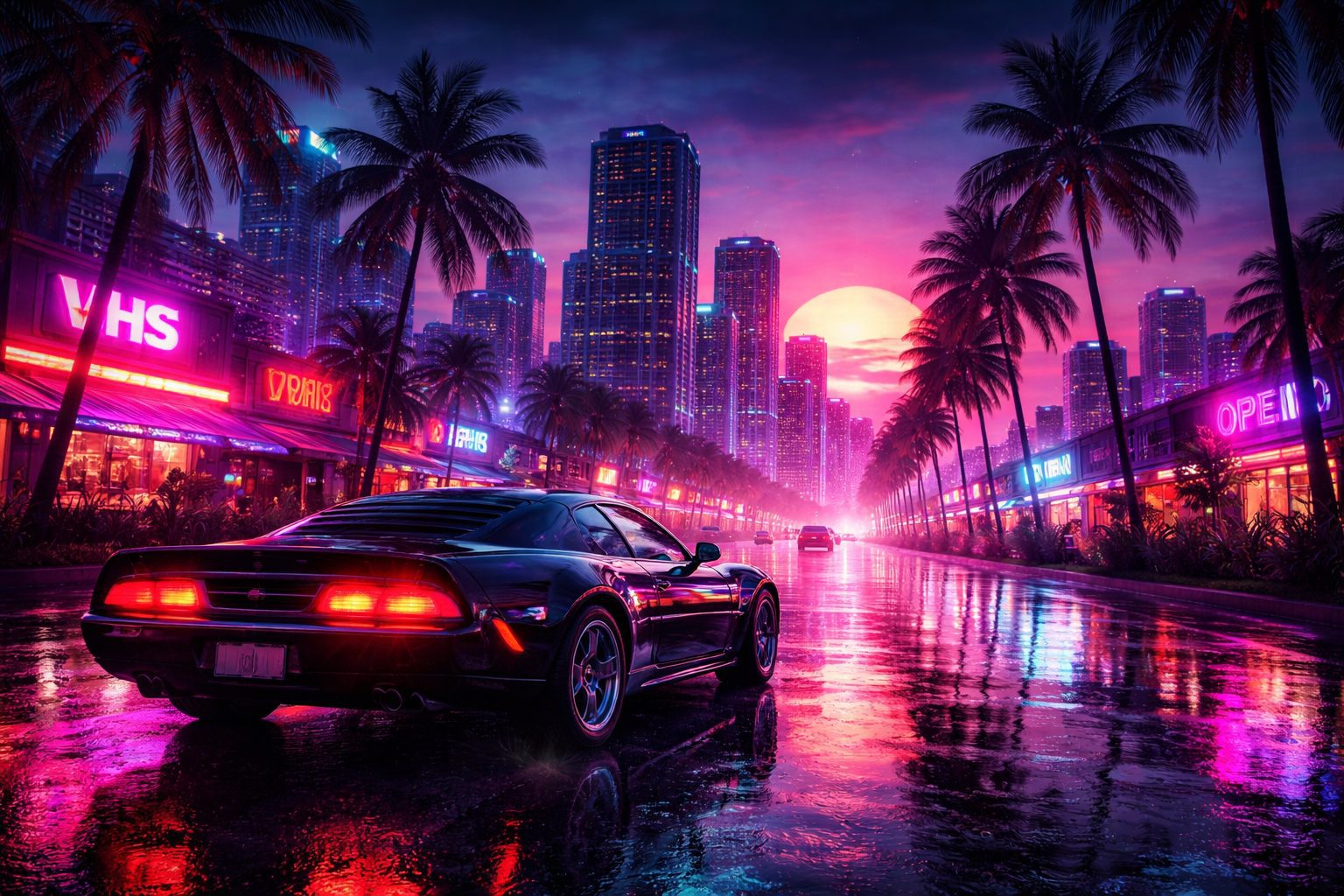

That paradox is precisely what gives synthwave its power. It is not simply retro music. It is remembered music. It transforms nostalgia into a creative language, turning memory into a mood and old technology into a living aesthetic. Behind its glossy surfaces and analog textures lies a genre obsessed not just with the past, but with the way the past is imagined.
Where Synthwave Comes From
To understand synthwave, it helps to begin with a simple idea: the genre does not come directly from the 1980s, but from the modern reinterpretation of that era. Its roots are emotional as much as musical. It emerged from a fascination with old film scores, early electronic pop, arcade culture, action movies, science-fiction imagery, and the dream of a future that once seemed just around the corner.
In many ways, synthwave was born from cultural memory. It takes the codes of an earlier time and reshapes them with modern production, digital distribution, and a sharper sense of atmosphere. The result is a genre that feels both familiar and strangely unreal, like the soundtrack to a memory that never actually happened.
The Precursors: Before Synthwave Had a Name
Long before synthwave existed as a defined genre, its sonic foundations had already been laid by electronic pioneers and visionary composers. Artists such as Vangelis, Tangerine Dream, Jean-Michel Jarre, and Giorgio Moroder helped establish the emotional and cinematic potential of synthesizers. Their music proved that electronic sound could be futuristic, sensual, dramatic, and expansive all at once.
Film composer John Carpenter also played a decisive role in shaping the sensibility that synthwave would later embrace. His minimalist, tense, and unforgettable themes created worlds with just a few notes and a handful of machines. His approach linked synthesizers to suspense, mystery, urban danger, and nocturnal atmosphere. In parallel, synth-pop, new wave, Italo disco, and early video game soundtracks added melody, pulse, and immediacy to the formula.
These influences mattered because synthwave would eventually borrow not only their sounds, but also their emotional grammar. The genre inherited the sense that electronic music could suggest motion, images, narrative, and longing. Even today, the strongest synthwave tracks rarely feel like ordinary songs. They feel like scenes.
The Birth of the Genre in the Internet Era
Synthwave as a real movement began to take shape in the mid-2000s, especially in Europe, where electronic producers started making music inspired by old soundtracks, vintage synthesizer textures, and 1980s visual culture. French artists were particularly important in this development. The influence of French electronic music, especially the post-house and cinematic side of the scene, gave early synthwave a polished and stylized identity.
At the same time, the internet gave the genre a perfect environment to grow. Forums, blogs, digital labels, YouTube uploads, Bandcamp releases, fan art, and retro-inspired graphic design helped create a shared world around the music. Synthwave was never only about sound. It arrived with a complete visual universe already attached: palm trees, sports cars, grid horizons, glowing cityscapes, leather jackets, digital sunsets, and VHS grain.
This online ecosystem allowed a niche genre to become an international movement. It spread not through traditional radio channels but through communities of listeners, gamers, designers, filmmakers, and underground electronic fans who all recognized the same aesthetic signal.
Why the 1980s Matter So Much
The 1980s remain central to synthwave because they represented a peculiar kind of optimism and anxiety at the same time. It was a decade fascinated by technology, speed, sleek consumer design, futuristic vehicles, and bold visual identities. But it was also a decade full of shadow, paranoia, and urban alienation. Synthwave feeds on both sides of that cultural tension.
That is why the genre can feel glamorous and melancholic in the same breath. It is drawn to the bright fantasy of the past, but also to its emotional darkness. The glowing skyline often hides heartbreak. The chrome surface often conceals loneliness. Synthwave works best when it understands that retro-futurism is not only style, but emotion.
The Breakthrough Into Popular Culture
Although synthwave had already formed underground, it truly broke into wider public consciousness through film, gaming, and streaming culture. One of the biggest turning points came when cinematic electronic tracks with retro DNA reached mainstream audiences through visually powerful productions. Suddenly, this music was no longer just a niche fascination for internet communities. It had become the sound of cool, danger, elegance, and modern nostalgia.
Few tracks symbolize that breakthrough better than Kavinsky’s “Nightcall.” The song became one of the defining pieces associated with the genre’s rise, capturing everything that made synthwave so compelling: seductive darkness, urban motion, mechanical pulse, and emotional tension.
Another essential landmark is “A Real Hero” by College and Electric Youth. Where “Nightcall” leans into mystery and menace, “A Real Hero” reveals the softer, more reflective side of the genre. It showed that synthwave could be intimate, moving, and quietly devastating without losing its cinematic glow.
What Defines the Synthwave Sound
Synthwave is built from a set of recognizable ingredients, but the genre is more than a checklist of vintage references. Yes, it often features analog-style synthesizers, pulsing basslines, drum machine grooves, bright arpeggios, lush pads, and huge snare hits. But what truly defines synthwave is the atmosphere those elements create together.
The music is often cinematic rather than purely functional. It is designed to evoke movement, mood, and visual imagination. Some tracks feel like a chase through a neon city. Others feel like a lonely drive home at 3 a.m. Some feel romantic, others dystopian, others heroic. This emotional flexibility is one of the reasons synthwave has lasted. It offers more than nostalgia. It offers a world.
The Artists Who Built the Genre’s Identity
Several artists helped transform synthwave from an underground curiosity into a genre with a real canon. Kavinsky remains one of the style’s most iconic names, thanks to his dark, elegant, and cinematic approach. College helped define the more reflective and emotional side of the scene. Together, early artists like these gave the genre a powerful foundation.
Later, the movement expanded through artists who pushed the sound in different directions. The Midnight brought songwriting, saxophone flourishes, emotional clarity, and a sweeping sense of scale. Their music helped synthwave move closer to modern pop without losing its nocturnal soul. GUNSHIP leaned into visual storytelling and comic-book intensity, embracing the genre’s cinematic instincts in grand style. FM-84 refined the bittersweet, uplifting side of the sound, while Timecop1983 became synonymous with romance, tenderness, and shimmering melancholy.
On the darker end of the spectrum, Perturbator and Carpenter Brut brought aggression, violence, and cyberpunk energy into the frame. They turned synthwave toward industrial textures, horror influences, and metallic force, proving that the genre could be muscular as well as dreamy.
One of the best examples of synthwave’s self-aware grandeur is GUNSHIP’s “Tech Noir,” a track that feels like a manifesto for the whole aesthetic. It is stylish, dramatic, immersive, and unapologetically larger than life.
FM-84’s “Running in the Night” captures another side of the genre: the mixture of momentum and longing that makes synthwave so emotionally addictive. It sounds triumphant on the surface, but something in it aches.
Then there is The Midnight’s “Sunset,” a track that helped define the emotional center of modern synthwave. It is expansive, wistful, and deeply melodic, turning nostalgia into something intimate and almost physical.
Artists to Watch: The New Generation
Synthwave has survived because it never depended only on its pioneers. A younger generation of producers continues to reinterpret the genre, sometimes preserving its classic codes, sometimes blending them with newer electronic forms. The most promising artists in the scene today often understand that synthwave cannot thrive as a museum piece. It needs mutation, friction, and personality.
Some rising names lean into a polished retro-futurist sound while others fuse synthwave with cyberpunk, dream pop, dark electronic music, cinematic ambience, or modern club influences. This new wave of artists is less interested in copying a fixed past than in extending the genre’s emotional and visual possibilities. That is where synthwave remains alive: not in imitation, but in reinvention.
What unites many of these emerging artists is their ability to keep the atmosphere intact while stretching the genre outward. The textures may be more modern, the rhythms sharper, the production bigger, but the core impulse remains the same: to create music that feels like light moving through memory.
The Main Variants of Synthwave
Outrun
Outrun is perhaps the most emblematic form of synthwave. Fast, glossy, and built for motion, it is the sound of speed, highways, car headlights, and endless horizon lines. It channels the fantasy of a neon-lit escape, often with a strong connection to arcade culture and stylized 1980s automotive imagery.
Darksynth
Darksynth takes the same retro foundation and pushes it toward menace. Heavier drums, distorted textures, darker harmonies, and horror-influenced atmospheres define this branch. It often feels closer to a dystopian soundtrack than a nostalgic daydream, and it has become one of the most powerful offshoots of the genre.
Dreamwave
Dreamwave is softer, slower, and more emotional. It often favors lush textures, romantic melodies, and reflective moods over pure momentum. This branch of synthwave is less about the chase and more about what remains afterward: the afterglow, the memory, the distance.
Chillsynth
Chillsynth extends that softness even further. It blends synthwave’s retro palette with a more ambient and relaxed approach, often emphasizing warm pads, smooth basslines, and meditative pacing. It is one of the clearest signs that the genre can evolve beyond its original clichés while keeping its emotional identity intact.
Why Synthwave Endures
It would be easy to dismiss synthwave as pure nostalgia, but that misses the point. At its best, synthwave is not simply a reenactment of the past. It is a reflection on how the past is remembered, desired, stylized, and transformed. It asks why old visions of the future still feel emotionally charged. It turns outdated technology into a source of beauty. It gives listeners a world where machines still shimmer with mystery and the night still seems full of possibility.
In a culture increasingly dominated by speed, fragmentation, and disposable attention, synthwave offers something surprisingly durable. It gives shape to longing. It creates atmosphere with precision. It slows the listener just enough to make emotion visible again. That is why the genre continues to matter. Not because it recreates the past perfectly, but because it understands how memory works: exaggerated, luminous, selective, and alive.
Conclusion
The history of synthwave is the history of a genre that turned collective memory into modern art. It began with the echoes of film composers, synthesizer pioneers, and early electronic dreamers. It found its form in the internet age, where music, image, and nostalgia fused into a single aesthetic language. It grew through iconic artists who defined its major moods, from romance to darkness, from velocity to introspection. And it continues to evolve through younger names who treat retro-futurism not as a costume, but as raw material.
Synthwave did not emerge from one city or one scene alone. It came from a shared cultural imagination, from a desire to hear the future the way the past once promised it. That is why the genre still resonates. Beneath the neon, beneath the chrome, beneath the analog glow, synthwave remains what it has always been at heart: music for the beautiful tension between memory and motion.