


The New Tools Producers Should Be Watching Right Now
Free VST culture has changed. It is no longer just about collecting as many downloads as possible and hoping one or two survive the first test session. Today, producers are more selective. They want plugins that solve real problems, spark fresh ideas, and bring something distinct to a workflow that is already crowded with options.
That is exactly what makes the latest FREE VST coverage on Audiartist worth following. The recent articles published in the category do not simply recycle the same old freeware legends. They spotlight a sharper, more current selection of tools and projects that feel relevant to how music is actually made in 2026: faster, more hybrid, more curious, and more demanding when it comes to sound and workflow.
From plugin organization and vintage synth emulation to open-source sound design environments, practical compressors, and curated weekly roundups, this latest wave reflects something important. The best free VST tools are no longer just budget alternatives. In many cases, they are creative triggers, workflow upgrades, or serious production resources in their own right.
Audiartist’s Latest FREE VST Highlights
The latest entries in the category form an interesting snapshot of where music production software is heading. There is no single dominant trend here. Instead, the newest articles cover multiple parts of the producer ecosystem: utility, emulation, dynamics, experimentation, and weekly discovery. That variety is precisely what makes the section feel alive.
OwlPlug
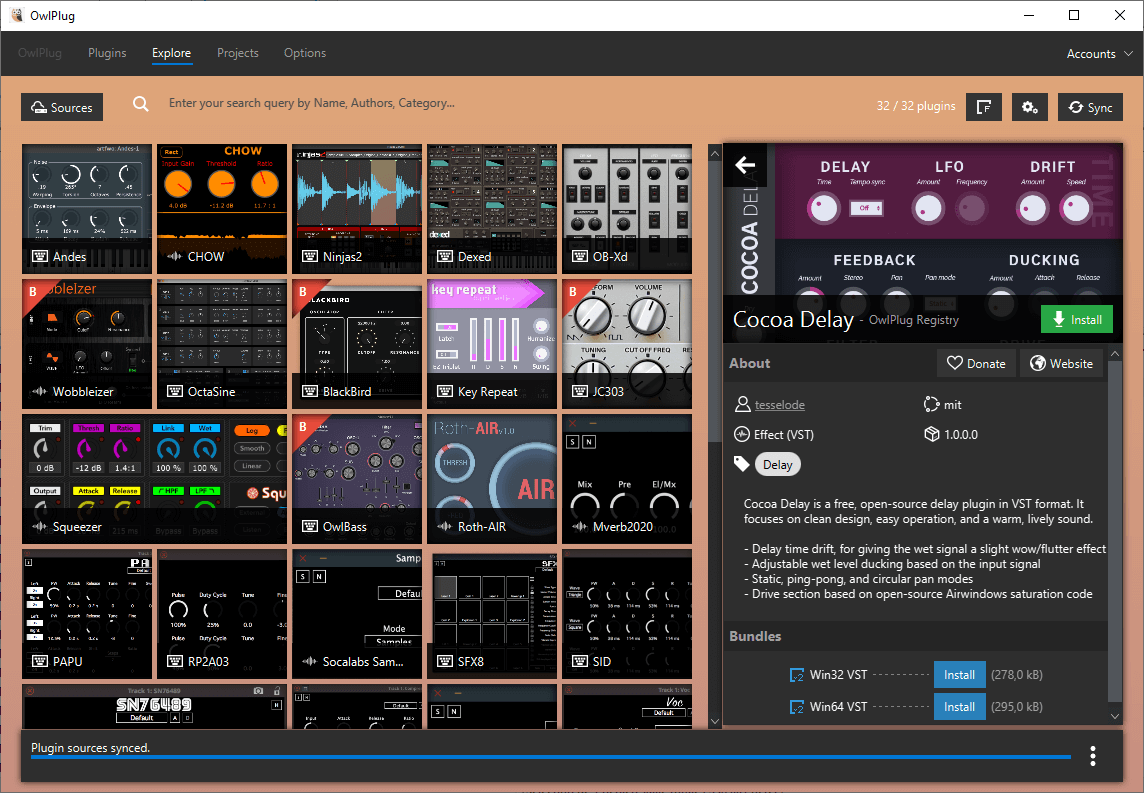
OwlPlug is one of those tools that may not make sound itself, but can still improve the way a studio works. Audiartist presents it as an answer to plugin overload, and that angle makes immediate sense. Every producer eventually reaches the moment when plugin folders become less of a resource and more of a maze. Too many downloads, too many scattered installs, too many half-remembered utilities lost in the clutter.
That is why OwlPlug stands out. It is positioned as a plugin manager for musicians and producers who want more control over how they organize, discover, and install plugins. In an era where creators often work across several DAWs, several operating systems, and a constantly expanding library of tools, this kind of software feels less like a luxury and more like a practical upgrade. The article gives it a workflow-first identity, which is a smart editorial angle because that is exactly where its value seems strongest.
What makes this feature especially relevant is that it speaks to a problem almost every modern producer understands. Not every breakthrough comes from a new synth or effect. Sometimes the real studio upgrade is simply being able to find, sort, and manage what you already have without killing momentum.
The Usual Suspects
Some plugin projects try to capture a vibe. The Usual Suspects tries to resurrect an era. That is what makes this article one of the most interesting recent additions in the category. Rather than covering just another generic synth, Audiartist frames the project as a portal back into the world of classic digital hardware, with emulations tied to iconic instrument families that shaped late-1990s and early-2000s electronic music.
The appeal here is obvious. Producers still love the sharp, recognizable identity of legendary digital machines, but very few want the cost, maintenance, or hardware limitations that come with chasing the originals. The article positions The Usual Suspects as a modern route into that sound world, especially for genres like trance, techno, house, synthwave, electro, ambient, and cinematic electronic production.
There is also a stronger editorial point underneath the feature: nostalgia only matters when it still sounds useful. The reason projects like this keep attracting attention is not because they are retro for the sake of it, but because those tones still cut through a mix, still carry personality, and still inspire. In a plugin market full of polished sameness, that kind of historical edge remains powerful.
Read the full The Usual Suspects article
Soundspear Formula
Soundspear Formula brings a very different energy to the category. While some free tools are valuable because they are focused and simple, Formula is exciting because it opens up space. Audiartist presents it as a free and open-source multi-effects environment, but the real hook is broader than that. This is not just a plugin. It is a creative playground.
The article emphasizes that Formula allows users to create custom effects directly inside the DAW while also giving access to bundled community-made effects. That dual identity is what gives it its spark. It is useful for adventurous producers, sound designers, beatmakers, and curious musicians who want more than a preset browser. It invites experimentation, and in the current production landscape, that matters more than ever.
What makes this feature strong is that it highlights one of the best things about modern freeware: freedom to explore without financial pressure. A plugin like Formula does not just save money. It changes creative behavior. It encourages testing, reshaping, breaking habits, and building sounds that feel less pre-packaged. For producers who are bored with routine plugin chains, this kind of release feels refreshing.
Read the full Soundspear Formula article
Best New Free VST Plugins This Week
One of the strongest editorial formats in the category is the weekly roundup, and this article is a good example of why. Instead of repeating the same eternal freeware recommendations, Audiartist focuses on new or updated tools that feel current, practical, and genuinely worth testing now. That gives the piece a stronger sense of urgency and relevance.
The roundup featured a varied selection: Witech TheDrumSource 4 for quick drum workflow, Plea Teach Spectaverb for cinematic and unstable reverb textures, Analog Obsession LAEA for characterful optical compression, Attila M. Magyar MPE Emulator for expressive MIDI control, Buchert Audio The Double Wide for stereo width handling, and Sender Spike filter.tank v1.20 for hardware-flavored filtering and grit.
That range is exactly why this kind of article works. It does not trap the reader inside one style of plugin or one kind of production need. Instead, it reflects the real shape of modern sessions, where a producer may need drums, space, dynamics, width, and movement all in the same day. Good roundups do not just list tools. They show patterns in the current plugin landscape, and this one does that well.
Read the full weekly free VST roundup
LAEA by Analog Obsession
Not every free plugin needs to reinvent the studio. Sometimes what matters most is reliability, tone, and speed. LAEA fits that role beautifully. Audiartist presents it as a solid-state optical compressor designed for musical control rather than technical overkill, and that already makes it attractive in a production world saturated with endless features and overbuilt interfaces.
The article frames LAEA as a tool that can handle vocals, bass, guitars, keys, bus work, and sidechain-driven production duties without turning compression into a science project. That positioning is smart because it speaks directly to what producers often want from dynamics tools: something that helps quickly, sounds right, and stays out of the way of creativity.
There is also a larger takeaway here. Free plugins become genuinely valuable when they can solve familiar mix problems without adding friction. LAEA seems to land in that category. It is not presented as a novelty. It is presented as a working tool, and that makes it far more appealing than yet another flashy release that looks impressive for ten minutes and then disappears into an abandoned folder.
The Best New VST Plugins Released This Week
Alongside the freeware-specific roundup, Audiartist also published a broader article covering the best new VST releases of the week. This is an important complement to the FREE VST category because it expands the editorial lens. Instead of focusing only on cost-free tools, it looks at the wider momentum of the plugin world and the kinds of releases that are shaping producer curiosity right now.
The article describes a stronger-than-usual week for creative workflow, with an emphasis on tools that do one thing very well rather than trying to become bloated all-in-one solutions. That is a notable editorial direction, because it aligns with what many producers increasingly prefer: focused tools with clear purpose, distinctive sonic identity, and immediate usefulness.
In practical terms, this kind of piece helps readers understand the broader plugin environment around the free releases. It gives context. It shows that the freeware scene is not isolated from the rest of the market, but part of a larger movement toward smarter, more musical, and more specialized development.
Why This Recent Batch Feels Stronger Than a Typical Freeware Cycle
What makes this latest group of VST-related articles especially compelling is that it avoids monotony. Too many plugin roundups end up circling the same ideas: another reverb, another analog-style saturator, another oversized list of “must-have” names everyone has seen a hundred times before. This recent Audiartist selection feels more intentional.
There is a real spread of use cases here. OwlPlug speaks to workflow and organization. The Usual Suspects taps into the continuing fascination with classic digital hardware tones. Soundspear Formula opens the door to custom effects and open-source experimentation. LAEA handles the timeless need for musical dynamic control. The weekly roundups tie everything together by showing how fast the plugin landscape is moving and where the most interesting energy currently sits.
That diversity matters because modern producers do not live in one lane. A single studio week can involve sound design, mixing, beatmaking, arrangement work, plugin testing, and export preparation across multiple projects. A VST section that reflects that reality feels much more useful than one built around narrow repetition.
A Category That Works as More Than a Simple Freebie Archive
The strongest thing about the current FREE VST section on Audiartist is that it does not feel like a dumping ground for random downloads. It feels editorial. The articles have direction. They connect plugins to creative scenarios, workflow needs, genre relevance, and actual producer behavior. That difference is what turns a category into a destination rather than a list.
For readers, that means faster discovery and better context. For a site, it means stronger engagement, deeper internal navigation, and a clearer identity. Instead of just saying “here is another free plugin,” the category increasingly says “here is why this tool matters, who it is for, and how it fits into the modern studio.” That is a much stronger value proposition.
Final Thoughts
The latest VST coverage on Audiartist shows a category in good health: current, varied, and closely connected to what producers are actually looking for right now. Some readers will click because they want a new compressor. Others will come for a workflow utility, a synth emulation project, or a fresh roundup of the week’s most interesting releases. The smart part is that the category supports all of those entry points at once.
If you want an article that not only summarizes the latest VST content on the site but also encourages readers to keep exploring, this kind of expanded editorial format does the job perfectly. It gives enough context to feel substantial, enough movement to keep reading smooth, and enough links to turn curiosity into deeper traffic across the category.
Explore the full FREE VST category on Audiartist:
https://www.audiartist.com/category/free-music-production-resources/vst/