
At a time when music promotion feels inseparable from screens, metrics, and digital noise, one truth remains stubbornly timeless: scenes still exist. Not as nostalgic relics, but as living ecosystems — local venues, collectives, radio stations, cultural spaces, and communities where music is experienced physically, collectively, and without buffering.
- The Myth of “Online-Only” Success
- Scenes as Ecosystems, Not Locations
- Why Real-World Context Builds Trust Faster
- The Enduring Power of Local Radio
- Collaboration as Cultural Integration
- Small Rooms, Big Impact
- Physical Presence in a Digital Era
- The Feedback Loop Between Offline and Online
- Cultural Identity in a Globalized Landscape
- Beyond Metrics
- AUDIARTIST
In 2026, as artists search for sustainable growth beyond algorithmic volatility, many are rediscovering the power of real-world presence. Not as a replacement for digital strategy, but as its most human counterpart.
Because before streams, there were rooms. And rooms still matter.
The Myth of “Online-Only” Success
The modern narrative suggests that everything happens online — discovery, fandom, revenue, influence. Yet countless artists with strong digital metrics struggle to mobilize real audiences, while others with modest online presence build thriving local followings that sustain careers.
Why? Because physical experiences create emotional anchors. A live set, a radio appearance, a collaborative event — these moments transform passive listeners into active supporters.
Clicks measure attention. Presence creates memory.
Scenes as Ecosystems, Not Locations
A scene is not just a city. It is a network: DJs, promoters, venues, radio hosts, photographers, designers, collectives, and listeners who share a cultural pulse.
In 2026, scenes are hybrid. A local event may be streamed globally. A community radio show may archive mixes online. A small venue performance may circulate through word-of-mouth and niche platforms.
The physical and digital no longer compete — they reinforce each other.
Why Real-World Context Builds Trust Faster
Online discovery often lacks context. A track appears in a playlist; the listener enjoys it but moves on. In a real-world setting, music is embedded in an experience: the atmosphere of a venue, the energy of a crowd, the narrative of an event.
This context accelerates trust. Listeners associate the music with a moment they lived, not just a sound they heard.
Memory binds stronger than metrics.
The Enduring Power of Local Radio
While global streaming dominates headlines, local and niche radio stations remain powerful discovery platforms. They curate with intention, speak to defined audiences, and maintain a sense of cultural identity.
A track played on a respected local show carries legitimacy. It signals that the artist belongs to a scene, not just a feed.
Radio does more than broadcast. It contextualizes.
Collaboration as Cultural Integration
Engaging with a local scene fosters collaboration — not the transactional kind, but the organic exchange of ideas, performances, and audiences. Shared lineups, back-to-back sets, community projects, and cross-genre events expose artists to listeners who trust the ecosystem they inhabit.
In this environment, discovery feels natural. Listeners explore because the scene invites them to, not because an algorithm suggests it.
Belonging precedes growth.
Small Rooms, Big Impact
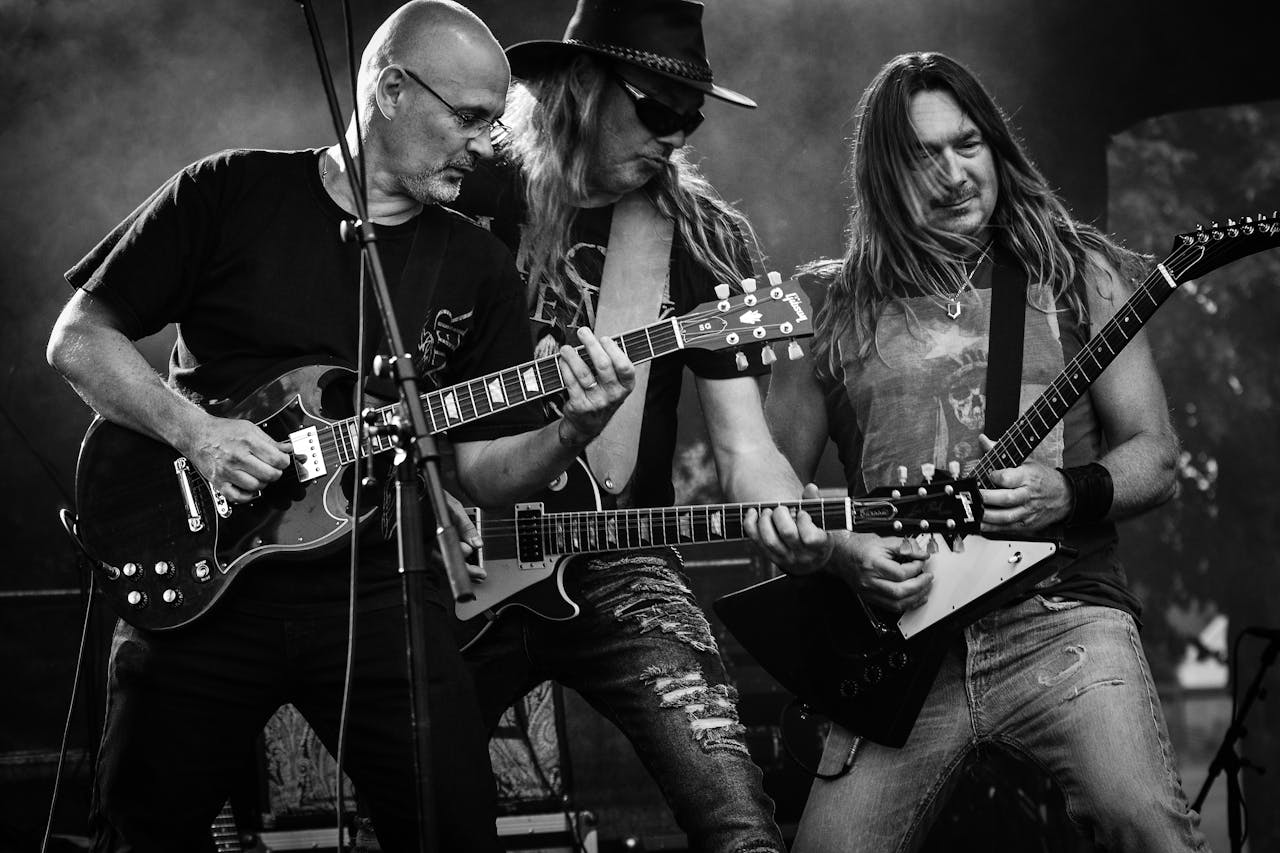
A common misconception is that only large events matter. In reality, intimate spaces often generate deeper connections. A small venue where listeners can approach the artist, exchange words, and share experiences fosters loyalty that massive stages rarely achieve.
Scale impresses. Intimacy converts.
These micro-communities become the foundation of long-term support — the listeners who return, recommend, and advocate.
Physical Presence in a Digital Era
Real-world engagement does not require constant touring. It can take many forms: local showcases, community events, workshops, radio guest mixes, collaborative sessions, or curated listening gatherings.
These activities create touchpoints that extend beyond screens. They allow listeners to encounter the artist as a person, not a profile.
Human presence humanizes music.
The Feedback Loop Between Offline and Online
Real-world activity strengthens digital discovery. Attendees search for tracks after events. Radio listeners explore catalogs online. Collaborative performances introduce artists to new communities that continue engagement digitally.
Offline experiences generate online signals — searches, streams, follows — that algorithms recognize. The cycle reinforces itself.
The screen reflects the room.
Cultural Identity in a Globalized Landscape
As digital platforms flatten geography, local scenes preserve cultural specificity. They nurture sounds shaped by place, history, and community. This authenticity resonates globally because it offers something distinct.
Paradoxically, the more rooted an artist is locally, the more universal their appeal can become.
Global reach often begins with local truth.
Beyond Metrics
In 2026, artists are reevaluating what success looks like. Metrics provide scale, but scenes provide substance. A room of fifty engaged listeners can generate more lasting impact than thousands of passive streams.
Real-world presence transforms listeners into participants, supporters, and advocates.
Algorithms distribute music. Scenes sustain it.
Streams measure reach. Rooms create belonging.
Visibility attracts. Presence endures.
And in a digital age defined by endless scrolling, the most powerful promotion may still be the simplest: a sound system, a room, and people who showed up to listen.