
The Strategy Behind the “Eternal Playlist Generator”
In the fiercely competitive world of music streaming, innovation is no longer limited to sound quality, recommendation algorithms, or exclusive content. Today, platforms compete just as much on culture, storytelling, and shareable experiences. Spotify, the world’s largest music streaming service, has increasingly leaned into this philosophy, turning music into a social and cultural event rather than a simple listening activity.
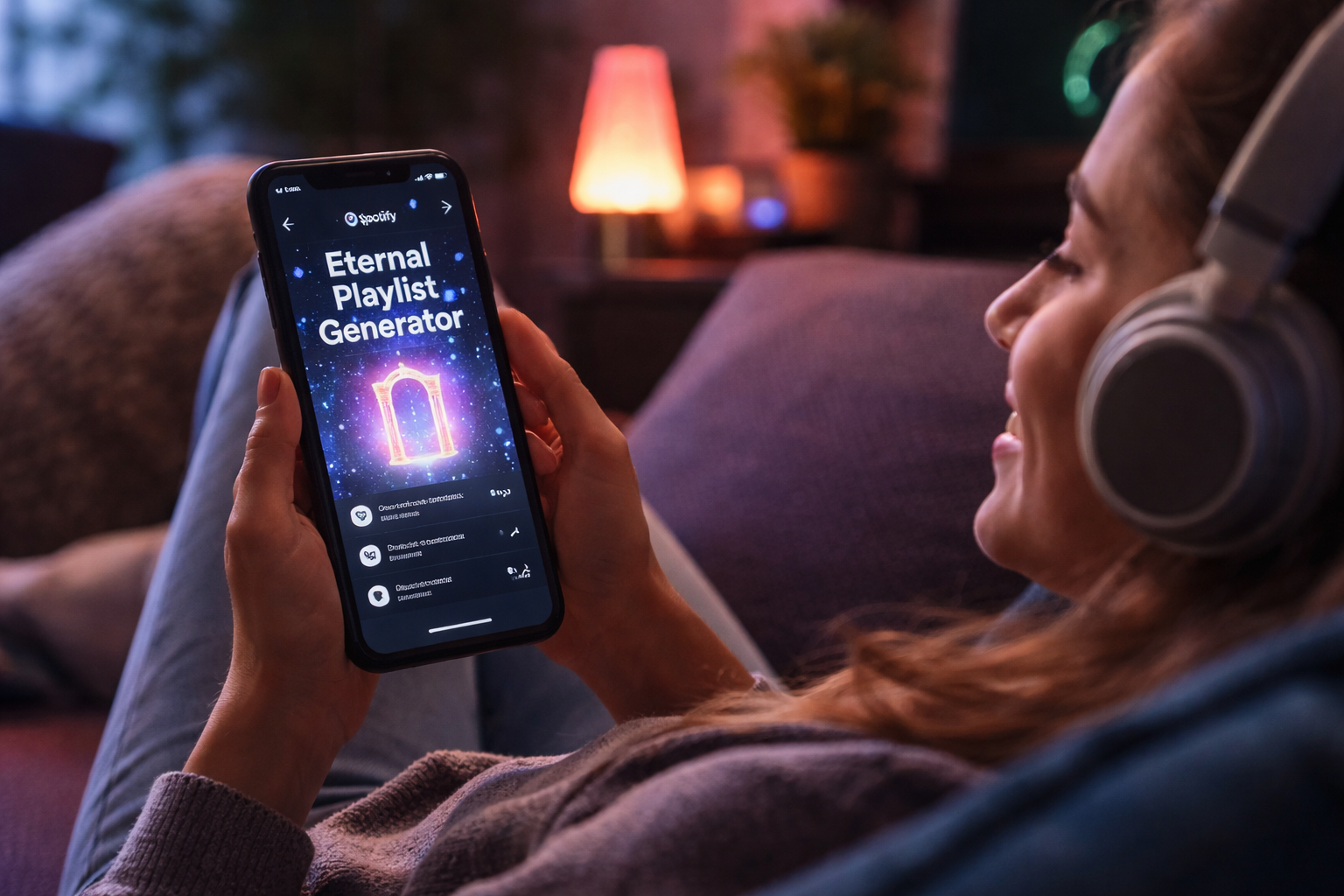
One of the most intriguing examples of this strategy recently emerged with the launch of the “Eternal Playlist Generator.” Presented with humor and a strong dose of internet-friendly absurdity, the concept allows users to generate a playlist designed for the “afterlife.” While the feature may seem playful on the surface, it reveals something deeper about Spotify’s evolving approach: transforming the platform into a space where music, identity, and viral culture intersect.
Music as an Experience, Not Just a Stream
Over the past decade, Spotify has gradually repositioned itself from a digital music library into a dynamic cultural platform. The company’s ecosystem now blends streaming with storytelling, social sharing, interactive campaigns, and data-driven personalization.
Campaigns like Spotify Wrapped already demonstrated how powerful this approach can be. Each year, the personalized listening summary becomes a global social media event, flooding platforms like Instagram, TikTok, and X with millions of user-generated posts. Wrapped is no longer just a recap of listening habits; it has become a digital ritual that reinforces Spotify’s cultural relevance.
The Eternal Playlist Generator follows the same logic. Instead of focusing purely on utility, the feature invites users to play with the emotional and symbolic side of music. By framing playlists as something that could accompany a listener “beyond life,” Spotify taps into humor, nostalgia, and identity in a single viral concept.
This type of experience turns the act of streaming into something far more memorable than simply pressing play.
The Viral Marketing Playbook
Spotify’s marketing strategy increasingly mirrors the dynamics of internet culture. Instead of traditional advertising campaigns, the platform often launches ideas designed to spread organically across social networks.
Features like the Eternal Playlist Generator work because they encourage participation. Users naturally want to share the results of their generated playlists, discuss them with friends, or post them online. The more playful the concept, the more likely it is to circulate across digital communities.
This strategy is particularly effective in a streaming market where attention is fragmented and competition is intense. Apple Music, Amazon Music, and YouTube Music all compete for the same audience, yet Spotify consistently dominates cultural conversation.
The reason is simple: Spotify understands that music discovery today happens not only through algorithms but also through memes, conversations, and social moments.
Turning Data Into Cultural Moments
Spotify’s strength lies in the vast amount of listening data it collects. Every stream, skip, save, and playlist addition contributes to a detailed understanding of listener behavior. But rather than keeping that data hidden behind recommendation engines, the platform increasingly transforms it into shareable content.
The Eternal Playlist Generator fits perfectly within this strategy. Behind the playful interface lies Spotify’s powerful personalization engine, capable of selecting tracks that reflect a user’s listening history and emotional patterns.
In other words, the humor is real, but the data-driven personalization is just as serious as the company’s core recommendation technology.
By blending entertainment with algorithmic insight, Spotify turns user data into cultural storytelling.
A Cultural Platform for the Streaming Era
The rise of interactive features like this also reflects a broader shift in how audiences engage with music platforms. Streaming services are no longer simply distribution tools; they are becoming media ecosystems where listening, sharing, and identity merge.
Spotify has increasingly positioned itself at the center of this ecosystem. Beyond music, the platform now integrates podcasts, audiobooks, video content, and social features designed to keep users engaged for longer periods of time.
The Eternal Playlist Generator may not revolutionize streaming technology, but it reinforces a crucial message: Spotify is not just about catalog size or audio quality. It is about creating moments that listeners want to talk about.
In the digital attention economy, that distinction matters.
The Future of Streaming Is Emotional and Social
The success of Spotify’s viral marketing experiments suggests that the future of streaming platforms will be defined not only by technology but by emotional engagement.
Algorithms may recommend songs, but cultural experiences make listeners stay. By blending humor, identity, and personalization, Spotify continues to shape how music lives on the internet.
If the Eternal Playlist Generator proves anything, it is that the most powerful feature a streaming platform can offer is not just access to millions of songs—it is the ability to turn music into a shared cultural story.
And in a world where attention is the most valuable currency, that story might last forever.