
The streaming landscape is evolving at a breathtaking pace, and Spotify is once again redefining how we experience music. With the rollout of Smart Reorder and the expansion of Prompted Playlists, the platform is shifting from passive listening toward an intelligent, fluid, and highly personalized audio journey. The result is a listening experience that feels less like pressing play — and more like having a DJ who knows you better than you know yourself.
Smart Reorder: When Your Playlist Learns to Mix
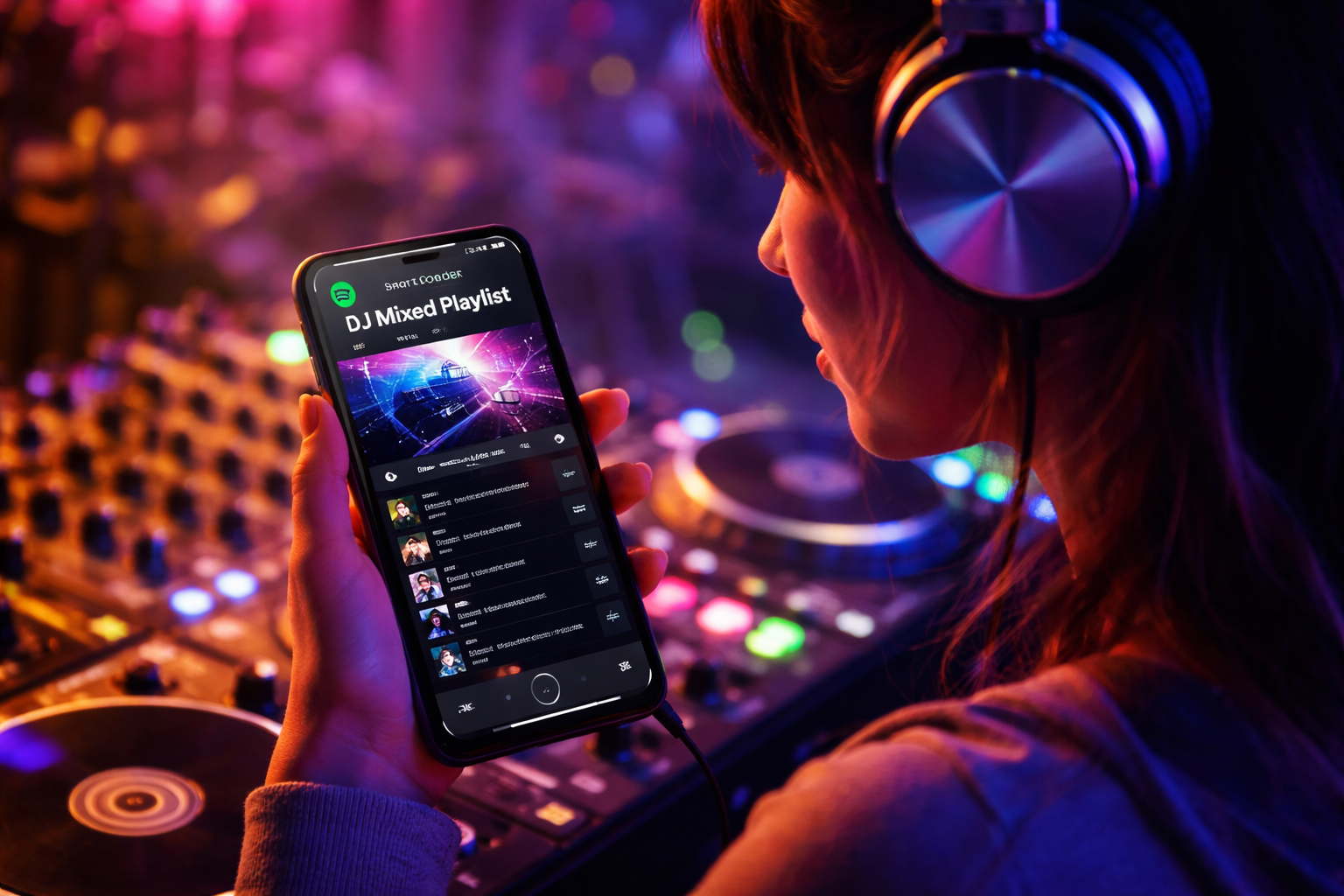
Spotify’s new Smart Reorder feature automatically reorganizes tracks within a playlist based on tempo (BPM), key, and energy levels. Instead of abrupt transitions between songs with conflicting moods or rhythms, listeners enjoy seamless flows that mimic professional DJ sets.
This innovation addresses one of the most common frustrations in digital listening: the jarring shift from a mellow track to a high-energy anthem. By smoothing transitions, Smart Reorder keeps listeners immersed longer, increasing session duration and deepening engagement.
For workout playlists, party mixes, or late-night chill sessions, the impact is immediate. The playlist becomes dynamic — not a static list of songs, but a living sequence optimized for continuity and emotional flow.
Prompted Playlists: From Search Bar to Soundtrack
Spotify is also expanding Prompted Playlists, allowing users to generate playlists simply by describing a mood, moment, or scene. Type a phrase like “sunset afro house chill” or “rainy night piano focus”, and the platform instantly curates a tailored soundtrack.
This shift represents a fundamental change in music discovery. Users no longer need to know artist names or genres. Instead, they communicate in feelings, atmospheres, and contexts — and the algorithm translates those emotions into music.
The result is a co-creative experience: listeners become curators, shaping their own sonic environments with natural language.
A New Listening Paradigm: Automated, Personalized, Immersive
Together, Smart Reorder and Prompted Playlists signal Spotify’s broader strategic direction: automated yet deeply personal listening.
Rather than replacing human taste, these tools amplify it. The platform learns preferences, interprets intent, and refines playback in real time. Music consumption becomes less about choosing tracks and more about designing experiences.
This evolution reflects larger industry trends:
- Personalization is replacing static curation.
- Mood and context are overtaking genre as discovery tools.
- Seamless playback is becoming essential for engagement.
In this new paradigm, the listener is no longer just an audience member — they are a collaborator.
Why This Matters for Artists and the Industry
For artists, these developments carry significant implications. Tracks are increasingly evaluated not only on artistic merit but also on how well they fit algorithmic flows: tempo compatibility, energy consistency, and mood tagging now influence discoverability.
Metadata, sonic coherence, and emotional clarity are becoming strategic assets. Songs that integrate smoothly into automated sequences are more likely to be surfaced, saved, and replayed.
For the industry at large, Spotify’s innovations reinforce a clear reality: the future of streaming lies in intelligent orchestration, where technology enhances musical storytelling rather than replacing it.
The DJ in Your Pocket
Spotify’s latest features blur the line between platform and performer. With Smart Reorder mixing transitions and Prompted Playlists generating soundtracks on demand, the app evolves into a pocket-sized DJ — one powered by data, shaped by user intent, and refined by artificial intelligence.
As streaming continues to mature, one thing becomes clear: the next era of music listening won’t be defined by what we play, but by how effortlessly it plays for us.