
Spotify now appears ready to challenge that version of its own success. With the rollout of SongDNA for Premium subscribers and the launch of its Listening Lounge concept in London, the platform is signaling a sharper ambition: not simply to be the place where people access music, but the place where they understand it, feel it, and perhaps even value it more deeply.
This is not a minor product update. It is a strategic reframing of what streaming can be. One feature adds context. The other adds ritual. Together, they suggest Spotify is trying to restore something digital music platforms have long neglected: the sense that listening can still be immersive, informative, and emotionally textured.
SongDNA turns a track into a creative ecosystem
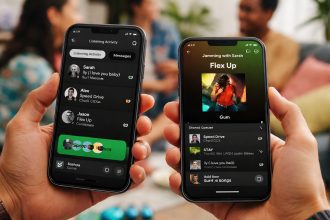
At first glance, SongDNA sounds like a feature built for the curious few: the obsessive listener, the producer who wants to know where a sample came from, the fan who reads credits the way others read headlines. But its importance goes beyond niche appeal. SongDNA reframes the song itself. Instead of presenting a track as a closed object, Spotify presents it as a living node connected to writers, producers, samples, interpolations, covers, and reinterpretations.
That shift matters. Streaming has made access faster than ever, but it has often stripped away the connective tissue that once surrounded recorded music. In earlier eras, a song came with liner notes, sleeve design, production mythology, studio lore, and a slower path toward discovery. You had to spend time with a record. The medium forced a relationship. SongDNA is an attempt to reintroduce that relationship inside an interface built for speed.
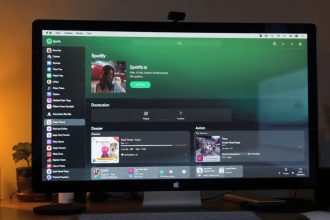
From the Now Playing screen, Premium users can move beyond the surface of a song and into its architecture. Who wrote it? Who produced it? What earlier work does it borrow from? Which version came first? Which melody traveled, evolved, or reappeared somewhere else? These are not trivial questions. They are the questions that reveal how music actually moves through culture.
In practical terms, SongDNA gives listeners a more layered way to explore music. In symbolic terms, it tells users that songs are worth more than a title, a thumbnail, and a stream count.
Why context is suddenly valuable again
There is a broader reason this move feels timely. The streaming market is no longer driven only by catalog size or playlist convenience. Nearly every major platform offers massive libraries, personalized recommendations, and polished mobile experiences. The next battleground is not simply access. It is depth.
Listeners increasingly want more than passive consumption. They want to understand why a track feels familiar, why a production choice hits so hard, why a chorus echoes another era, or why one song opens the door to ten others. This kind of contextual listening has always existed among fans, DJs, journalists, collectors, and producers. Spotify is now packaging it into the mainstream experience.
That matters for casual users as much as power listeners. SongDNA can turn an ordinary session into a trail of discovery. A listener may arrive through one current hit and suddenly uncover the original sample, the songwriter behind multiple chart records, or a chain of covers linking decades of pop history. That journey creates something streaming platforms constantly chase but rarely earn: attention that deepens instead of drifting away.
Spotify is not just adding information. It is changing the mood of the platform
The launch of the Listening Lounge in London makes that even clearer. If SongDNA enhances the intellectual and creative side of music discovery, the Listening Lounge works on the sensory and emotional side. It is built around immersive listening and Spotify’s more premium audio ambitions, particularly around higher-fidelity playback and a more intentional way of hearing music.
This is a fascinating move because it pushes Spotify into a different cultural register. Streaming platforms are usually associated with utility. Open app. Press play. Move on. A listening lounge evokes something else entirely: focus, space, quality, atmosphere, curation, and even a touch of luxury. It suggests that sound itself can once again be an event.
That language is important. Spotify is no longer speaking only to convenience. It is speaking to taste. It is suggesting that premium listening is not just about subscription status, but about the feeling of being closer to the music.
A response to a more mature streaming era
Spotify’s new direction also reflects the maturity of the streaming business. In its early phase, streaming had to convince users to adopt the model. Quantity, speed, and ubiquity were everything. The promise was simple: all the music you want, instantly. That promise has already been fulfilled. The question now is what comes after saturation.
Once access becomes standard, platforms need new forms of differentiation. Some lean into exclusives. Some build around hardware ecosystems. Some push live experiences or fan communities. Spotify appears to be strengthening a different combination: editorial intelligence, creative context, and a more aspirational relationship with listening itself.
That is a smart pivot. It allows the company to compete on more than catalog and convenience, two categories where the field has become increasingly compressed. By making music feel richer rather than merely available, Spotify can shape a more distinctive identity in a market crowded with competent alternatives.
What SongDNA could mean for artists, producers, and music culture
For artists and producers, SongDNA could become more than a discovery tool. It could become a subtle rebalancing of visibility inside streaming. Credits have long been underexposed in the digital era. Producers, songwriters, arrangers, and contributors often drive the identity of a record while remaining invisible to the average listener. A feature that foregrounds those creative links has the potential to restore some of that recognition.
That matters culturally and commercially. When listeners can follow the fingerprints of a songwriter or producer across multiple songs, careers become easier to understand. Influence becomes more visible. Music history becomes less abstract. For emerging artists, this kind of ecosystem mapping may also help position their work inside broader creative conversations rather than leaving it isolated in a feed.
There is also a deeper artistic implication. Music has always been built through dialogue: references, samples, reinterpretations, genre migration, rhythmic borrowing, melodic echoes, and deliberate reinvention. SongDNA highlights those connections in a way that aligns with how contemporary music is actually made. It treats musical lineage not as a footnote, but as part of the listening experience.
The lossless narrative is about more than fidelity
The Listening Lounge, meanwhile, is about more than better sound on paper. In streaming, audio quality is often discussed in technical terms, but the emotional promise is much bigger. Higher-fidelity listening is ultimately about detail, texture, presence, and immersion. It is about hearing music in a way that feels less disposable.
Spotify’s challenge has never been explaining that great sound matters. Music lovers already know that. The challenge has been turning audio quality into a compelling public story. A physical listening space helps do exactly that. It transforms an invisible product improvement into a tangible experience. It gives the premium audio conversation a room, a mood, and a memory.
That is clever branding, but it is also a meaningful cultural statement. Spotify is effectively saying that streaming does not have to be synonymous with low-attention listening. It can still aspire to seriousness. It can still create moments that feel curated rather than automated.
A more intentional future for digital listening
There is a quiet tension at the center of all this. Spotify built part of its empire on effortless, ambient consumption. Now it is investing in tools that reward curiosity, patience, and attentiveness. That is not a contradiction so much as an evolution. The platform understands that streaming’s next phase cannot be powered only by faster recommendation loops and bigger libraries. It also has to feel more meaningful.
SongDNA and the Listening Lounge point toward a future where streaming platforms do more than deliver audio. They interpret it. They frame it. They surround it with creative, historical, and sensory value. In other words, they try to make digital listening feel less transactional and more memorable.
Whether that vision fully lands will depend on execution. Features like SongDNA need to feel intuitive rather than buried. Premium audio narratives need to translate beyond special events and marketing images. Users must feel the benefit in everyday listening, not just in launch-week enthusiasm. But the direction is unmistakably interesting.
Spotify is betting that music deserves more than speed
What makes these developments compelling is not simply that Spotify has added a new feature and staged a new experience. It is that both moves reveal a larger belief: in a market built on endless availability, the next premium layer is meaning.
SongDNA tells listeners that every song has a backstory, a network, a lineage, and a creative anatomy worth exploring. The Listening Lounge tells them that sound quality and focused listening still matter in an age of constant distraction. Together, they push Spotify away from pure utility and toward a more elevated cultural role.
That does not mean streaming is suddenly becoming romantic again. It remains a business, a platform economy, and a technology product driven by engagement. But for perhaps the first time in a while, Spotify seems eager to remind users that music is not just content filling a feed. It is craft, history, influence, texture, and emotion. And if the company is serious about building around that idea, the listening experience could become far more interesting from here.