
The listening app is becoming an ecosystem
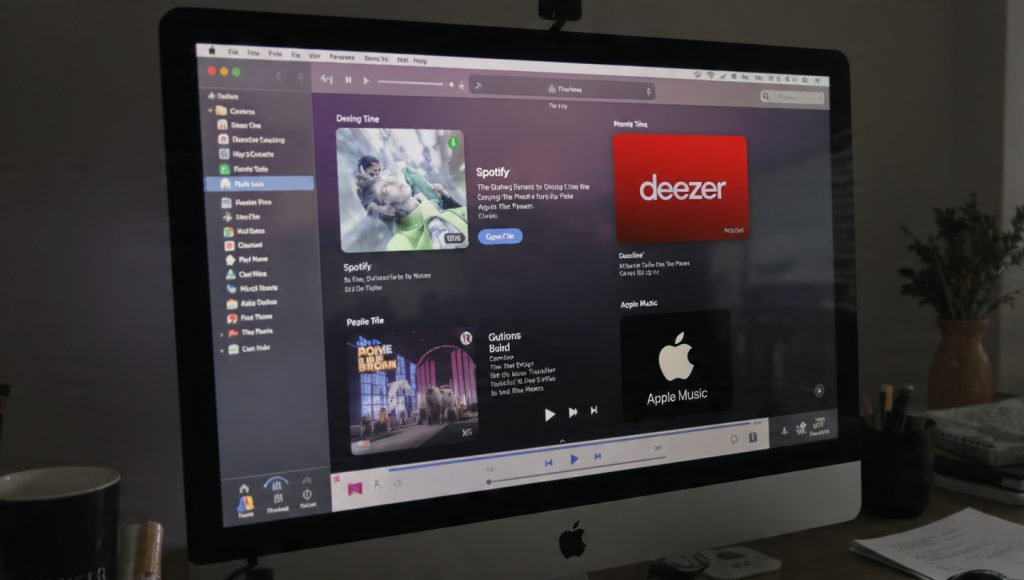
Spotify has been especially blunt about the shift. The platform has rolled out new advertising tools including upgraded sponsored playlists, carousel-style formats, audience testing, and more automated campaign management, while describing itself less as a pure audio service and more as an interactive multiformat environment. That wording matters. It reflects a company that no longer sees listening as its only job. Spotify is now selling access to fan behavior across music, video podcasts, playlists, discovery habits, and creator interaction. In other words, it is packaging culture itself as a performance channel.
The same strategy is visible on the product side. Spotify has also invested in recommendation transparency and premium listening experiences, giving users more control over how the platform interprets their taste while elevating audio quality as a premium lifestyle marker. One side of the strategy makes personalization feel more transparent. The other turns listening into something more curated, more intentional, and more aspirational.
That combination is telling. Streaming once flattened music into an endless feed. Now platforms are trying to reintroduce texture: better sound, more visible recommendation logic, more exclusive fan access, more social and commercial surfaces around the music. The goal is not simply to keep people listening longer. It is to make listening feel like participation, because participation is easier to monetize than passive consumption.
AI transparency is moving from talking point to infrastructure
If one subject now hangs over every streaming conversation, it is trust. Not abstract trust in technology, but practical trust in what a song is, who made it, and whether the surrounding royalty system is being gamed. Deezer has gone furthest in treating that as an infrastructure problem. The company has made AI detection a central part of its positioning, presenting itself not only as a platform but as a system capable of identifying suspicious uploads, fraudulent patterns, and the growing flood of synthetic content entering streaming catalogs.
That is not just a moderation story. It is a business story. Deezer’s recent repositioning around business services, advertising infrastructure, and AI detection suggests a platform trying to become more than a consumer app. In a market where scale has long favored the largest players, Deezer appears to be betting on strategic relevance. Rather than winning the streaming war on sheer size, it is trying to become essential through specialized infrastructure, licensing relationships, and trust-based technology.
Apple Music has taken a softer route, but it is moving across the same battlefield. Its growing emphasis on AI-related transparency signals a platform aware that metadata and disclosure will increasingly shape user confidence. The challenge is obvious. Disclosure only works if the supply chain participates honestly. Without that, transparency risks becoming more symbolic than structural. Still, the move matters because it shows that AI labeling is no longer a fringe debate. It is entering the product layer.
This is where the streaming wars of 2026 begin to feel less like a fight over catalog size and more like a fight over credibility. One platform is building detection tools and extending them outward. Another is building disclosure frameworks and hoping norms will harden into standards. Both are responding to the same pressure: if listeners, artists, and rights holders lose confidence in what is entering the system, the value of the system itself starts to wobble. In the age of generative abundance, authenticity is no longer just an artistic concern. It is a product feature.
The subscription is no longer the whole story
Streaming remains a massive business, but the economics are changing shape. The subscription model still matters, yet it no longer explains the full strategy of the major players. Once subscriber growth matures, platforms need new layers of revenue. That is why the current phase of streaming feels so much more commercially ambitious. The song is only the entry point. What matters now is everything that can be sold or activated around it.
Spotify’s emphasis on ticketing, fan engagement, premium experiences, and new advertising formats fits this broader direction. The platform is no longer simply paying royalties and counting streams. It is trying to turn listening into downstream action, whether that means attending a show, interacting with an artist, consuming video, or remaining active inside its ecosystem for longer periods. The business case is clear: the most valuable user is no longer just a listener. It is a fan whose behavior can extend across multiple monetizable surfaces.
That is why fandom has become such a central word in platform language. It sounds warmer than monetization, but the logic is the same. Platforms want to identify the listener who will not only stream a track, but buy a ticket, watch the visual, save the playlist, share the clip, and stay inside the recommendation loop a little longer. The value of a fan is no longer measured only in streams. It is measured in how many revenue layers can be built around those streams without breaking the illusion of intimacy.
Video is no longer adjacent to streaming audio. It is part of it.
No company has pushed that idea more clearly than YouTube. Its music strategy continues to position video as a core tool of artist development, not an optional add-on. In a saturated market, a song no longer arrives alone. It travels with visual identity, narrative context, clips, performance footage, shorts, interviews, and algorithm-friendly storytelling. The track is part of a wider cultural object designed to move across screens and formats.
That shift matters even for platforms still rooted in audio, because it changes the competitive standard for music releases. The expectation is no longer just that a song should sound good. It must also live well in images, snippets, performance moments, and fan-facing narratives. A release needs a world around it. In that sense, YouTube is not simply competing in music. It is helping redefine what music distribution looks like in an era where attention follows story as much as sound.
As connected screens, smart TVs, and conversational interfaces become more central, the distinction between streaming audio, creator content, podcasts, and digital entertainment grows thinner. The future of streaming is not neatly separated by format. It is blended by design.
Amazon’s retreat says as much as everyone else’s expansion
Not every signal arrives with a triumphant product launch. Sometimes the important story is what gets folded away. Amazon’s move to wind down Wondery+ and reduce the standalone role of the Wondery app says a great deal about the current mood of the industry. In 2026, audio businesses are being judged not only on audience but on efficiency, integration, and structural clarity. Products that once looked strategic can quickly become redundant when a larger ecosystem wants fewer silos and a cleaner user journey.
Seen in that light, Amazon’s decision fits the broader direction of the market. Consolidate where possible. Merge services where useful. Reduce friction between formats. Build fewer isolated apps and more stacked ecosystems. The winners in streaming audio may not be the companies with the most elegant standalone music product, but the ones most capable of connecting music, spoken word, subscriptions, advertising, and commerce inside a single account relationship.
What this means for artists, labels, and the next phase of streaming
For artists and rights holders, the implications are immediate. AI disclosure will become harder to avoid. Metadata will matter more. Recommendation systems will become both more transparent and more interventionist. Fan development will matter at least as much as raw reach. And the strongest release strategies will increasingly be built for ecosystems, not just for digital shelves. A single track will need a larger narrative surface around it if it is going to travel.
For listeners, the trade-off is more complicated. The experience is becoming richer, smarter, and in some cases more useful. It is also becoming more commercial, more layered, and more actively designed to guide attention toward certain forms of behavior. The app that once felt like a jukebox now wants to be a tastemaker, a storefront, a ticketing channel, a metadata referee, and a cultural concierge. Efficient, yes. Neutral, not remotely.
The most honest way to describe streaming audio in 2026 is this: it is no longer really about pure listening. The song still sits at the center, but the business has moved outward in every direction. Around the track now sits a battle over transparency, loyalty, premium experience, ad inventory, recommendation control, and cultural context. The platforms that thrive in the next phase will not be the ones that merely deliver sound fastest. They will be the ones that can persuade artists, advertisers, and audiences that their version of music culture is the most trustworthy, the most immersive, and the hardest to leave.