
Not every useful EQ needs to arrive dressed like a spaceship. Blue Cat’s Triple EQ takes a more elegant route. It is a free VST built around a three-band semi-parametric design, but the real appeal is not just that it costs nothing. It is that the plugin feels fast, visual, and surprisingly flexible for something that could easily have settled for “good enough” and gone home early. Instead, it offers a workflow that makes shaping tone feel immediate, musical, and refreshingly uncluttered.
Available from the official Blue Cat Audio product page, Blue Cat’s Triple EQ is presented as a free shapeable filter and equalizer, with support for major formats including VST, VST3, AU, and AAX. It runs on both macOS and Windows, which already makes it an easy recommendation for producers who want a reliable free mixing tool without playing compatibility roulette before lunch.
What Blue Cat’s Triple EQ Actually Is
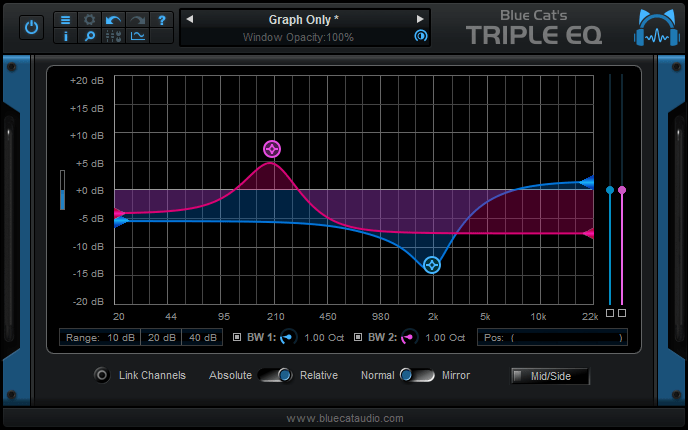
At heart, this is a three-band semi-parametric EQ built around a low shelf, a high shelf, and a boost/cut peak filter. That sounds modest on paper, but the plugin becomes much more interesting once you see how those bands are linked. Rather than treating each section like a separate island, Blue Cat lets you move the overall shape in a more unified way. Change the center frequency or bandwidth and the whole curve responds, which makes the plugin behave more like a shapeable filter than a conventional “three knobs and good luck” equalizer. :contentReference[oaicite:2]{index=2}
That design gives Triple EQ a different personality from many free EQ plugins. It is not trying to be a surgical, ultra-dense mastering workstation with enough nodes to frighten a small orchestra. It is trying to be quick, flexible, and visually intuitive. In actual production work, that is often the better bargain.
Why It Feels So Fast in a Real Session
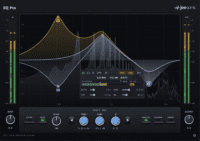
One of the smartest parts of Blue Cat’s Triple EQ is the graph-based approach. The plugin shows the computed frequency response in real time, and the controls sit directly on top of that graph. In other words, you are not adjusting tone blindly and then waiting for your ears to send a formal report. You can see the curve as you shape it, which makes broad tonal moves feel fast and deliberate.
This matters more than it sounds. During a session, speed is not just convenience. Speed keeps decisions musical. If a vocal needs less mud, a synth needs more bite, or a bus needs a broader tonal contour, Triple EQ helps you get there without turning a simple move into a minor administrative task. It is the kind of plugin that encourages action instead of menu-diving, and that is always welcome in a DAW.
Sound-Shaping Strengths That Make It Worth Keeping
Blue Cat gives each band a very generous gain range of plus or minus 40 dB, alongside a bandwidth range from 0.01 to 5 octaves. That opens the door to much more than polite corrective EQ. Triple EQ can handle broad sweetening, exaggerated tone shaping, narrow filtering, and more stylized sound design moves when needed. It is equally capable of subtle cleanup and much more obvious tonal sculpting.
For producers, that means practical versatility. On vocals, it can quickly remove weight from the low end or add air on top. On synths, it can create more dramatic tonal motion than a stock EQ might invite. On guitars, drums, keys, or even buses, it works well when you want broad tonal character without reaching for a more complex tool. This is especially useful in fast-moving writing sessions, where “good and immediate” beats “theoretically perfect but strangely exhausting.”
More Than a Basic Free EQ
The plugin also includes a dual-channel version with independent left/right and mid/side equalization options, plus multiple linking modes between channels. That gives it far more depth than many producers might expect from a free three-band EQ. Used creatively, it can even move toward frequency-dependent panning and more spatial tone shaping, which makes it attractive not only for mixing engineers but also for sound designers and producers who enjoy a little mischief in their utility plugins.
Blue Cat also supports real-time MIDI and automation control with zipper-free parameter changes and no latency, alongside automatic gain compensation. Those are the kinds of details that separate a merely free plugin from a genuinely usable one. Triple EQ is not just inexpensive. It is well thought out.
Who This Free VST Is For
Blue Cat’s Triple EQ makes sense for a wide range of users. Beginners will appreciate how understandable it feels from the first few seconds. Producers and beatmakers will like how quickly it shapes a sound. Mixing engineers may keep it around for broad tone moves, stereo work, or utility tasks that do not require a full-blown surgical EQ. It is especially appealing for people who value speed and visual clarity over endless feature creep.
It is also a useful reminder that a plugin does not need twelve bands and a dramatic personality crisis to earn a place in regular use. Sometimes three intelligently linked bands and a clean interface are more than enough.
A Free EQ That Has Stayed Current
Another quiet strength here is longevity. Blue Cat continues to maintain the plugin, with the product history showing a version 4.5 update in September 2024 that improved high-DPI support on Windows and Retina display support on macOS. That may not be glamorous, but it is exactly the kind of maintenance that keeps a free plugin from aging into a tiny blurry relic hiding in your plugin menu.
For download access, the easiest route is the official product page, where Blue Cat provides download options for macOS and Windows directly on the page. There is also a broader software downloads section if you prefer browsing the company’s catalog.
Watch Blue Cat’s Triple EQ in Action
A relevant demo video does exist, and it is worth a look before installing the plugin if you want a quick sense of how the interface and tone-shaping workflow behave in practice. :
Why Blue Cat’s Triple EQ Is Worth Trying
For a free plugin, Blue Cat’s Triple EQ feels remarkably complete. It offers a strong visual workflow, broad shaping power, dual-channel flexibility, and the kind of no-nonsense usability that makes a tool easy to keep in rotation. It is not trying to replace every EQ in your studio. It is doing something more useful: giving producers a fast, musical, dependable way to shape tone without overcomplicating the job. That alone makes it worth downloading—and frankly, worth keeping.