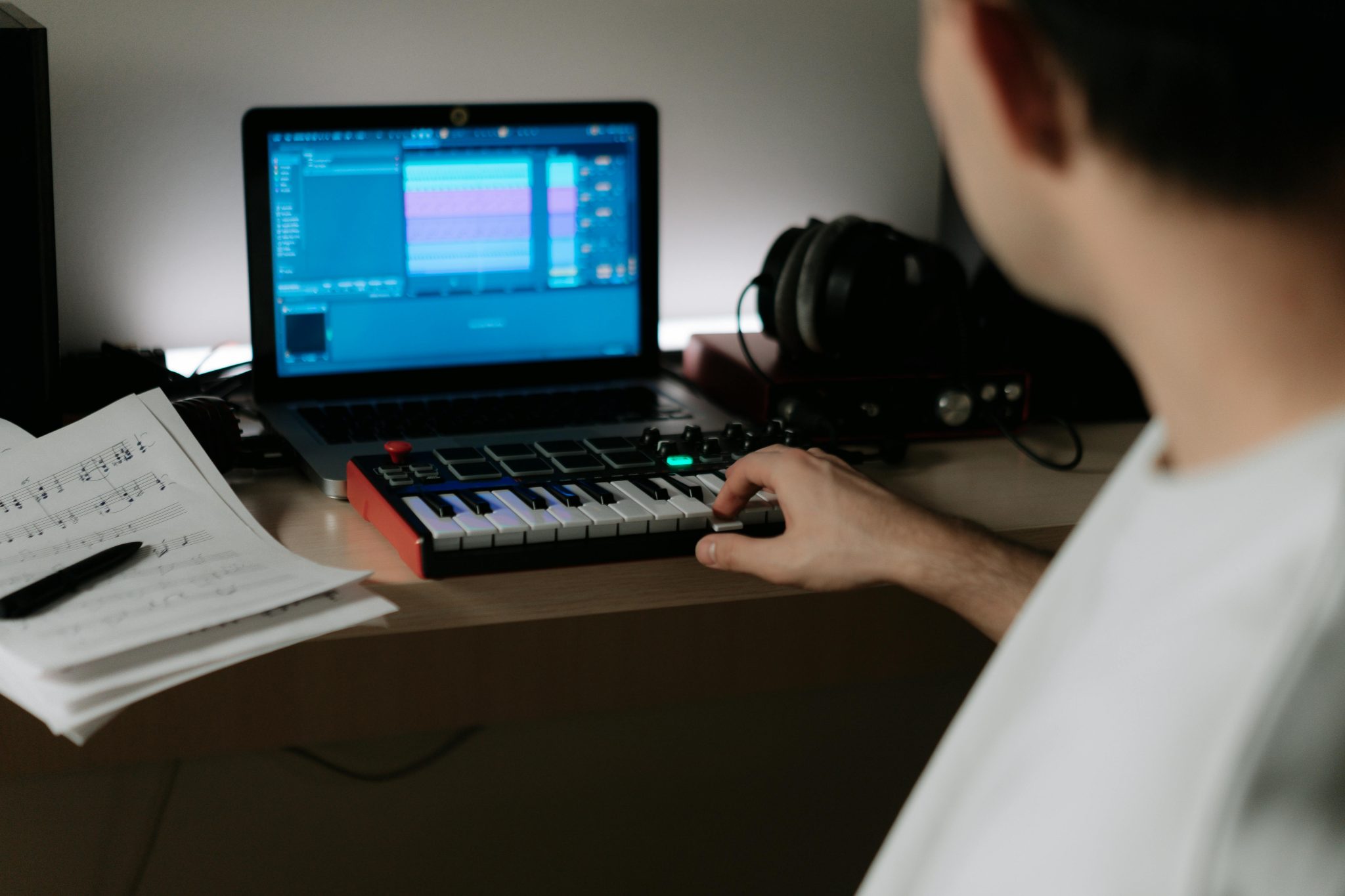

The essential gear and smart setup every beginner music producer should know
- The Computer: The Heart of Your Studio
- The Audio Interface: Connecting Sound to Your Computer
- Headphones: Your First Monitoring Tool
- Studio Monitors: Hearing Your Mix Clearly
- MIDI Controllers: Turning Ideas Into Music
- Plugins and Virtual Instruments
- Simple Acoustic Treatment That Makes a Big Difference
- Building a Creative Space
The idea of building a music studio often conjures images of massive mixing consoles, expensive acoustic panels, and rooms filled with vintage gear. Yet modern music production has changed dramatically. Today, many chart-topping tracks are created in small bedrooms or home offices with surprisingly simple setups.
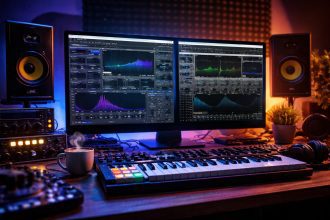
A beginner home studio does not require tens of thousands of dollars in equipment. What it requires is a smart selection of essential tools: a reliable computer, an audio interface, monitoring headphones or speakers, a MIDI controller, and a few basic acoustic adjustments. With these elements in place, producers can create professional-quality music from home.
Understanding what gear actually matters — and what can wait — is the key to building an effective home studio without overspending.

The Computer: The Heart of Your Studio
Every modern home studio begins with a computer capable of running a Digital Audio Workstation (DAW). This is the environment where recording, composing, arranging, and mixing take place.
Popular DAWs used by beginners and professionals include:
Ableton Live
https://www.ableton.com
FL Studio
https://www.image-line.com/fl-studio/
Logic Pro
https://www.apple.com/logic-pro/
Studio One
https://www.presonus.com/products/studio-one
These platforms provide the tools necessary for recording instruments, programming beats, designing synth sounds, and mixing full productions.
A modern laptop or desktop with at least 16 GB of RAM and an SSD drive ensures smooth performance when working with multiple tracks and plugins. While the software environment is the creative center of a studio, the next piece of equipment determines how sound enters and exits that digital space.
The Audio Interface: Connecting Sound to Your Computer
An audio interface acts as the bridge between instruments, microphones, headphones, and the computer. It converts analog signals into digital audio and ensures low latency during recording and playback.
Without an interface, producers must rely on the basic sound card of their computer, which typically lacks the audio quality and connectivity required for music production.
Several affordable interfaces are widely recommended for beginners.
The Focusrite Scarlett 2i2 remains one of the most popular entry-level interfaces thanks to its clean sound and reliability.
https://focusrite.com/products/scarlett-2i2
Another excellent option is the PreSonus AudioBox USB 96, a compact interface that integrates well with Studio One.
https://www.presonus.com/products/audiobox-usb-96
For producers who want slightly more advanced monitoring features, the Audient iD4 offers high-quality preamps and professional-grade converters.
https://audient.com/products/audio-interfaces/id4
With an audio interface in place, producers gain clean recordings, accurate playback, and proper connections for microphones, guitars, and studio monitors.
Headphones: Your First Monitoring Tool
When starting out, high-quality studio headphones are often the most practical monitoring solution. They allow producers to work in small rooms or apartments without disturbing neighbors, while also providing a clear and detailed listening environment.
Unlike consumer headphones designed to enhance bass or treble, studio headphones aim for a more neutral sound response.
One of the most widely used models in professional studios is the Sony MDR-7506, known for its clarity and reliability.
https://pro.sony/en_GB/products/headphones/mdr-7506
Another popular option among producers is the Audio-Technica ATH-M50x, praised for its balanced sound and comfort.
https://www.audio-technica.com/en-us/ath-m50x
Headphones are particularly useful during recording sessions and for checking fine details in a mix. However, relying exclusively on headphones can sometimes make it harder to judge stereo space and low frequencies accurately.
This is where studio monitors come into play.
Studio Monitors: Hearing Your Mix Clearly
Studio monitors are speakers designed specifically for music production. Unlike consumer speakers that color the sound, monitors aim for accuracy so producers hear their mix as it truly is.
This honest sound reproduction helps avoid mixes that sound good in the studio but fall apart on other systems.
Among beginner-friendly monitors, the Yamaha HS5 has earned a reputation for precision and transparency.
https://usa.yamaha.com/products/proaudio/speakers/hs_series/index.html
Another highly respected option is the KRK Rokit 5, known for its punchy low-end response and modern design.
https://krkmusic.com/collections/rokit-g4
When setting up monitors, placement matters as much as the speakers themselves. Ideally, they should form an equilateral triangle with the listening position, ensuring balanced stereo imaging.
MIDI Controllers: Turning Ideas Into Music
While it is possible to compose music using only a mouse and keyboard, a MIDI controller dramatically improves workflow and creativity.
MIDI controllers allow producers to play melodies, chords, basslines, and drum patterns in real time. They also enable hands-on control of synth parameters and software instruments.
One of the most popular beginner controllers is the AKAI MPK Mini, a compact keyboard featuring pads, knobs, and built-in arpeggiators.
https://www.akaipro.com/mpk-mini-mk3
Another excellent option is the Novation Launchkey, which integrates deeply with Ableton Live and many other DAWs.
https://novationmusic.com/en/keys/launchkey
With a MIDI controller, musical ideas flow more naturally and production becomes more intuitive.
Plugins and Virtual Instruments
Software instruments and effects are essential components of modern home studios. Many powerful tools are available for free.
The wavetable synthesizer Vital is one of the most impressive free synths available today, capable of creating bass sounds, pads, leads, and experimental textures.
Another excellent resource is Spitfire LABS, a collection of free cinematic instruments including pianos, strings, and atmospheric sounds.
https://labs.spitfireaudio.com/
For producers seeking a professional industry-standard synthesizer, Serum by Xfer Records remains one of the most widely used plugins in electronic music.
https://xferrecords.com/products/serum
These plugins allow producers to design unique sounds without investing heavily in hardware synthesizers.
Simple Acoustic Treatment That Makes a Big Difference
Even the best speakers cannot perform properly in a poorly treated room. Sound reflections from walls, desks, and ceilings can distort what producers hear.
Professional studios invest heavily in acoustic treatment, but beginners can make significant improvements with simple solutions.
Placing acoustic foam panels on reflective walls reduces unwanted echoes.
Bass traps placed in room corners help control low-frequency buildup.
Thick curtains, bookshelves, rugs, and furniture also absorb reflections and improve the listening environment.
The goal is not perfect acoustics — it is simply reducing problematic reflections so mixes translate more accurately.
Building a Creative Space
A home studio is more than a collection of equipment. It is a personal creative environment where ideas take shape.
Good lighting, comfortable seating, and an organized desk can make a surprising difference in productivity. Producers often work for long hours, and a comfortable space helps maintain focus and inspiration.
What matters most is not the price of the gear but the consistency of the workflow. Many legendary producers started with minimal setups and gradually expanded their studios over time.
The best home studio is the one that encourages you to create music every day.