

The Visual Layer of a Song: Why Clips, Canvas, and Vertical Micro-Content Matter More Than Ever
There was a time when a song could arrive almost naked and still command the room. A strong melody, a memorable hook, a voice with gravity, and the track could do most of the work on its own. That time has not vanished entirely, but in 2026 it no longer describes the full reality of how music travels. Songs still matter first. They always will. But the way they are discovered, remembered, shared, and emotionally processed now depends on something larger than audio alone. Every release carries a visual layer, whether the artist builds it deliberately or not.
This is one of the most important shifts in modern music promotion. A song is no longer just heard. It is seen in fragments, loops, motion, color, captions, performance clips, visual cues, interface moments, and short vertical scenes that often shape first impression before the full track even begins. The audience meets the music through image as much as through sound. And that image does not need to be a glossy music video or a giant-budget campaign piece. Often it is smaller than that. Faster. More repeated. More integrated into everyday digital behavior.
That is why clips, Canvas-style looping visuals, and vertical micro-content matter so much now. They do not simply decorate the release. They help define how it lives in the feed, how it feels in memory, and how quickly it becomes recognizable to the listener. The strongest artists in 2026 are not just making songs. They are shaping the visual pulse that travels with those songs wherever they go.
And the artists who ignore that layer are not necessarily making worse music. They are simply leaving too much emotional territory unclaimed.
Music is now experienced as an audiovisual identity
One of the biggest mistakes artists still make is treating visuals as secondary packaging. The cover art gets made, the song gets uploaded, maybe a video clip appears if time and energy allow, and the rest is left to chance. That approach underestimates how audiences now process music. For many listeners, the song does not enter their life first as a full uninterrupted listening experience. It enters through a moving image, a loop, a short performance fragment, a visual mood, or a piece of content attached to the track’s most immediate emotional signal.
That changes the role of visuals completely. They are not merely promotional wrappers around the audio. They are part of the way the song is perceived. A visual can make a track feel intimate, cinematic, urgent, distant, luxurious, playful, dark, vulnerable, futuristic, or raw before the listener has even formed a full opinion about the production itself.
In other words, the visual layer is no longer separate from the song’s identity. It is one of the main ways that identity becomes legible in public.
Why static promotion no longer carries enough emotional force
Static assets still matter. Cover art still matters. A strong photo still matters. A clean visual identity still matters. But a single still image often struggles to do enough on its own in an environment dominated by movement. Feeds reward motion. Attention follows gesture, change, rhythm, and energy. A static post can work if the framing is strong enough, but more and more often it needs support from something alive.
This is exactly where clips, loops, and short vertical content become essential. They create motion around the release without requiring the scale of a full music video. They give the audience something to feel, not just something to look at. A track that appears through a subtle loop, a micro-performance, a short visual motif, or a repeated moving element gains far more emotional texture than one represented only by a square cover and a sentence asking people to listen.
Static promotion tends to inform. Visual motion tends to immerse. And immersion is what makes the song feel present rather than merely available.
The visual layer is what helps a song become memorable
Memory in music promotion is built through association. People remember a sound because it arrived with a mood, a face, a color, a movement, a moment, a phrase, a gesture, a scene. Very few songs are remembered at first through pure audio abstraction, especially in a crowded release environment where dozens of tracks compete for the same limited attention.
This is why visual repetition matters so much. Not repetition in the boring sense of posting the same asset until everyone develops mild resistance to the campaign, but repetition of visual language. The same atmosphere. The same tone. The same world. The same movement logic around the song. Over time, this creates recognition. The listener sees a fragment and already knows what emotional territory it belongs to.
That kind of recognition is powerful because it reduces friction. The audience no longer has to meet the release from zero every time. The visual layer carries memory forward, and memory is what makes repeat attention far more likely.

Why clips now do more than promote
Clips used to be treated like bait. A quick lure. A snippet designed to push the audience toward the “real” experience somewhere else. That mindset is increasingly outdated. In 2026, clips are often part of the real experience. They are not simply marketing fragments. They are emotional access points.
A strong clip can do several jobs at once. It can introduce the artist’s face. It can give the song a visual tone. It can create a mood before the full stream. It can help a lyric land more deeply. It can reveal performance energy. It can transform a short section of music into a memorable scene. Most importantly, it can make the release feel like it belongs to a living world rather than existing as a file waiting to be clicked.
This is why the best artists do not treat clips like leftovers cut from a larger campaign. They treat them like primary storytelling tools. Even a short clip can do an astonishing amount of work when it is built around a clear emotional purpose.
Canvas-style looping visuals create atmosphere at the point of listening
One of the most underrated aspects of modern music discovery is what happens after the listener presses play. This moment matters more than artists sometimes realize. The song has already won the first small battle: curiosity. But now the experience needs reinforcement. That is where short looping visuals become unusually powerful.
A good loop does not scream for attention. It deepens the feeling already present in the music. It can extend the atmosphere of the track, sharpen the emotional tone, or create a quiet but lasting visual association that makes the listening experience more immersive. A strong loop can make a song feel more cinematic, more intimate, more alive, or simply more complete.
The key is that these visuals work at the point of listening, not just at the point of promotion. They help the track live better once the audience is already inside it. That gives them a different kind of value. They are not merely there to attract. They are there to intensify.
Vertical micro-content is now one of the strongest discovery formats in music
There is no serious way to talk about music promotion in 2026 without acknowledging the power of short vertical content. This is where a huge portion of discovery now happens. Songs are encountered not as tracks in a traditional sense, but as moments inside visual sequences: a face singing one line, a drop paired with a movement, a beat attached to a visual mood, a lyric framed by a caption, a performance clipped into an emotional scene that the audience understands instantly.
What makes vertical micro-content so important is not just its reach. It is its efficiency as a meaning-delivery system. In a matter of seconds, the audience can understand not only the sound of the song, but the emotional intention around it. That is an extraordinary amount of communication packed into a very small unit.
For artists, this creates a huge opportunity. One song can generate multiple visual entry points. A dramatic line can become one vertical piece. A performance moment can become another. A behind-the-scenes story can become another. A movement-based visual can create yet another layer. The same track starts to circulate through several doors at once, each reinforcing the same world in a slightly different way.
The visual layer helps bridge the gap between discovery and streaming
One of the hardest problems in modern music promotion is not discovery itself, but conversion. People hear something. They like it. Then they keep scrolling. Interest appears and evaporates before it becomes listening behavior. The visual layer helps close that gap because it gives the song stronger emotional residue.
A listener may not stream a track the first moment they encounter it in a feed. But if the visual attached to it was distinct enough, the song becomes easier to remember later. It gains a hook beyond the hook. A movement, a face, a color, a gesture, a repeated visual cue that makes the music feel familiar when it appears again.
This is why visual consistency matters so much. If the visual language around the release is coherent, every new exposure strengthens the previous one. The audience begins to recognize the song before fully hearing it. That recognition is often what turns curiosity into the next step.
Artists should stop thinking in terms of one big video only
For a long time, visual thinking in music was dominated by a binary logic. Either you had a full music video, or you had very little. That model made sense in an earlier era, but now it is far too narrow. The visual life of a song is no longer dependent on one flagship video asset. In many cases, it is shaped more by a constellation of smaller visual forms.
This is good news for independent artists. It means you do not need one expensive centerpiece to create strong visual identity. You need a coherent system. A looping visual that reinforces mood. A few strong short clips. A vertical performance fragment. A visual storytelling angle. A recognizable atmosphere that can move across platforms without falling apart.
In fact, some artists weaken their promotion by placing too much pressure on one large video while neglecting the smaller assets that actually sustain memory over time. The visual layer works best when it is distributed, adaptable, and repeated intelligently.
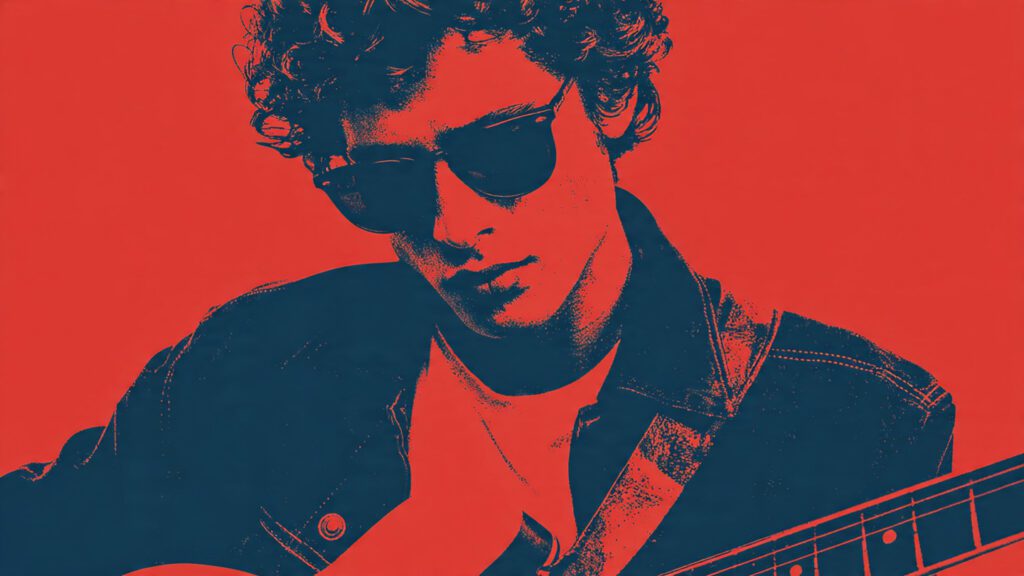
The strongest visuals do not explain the song. They intensify it.
This is where many artists go wrong. They try to use visuals to explain too much, illustrate every lyric literally, or overdetermine the meaning of the track until the audience has no room left to feel anything independently. That approach often makes the release smaller, not larger.
The best visual layers do something subtler. They intensify the emotional field of the song. They sharpen what is already there. They give it texture, mood, pace, and atmosphere. They do not flatten the music into a slideshow of obvious references. They create a world in which the track can breathe more deeply.
A great loop, a great short clip, or a great micro-visual does not need to tell the whole story. It only needs to make the story more difficult to forget.
Visual coherence now affects artist credibility
There is another important reason this matters: credibility. Artists are now judged not only by the quality of their songs, but by how well the surrounding world holds together. If the music feels emotionally rich but the visuals feel random, generic, or disconnected, the project loses force. The release may still function, but it feels less convincing.
Coherence does not mean sameness. It means that the visual elements speak the same language as the music. The clip, the loop, the short content, the artwork, the performance framing, and the artist’s public presence should all feel like they belong to the same creative intelligence. When they do, the audience senses more than polish. It senses intention.
That matters because intention builds trust. And trust makes people more likely to return.
The visual layer is also a catalog tool, not just a release tool
Another mistake artists make is limiting visual strategy to the newest song only. In reality, the visual layer can help reactivate the entire catalog. An older track can be given new life through a loop, a fresh clip, a live micro-performance, or a visual reinterpretation that helps the song re-enter circulation with stronger emotional framing.
This is especially powerful in 2026 because audiences discover music non-linearly. A listener may encounter an old song through a new visual and experience it as entirely fresh. The release date means very little to them. What matters is whether the song arrives with enough feeling, enough shape, and enough recognizability to stick.
That is one of the most exciting parts of the current visual landscape. It allows artists not only to launch new songs more effectively, but to give overlooked tracks the visual language they may never have had the first time.
Why the visual layer matters more than ever
Because attention is faster. Because feeds are more crowded. Because songs are discovered in fragments. Because audiences remember movement more easily than static information. Because identity now has to survive across multiple platforms and multiple contexts. Because music without a visible world around it often struggles to hold shape in public.
Most of all, the visual layer matters because it helps a song feel real in culture. Not just uploaded, not just available, not just technically present, but alive. A track with strong visual support has more ways to enter the audience’s mind. More ways to repeat itself without becoming repetitive. More ways to build recognition, mood, and return behavior.
The artists who understand this are not replacing music with visuals. They are strengthening music with visual intelligence. They are letting image, motion, and atmosphere carry part of the emotional labor that modern discovery now requires.
The future belongs to songs with a visible pulse
In 2026, the question is no longer whether visuals matter. They do. The real question is whether the artist is shaping them deliberately or leaving that part of the release to chance. Because chance now costs too much. Too much memory lost. Too much identity blurred. Too much emotional value left on the table.
The strongest releases are no longer only heard. They are felt through a system of visual reinforcement that makes the song easier to remember, easier to revisit, and harder to confuse with everything else flying through the feed. Clips, loops, and vertical micro-content are not optional ornaments in that system. They are part of the song’s public life.
And in a music culture where public life increasingly determines what survives, that may be the difference that matters most: not just writing a strong song, but giving it a visible pulse the audience can recognize before, during, and after the stream.