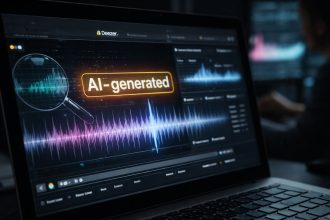

The IFPI has begun introducing new eligibility rules for recordings created with generative artificial intelligence across its international network of official music charts.
The announcement moves the music industry’s AI chart debate beyond a simple proposal. The principles are now being applied to charts directly managed by the IFPI across Latin America, the Middle East, Africa and Southeast Asia.
The organization is also working with its national groups to extend the framework to more than 20 additional chart programs worldwide.
Three Main Conditions for AI Music
Under the new guidelines, a recording developed with generative AI can qualify for an official chart only when it satisfies three central conditions:
- the AI service used must be properly authorized and lawful;
- the recording must remain substantially human-made;
- the release must not raise concerns about streaming or chart manipulation.
The complete framework also requires compliance with copyright, personality rights and the conditions of the AI platform used. Artists and rights holders are expected to disclose the use of generative AI through appropriate metadata and listener-facing labels.
AI-Assisted Music Can Remain Eligible
The rules do not exclude every recording created with artificial intelligence.
An artist may still use AI for selected production tasks while remaining eligible for the charts, provided that human creativity remains central to the finished recording.
This could include limited uses of AI for sound design, arrangement, vocal processing, restoration or other production elements.
Fully synthetic recordings may face a different outcome. A song generated primarily by an unlicensed model, or one with little meaningful human creative involvement, could be declared ineligible even when it accumulates a large number of streams.
Streams May No Longer Guarantee Chart Recognition
The introduction of these principles changes the relationship between streaming popularity and official chart success.
Until now, chart rankings have largely depended on verified streams, downloads and physical sales. The new framework adds questions about how a recording was created and which technology was used.
A synthetic song could therefore become popular on streaming platforms without being recognized as an official chart hit.
The rules are also designed to prevent automated production from being combined with artificial streaming. Generative services can produce thousands of tracks at low cost, while bot networks can be used to inflate their apparent popularity.
The IFPI wants official charts to represent genuine audience demand rather than industrially generated content supported by manipulated streams.
Important Questions Remain
The framework still leaves several practical issues unresolved.
The IFPI has not established a precise percentage defining when a song is “substantially human-made.” Modern productions can combine human lyrics, generated vocals, AI instrumentation and conventional mixing in many different ways.
Chart organizations will also need to determine which AI platforms are considered properly authorized. A service may have licensing agreements with some rights holders while facing legal disputes with others.
Reliable metadata, transparent review procedures and an appeal system will therefore be necessary to prevent legitimate artists from being incorrectly excluded.
Official Charts Draw a Line Around Human Creativity
The new rules show that the music industry is not attempting to ban every use of artificial intelligence.
Instead, it is defining which uses can receive official commercial recognition.
AI may assist the creative process, but the recording must remain human-led, legally produced and supported by genuine listening activity.
For fully synthetic projects, large streaming numbers may no longer be enough. A track can attract millions of plays and still be denied a place in the official charts.
The debate is no longer only about whether AI music should be labelled. It is now about whether the machine should be allowed onto the podium.