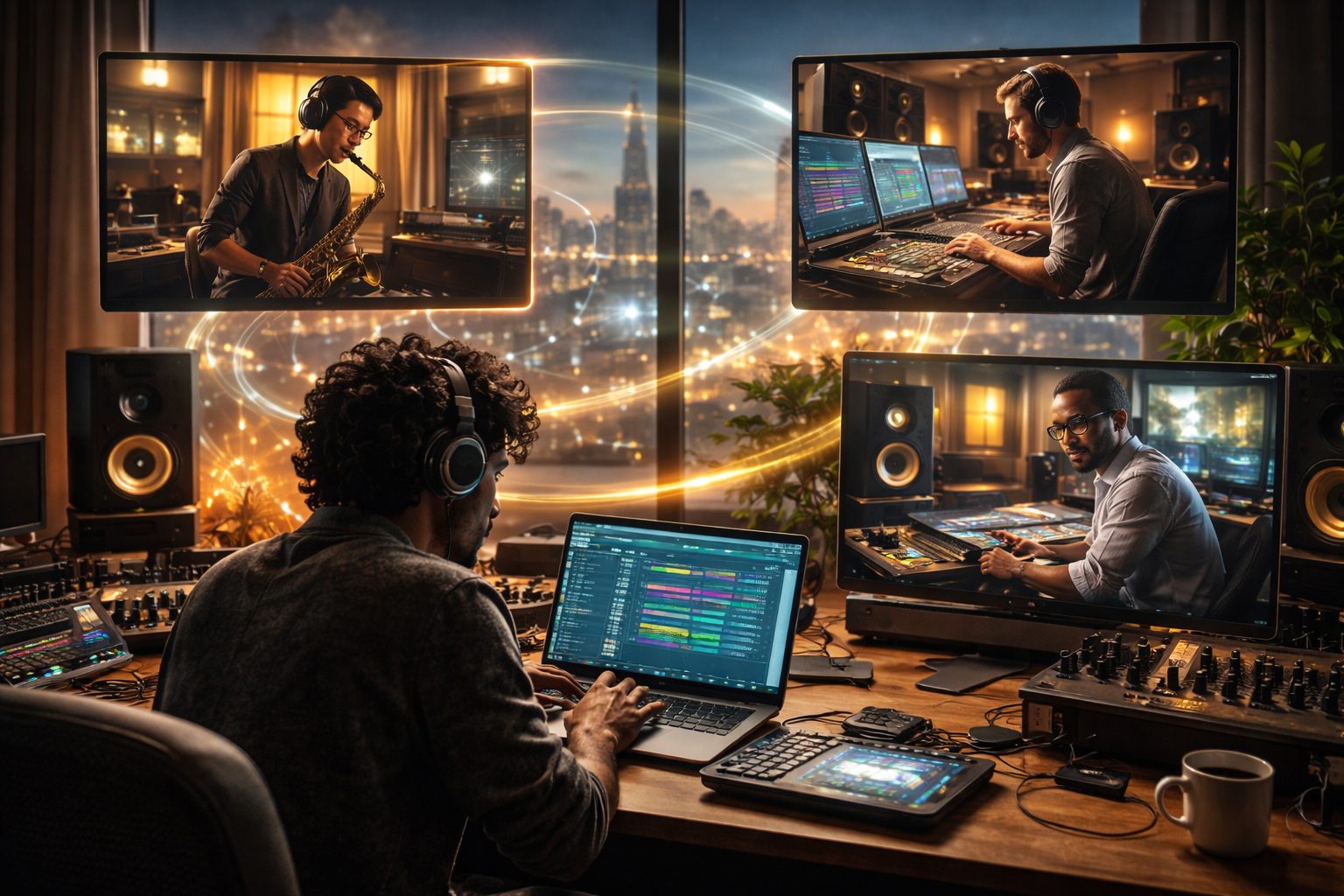

The modern music studio no longer has walls. In 2026, it has coordinates — spread across continents, time zones, and cultures. What once required physical presence, expensive travel, and rigid scheduling has evolved into a fluid, borderless creative process. Global collaboration in music production is no longer a futuristic concept; it is the new normal.
Distance hasn’t disappeared. It has simply lost its power.
Today’s producers can open a session in the morning, receive recorded vocals from Asia by noon, refine a mix with a European engineer in the afternoon, and approve a master from Africa before midnight. This isn’t a technological miracle — it’s the result of an industry that finally adapted its tools to the speed of creativity.

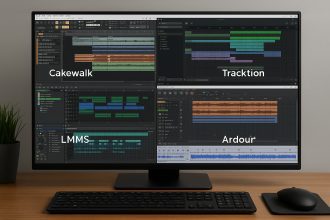
At the heart of this transformation are real-time collaboration platforms built specifically for musicians. Cloud-based DAWs, synchronized project sessions, shared stems, and low-latency audio streaming have turned remote work into genuine co-creation. Artists no longer “send files and wait.” They react, adjust, and build together, often simultaneously. The creative spark no longer fades between emails.
This immediacy has fundamentally changed how music is written. Songs are no longer assembled in isolated phases. They evolve organically, shaped by instant feedback and collective intuition. A producer adjusts the groove, a guitarist responds with a new riff minutes later, and a vocalist captures the emotion while it’s still raw. The result is music that feels alive — not engineered in fragments, but grown in motion.
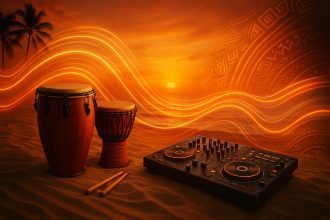
Global collaboration has also unlocked an unprecedented cultural exchange. Producers are no longer limited to local scenes or familiar influences. Working with international artists brings new rhythms, harmonic traditions, and production philosophies directly into the session. Afro-inspired percussion blends seamlessly with European electronic precision. Jazz sensibilities merge with modern pop structures. Genre boundaries blur not because trends demand it, but because collaboration makes it inevitable.
For independent artists, this shift has been quietly revolutionary. Access to high-level production is no longer dictated by geography or budget. A talented musician with a strong vision can now collaborate with world-class engineers, session players, and producers without ever leaving home. The industry’s gatekeepers have less control, and creativity flows more freely across borders.
Producers, in particular, have seen their role evolve. Beyond technical expertise, they are now facilitators of global creativity. Managing remote sessions, aligning international teams, and maintaining artistic cohesion across distances have become essential skills. The modern producer is part sound designer, part project manager, part cultural translator.
Streaming platforms have only accelerated this global mindset. Music is released worldwide in seconds, consumed by listeners across every market simultaneously. Production has naturally followed the same logic. If the audience is global, the creative process must be too. Collaboration mirrors consumption, and speed has become a creative asset.
This new reality has also reshaped work habits. Studios no longer close. Someone, somewhere, is always recording, editing, or refining. Projects move forward continuously, passing from one time zone to the next like a relay race of ideas. Creativity no longer sleeps — it rotates.

Instant global collaboration has not removed human connection from music. On the contrary, it has amplified it. Artists are more connected than ever, sharing not only sounds, but perspectives, cultures, and emotions. Technology didn’t replace collaboration — it finally allowed it to happen at scale.
The future of music production isn’t about where you are. It’s about who you connect with, how fast ideas can move, and how openly creativity can flow. Distance is still there. It just doesn’t get the final say anymore.