
A Direct-Upload Guide for Independent Artists
For independent artists, “releasing music without a distributor” usually means one thing: you want to upload your tracks yourself, publish them quickly, and share a streaming link—without going through an aggregator or label delivery pipeline.
In 2026, that’s absolutely possible. But you need to be clear about the trade-off:
- Direct-upload platforms let you publish immediately and build an audience on their ecosystem.
- Major DSP catalog platforms (the ones most listeners think of first) typically require an intermediary for delivery, rights management, metadata handling, and reporting.
So the smart move isn’t to fight the system—it’s to use direct-upload platforms strategically: as release hubs, discovery engines, and fan-building tools that can work beautifully with or without later distribution.
Below is a practical, SEO-ready guide to the best platforms you can use in 2026 without a distributor, plus a simple release strategy that actually converts streams into fans.
What “Without a Distributor” Really Means in 2026
A distributor (or “aggregator”) typically delivers your release to multiple stores/streaming services, standardizes metadata, manages identifiers, and collects reports.
Without one, you have two main options:
- Upload directly to platforms that host your audio
Your music is streamable on that platform as soon as you publish. - Upload video-based or long-form content
Your “release” becomes a visualizer, a lyric video, a live performance, or a DJ mix—still streamable, still discoverable, and sometimes more shareable than a standard audio-only drop.
The key is choosing platforms that match your goal: community, sales, mixes, mobile discovery, long-tail search traffic, or licensing.

The Best Direct-Upload Streaming Platforms in 2026
1) SoundCloud — The fastest route from “export” to “public link”
SoundCloud remains one of the most practical places to publish music instantly: upload, tag, schedule (depending on plan), share private previews, and build a follower base that actually cares about new uploads.
Why it works in 2026
- Fast publishing workflow
- Strong community culture (comments, reposts, niche scenes)
- Great for demos, singles, WIPs, DJ edits, and alternate versions
Official links
- Upload: https://soundcloud.com/upload
- Creator platform: https://artists.soundcloud.com/
- Help center: https://help.soundcloud.com/
Best for: electronic music, underground scenes, quick releases, feedback loops
Watch out for: claims/flags if you upload uncleared samples or copyrighted content
2) Bandcamp — Streaming, yes… but especially a fan economy machine
Bandcamp is “streaming with intent”: listeners can play your tracks, but the platform’s real power is direct-to-fan ownership—selling music, merch, and building a supporter base without begging an algorithm for mercy.
Why it works in 2026
- Excellent for EPs/albums
- Supports higher perceived value (fans buy, not just stream)
- Ideal for building a sustainable audience
Official links
- Artist start page: https://bandcamp.com/artists
- Guide: https://bandcamp.com/guide
- Main site: https://bandcamp.com/
Best for: album culture, niche genres, collectors, merch, serious supporters
Watch out for: Bandcamp doesn’t “push” you by default—you drive traffic
3) YouTube — The world’s biggest streaming platform (disguised as video)
If you want reach, YouTube is unavoidable. Even with audio-only releases, a simple visualizer can outperform a pure-audio upload elsewhere because YouTube is search-driven and share-friendly.
Why it works in 2026
- Powerful discovery via search, recommendations, and Shorts
- Excellent for long-tail traffic (“best afro house 2026”, “lofi beat for studying”, etc.)
- Your cover art + title + description become your SEO surface
Official links
- YouTube for Artists resources: https://artists.youtube/
- Channel optimization: https://artists.youtube/resources/channel-optimization/
Best for: discoverability, evergreen traffic, branding, visuals
Watch out for: content ID/copyright systems—only upload what you own or have cleared
4) Audiomack — Mobile-first discovery with direct uploads
Audiomack is built for fast consumption, playlists, and discovery—particularly strong in genres where mobile listening dominates.
Why it works in 2026
- Creator-friendly upload flow
- App-first user base
- Useful for momentum and early audience testing
Official links
- Creators hub: https://creators.audiomack.com/creators
- Help center: https://audiomack.zendesk.com/hc/en-us
Best for: rap, urban, global scenes, fast release cycles
Watch out for: genre fit varies—test a release before committing a full catalog
5) Mixcloud — The legal home for DJ mixes, radio shows, long-form sets
If your world includes DJ mixes, radio-style shows, or long sets, Mixcloud is a serious contender. It’s designed around long-form listening and creator channels.
Why it works in 2026
- Strong for mixes and shows
- More “radio” culture than “single track” culture
- Good for consistent programming (weekly/monthly sets)
Official links
- Upload: https://www.mixcloud.com/upload/
- Help center: https://help.mixcloud.com/
Best for: DJs, curators, radio shows, continuous mixes
Watch out for: not a typical “single release” environment
6) hearthis.at — Direct uploads for DJs and independent releases
hearthis.at is a practical upload-and-share platform used by many DJs and independent artists. It’s often used for sets, promos, and niche community distribution.
Official link
- Upload: https://hearthis.at/upload/
Best for: DJ promos, sets, quick sharing
Watch out for: discovery is less algorithmic—promotion is on you
7) Jamendo — Streaming plus an ecosystem that can include licensing
Jamendo has long positioned itself around independent music discovery and licensing possibilities. If you think in terms of content usage (videos, businesses, background music), Jamendo can be relevant.
Official links
- Jamendo: https://www.jamendo.com/
- Jamendo Licensing: https://licensing.jamendo.com/
Best for: indie discovery + potential licensing pathways
Watch out for: licensing programs have specific terms—read them carefully
8) Audius — Alternative discovery and community-led momentum
Audius is an alternative streaming platform where artists can publish directly. It’s not “mainstream DSP scale,” but it can be useful for experimentation, early adopters, and community-led traction.
Official link
- Audius: https://audius.co/
Best for: experimental releases, early adopter audiences, community discovery
Watch out for: results can be inconsistent depending on genre and audience
9) TIDAL Upload — Direct upload with a different value proposition
TIDAL has introduced creator-facing upload options. Depending on your objectives, it can be worth mentioning as part of a broader visibility strategy—especially if you’re exploring platform programs.
Official link
- TIDAL Support (search “TIDAL Upload”): https://support.tidal.com/
Best for: platform experimentation and potential opportunities
Watch out for: always verify monetization/royalty rules on the platform before treating it as a primary revenue lane

Comparison Table: Choose the Right Platform Fast
| Platform | Direct Upload | Best For | Biggest Advantage | Main Trade-Off |
|---|---|---|---|---|
| SoundCloud | Yes | Singles, WIPs, community | Fast release + scene culture | Claims/flags if rights aren’t clean |
| Bandcamp | Yes | EPs/albums, merch | Direct-to-fan revenue | You drive traffic |
| YouTube | Yes (video) | Reach + search discovery | Massive audience + SEO surface | Needs visuals + consistent publishing |
| Audiomack | Yes | Mobile discovery | App-first momentum | Genre-dependent performance |
| Mixcloud | Yes | DJ mixes/shows | Long-form listening culture | Not “single-centric” |
| hearthis.at | Yes | DJ promos/sets | Simple upload & share | Lower organic discovery |
| Jamendo | Yes | Discovery + licensing angle | Multiple use cases | Terms vary by program |
| Audius | Yes | Alternative ecosystems | Community-driven | Smaller/uneven audiences |
| TIDAL Upload | Yes (where available) | Experimentation | Platform-facing tools | Check monetization details carefully |
A Practical 2026 Release Strategy Without a Distributor
If you want results—not just links—you need a release system. Here’s a clean setup that works for most independent artists.
Step 1: Pick a “Home Base” + a “Reach Platform”
Home base (where fans come back):
- SoundCloud or Bandcamp
Reach platform (where new listeners discover you):
- YouTube
This combination is powerful because it blends community + search discovery + ownership.
Step 2: Release assets like a pro (even if you’re “indie”)
Direct upload doesn’t mean “messy upload.” In 2026, metadata and packaging matter everywhere.
Minimum release kit
- One clean master file (WAV for archiving, high-quality upload)
- Cover art readable at thumbnail size
- A short description that tells a story (2–4 sentences)
- 5–10 tags that match real listener intent (genre, mood, context)
Step 3: Use a staged drop (the easiest way to look professional)
Instead of “upload and hope,” do:
- Day -7 to -3: private preview link (SoundCloud private, unlisted YouTube)
- Day -2: teaser (YouTube Shorts / Instagram / TikTok)
- Release day: public links go live + pinned post + email/newsletter
- Day +3: alternate version (instrumental, extended mix, live take)
- Day +7: behind-the-scenes or breakdown video
You’re not “posting more.” You’re reusing one release intelligently.
Step 4: Build a fan funnel (because playlists won’t do it for you)
If you’re not distributing to the biggest DSPs, you must convert attention into retention.
A simple funnel:
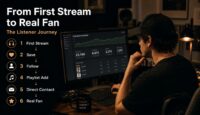
- YouTube (discovery) → SoundCloud (community + follows) → Bandcamp (support + sales + emails)
Even if only 1% convert, that 1% is the difference between “streams” and “career.”
Common Mistakes to Avoid (So You Don’t Vanish After the Upload)
Mistake 1: Posting everywhere with no consistency
Better: two platforms, consistently, than eight platforms you forget next week.
Mistake 2: Treating direct-upload platforms like “second-class releases”
If you want listeners to take you seriously, your release needs:
- strong cover art
- clean titles
- a real description
- a predictable cadence
Mistake 3: No link hub, no tracking, no plan
At minimum, create a simple link hub (website page or smart link) so your audience has one place to go.
FAQ: Quick Answers for 2026
Can I upload to Spotify or Apple Music without a distributor?
In most cases, independent artists still rely on delivery partners for major catalog DSP releases. If your goal is immediate streaming links without intermediaries, direct-upload platforms are the fastest route.
What’s the best “free” option for instant streaming?
SoundCloud and YouTube are typically the most practical starting point: fast publishing, shareable links, and huge listener behavior baked in.
What’s best if I want to earn directly from fans?
Bandcamp is hard to beat for direct sales and supporter culture.
What’s best if I’m a DJ and I upload mixes?
Mixcloud is purpose-built for that lane, and hearthis.at is also commonly used for sets and promo sharing.
Bottom Line: “No Distributor” Doesn’t Mean “No Strategy”
In 2026, direct-upload platforms are not a compromise—they’re a different route:
- SoundCloud for speed and scene-building
- YouTube for discoverability and evergreen search traffic
- Bandcamp for real fan support
- Mixcloud/hearthis.at for DJ culture and long-form content
- Audiomack/Jamendo/Audius for specific audiences and experiments