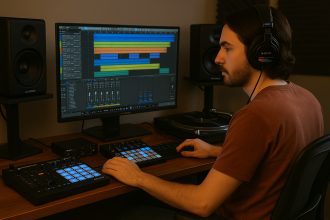

In modern music production, drums often define the energy and identity of a track. Whether it’s a house groove, a hip-hop beat, or an electronic drop, the rhythm section drives the movement and keeps listeners engaged. Yet one of the most common issues beginner and intermediate producers face is drums that sound weak, flat, or buried inside the mix.
Professional-sounding drums are rarely the result of a single plugin or preset. Instead, they come from a combination of sound selection, layering, transient control, and careful mixing techniques. When these elements work together, drums cut through the mix naturally and deliver the punch and impact that modern productions demand.
Understanding how to shape this impact is one of the most valuable skills a producer can develop.

Start with Strong Drum Samples
Before any mixing technique is applied, the most important factor is the quality of the drum samples themselves. If the original kick, snare, or clap lacks impact, no amount of processing will fully fix it.
Professional producers spend significant time selecting drum sounds that already have the character they need. A punchy kick with a defined transient and solid low-end foundation will immediately sound stronger than a dull or overly soft sample.
High-quality drum samples can be found in many professional libraries and platforms. For example, Splice offers an extensive catalog of professionally produced drum samples used across multiple genres.
Another excellent resource is Loopcloud, which provides searchable sample libraries and integration with many DAWs.
Starting with strong drum sounds drastically reduces the amount of processing required later in the mix.
Layering Drums for Depth and Impact
Layering is one of the most common techniques used by producers to create powerful drum sounds. Rather than relying on a single sample, multiple layers are combined to build a richer and more controlled sound.
A kick drum, for example, might be constructed from two or three separate layers. One layer provides the deep sub frequencies, another adds the punchy midrange, and a third contributes the click or attack that helps the kick cut through the mix.
Snare drums often benefit from layering as well. A crisp top snare combined with a slightly deeper clap can produce a more complex and impactful sound.
The key to successful layering is ensuring that each layer serves a specific role in the frequency spectrum. If multiple layers occupy the exact same frequencies, they can cancel each other out or create unwanted muddiness.
Careful EQ adjustments help maintain clarity between the different layers.
Controlling Transients for Maximum Punch
The transient is the very first moment of a sound — the sharp initial attack that defines how a drum hits. Transients are critical for creating punch and clarity.
If transients are too soft, drums may feel dull or distant. If they are too aggressive, they can dominate the mix in an unpleasant way.
One effective tool for shaping transients is a transient shaper, which allows producers to increase or decrease the attack and sustain portions of a sound independently.
A popular free option is Kilohearts Transient Shaper, which provides simple yet powerful transient control.
https://kilohearts.com/products/transient_shaper
For more advanced processing, SPL Transient Designer is widely used in professional studios to enhance drum attacks and tighten rhythmic elements.
https://spl.audio/en/spl-produkt/transient-designer/
By slightly increasing the attack portion of a kick or snare, producers can make drums feel more immediate and impactful without raising their overall volume.
Using Compression to Enhance Drum Power
Compression is another essential tool for strengthening drum sounds. Rather than simply making drums louder, compression shapes their dynamic behavior and enhances perceived punch.
One technique often used in drum processing is parallel compression. This method blends a heavily compressed version of the drums with the original signal. The compressed signal adds density and sustain, while the original retains the natural transient impact.
The result is a drum sound that feels both powerful and controlled.
A widely respected free compressor plugin is TDR Kotelnikov, known for its clean and transparent compression.
https://www.tokyodawn.net/tdr-kotelnikov/
For professional mixing environments, FabFilter Pro-C 2 offers multiple compression styles specifically designed for drums and rhythmic material.
https://www.fabfilter.com/products/pro-c-2-compressor-plug-in
Used carefully, compression can dramatically improve the weight and consistency of drum tracks.
Creating Space with EQ
Even the best drum sounds can struggle to stand out if the rest of the mix occupies the same frequency ranges. Equalization helps carve out space so drums remain clear and impactful.
Kick drums typically dominate the low-frequency spectrum, often between 40 and 120 Hz. Reducing competing frequencies from other instruments can allow the kick to remain prominent.
Similarly, snare drums often benefit from presence around the midrange and high-mid frequencies, where their attack becomes more audible.
Strategic EQ adjustments across the mix help ensure that drums are not fighting for attention within crowded frequency areas.
Stereo Placement and Width
Drums are often perceived as more powerful when their spatial placement feels balanced. While kick and snare usually remain centered in the mix, other percussion elements can be spread across the stereo field.
Hi-hats, shakers, and percussion can be panned slightly left or right to create width and movement. This technique opens space in the center of the mix, allowing core drum elements to remain clear.
Subtle stereo imaging can also enhance drum presence without overwhelming the track.
Bus Processing and Drum Glue
Professional productions often route all drum tracks into a drum bus. This allows producers to process the entire drum section as a unified group.
A small amount of compression applied to the drum bus can create a sense of cohesion often described as “glue.” This helps individual drum elements feel like part of the same rhythmic system rather than separate sounds.
Gentle saturation or harmonic processing can also add warmth and energy to the drum bus.
The Role of Arrangement
Punchy drums are not only about processing — arrangement plays an equally important role.
If too many elements play simultaneously, drums may struggle to remain prominent. Strategic breaks in the arrangement allow the rhythm section to breathe.
For example, temporarily removing bass or melodic elements during certain sections can highlight the drum groove and create greater impact when the full arrangement returns.
Final Thoughts
Drums that punch through the mix are rarely the result of a single technique. Instead, they emerge from a thoughtful combination of sound selection, layering, transient control, compression, and careful frequency balance.
When these elements are aligned, drums naturally command attention without overpowering the rest of the track.
Producers who focus on these fundamentals quickly discover that impactful drums are less about complex processing and more about understanding how rhythm, sound design, and mixing interact.
In the end, the most powerful drum mixes come from a simple principle: strong sounds, clear space, and deliberate energy.