
From Piracy Icon to Generative Streaming Pioneer
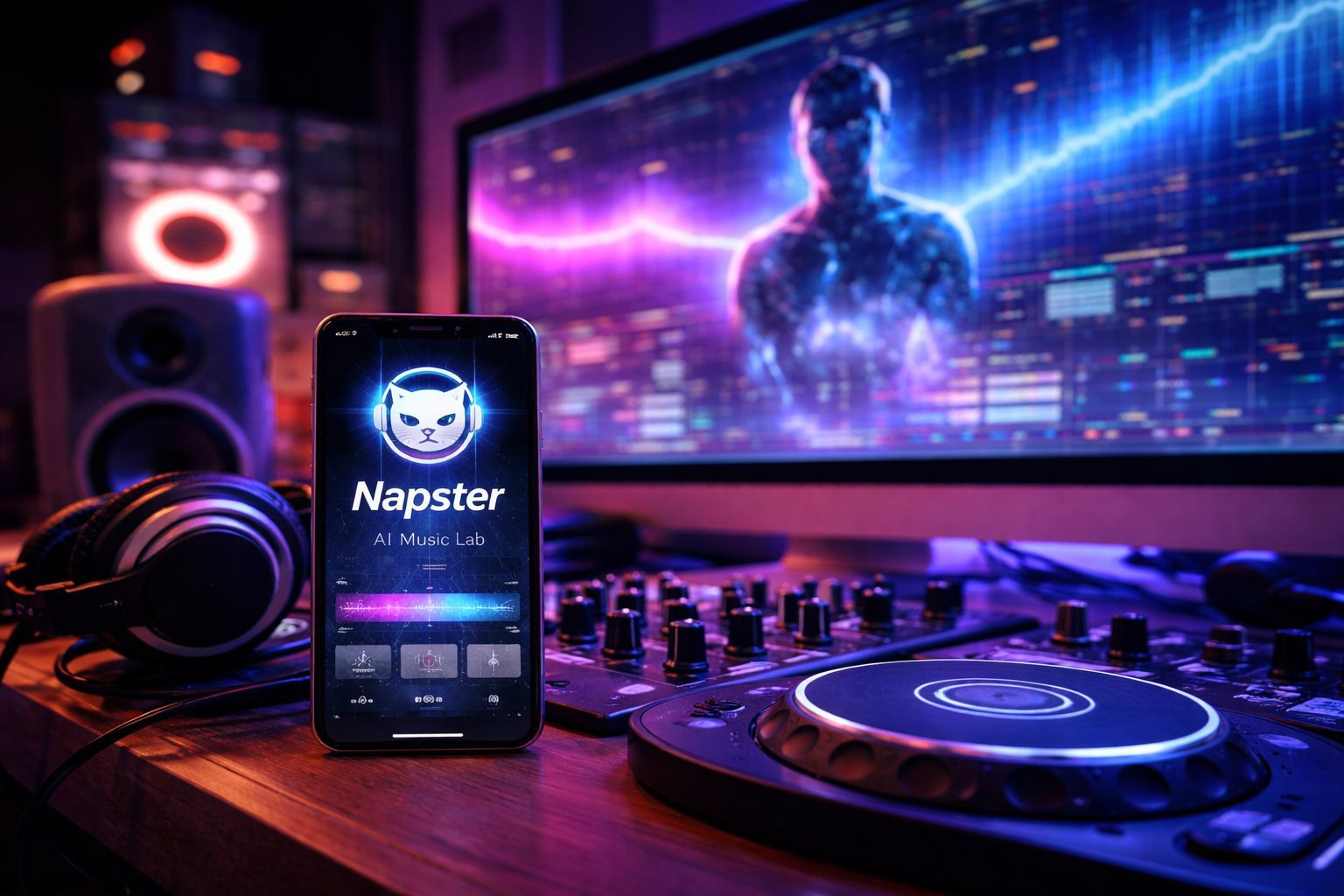
For a generation raised on dial-up modems and MP3 folders, the name Napster evokes equal parts nostalgia and disruption. Once the emblem of peer-to-peer file sharing that shook the foundations of the music industry, Napster has returned with a radically different ambition. Its latest incarnation positions the platform not as a streaming service in the traditional sense, but as an AI-driven music laboratory where listeners become co-creators and songs are no longer fixed objects, but evolving experiences.
This is not a retro revival. It is a reinvention that reflects a deeper shift in how music is produced, consumed, and monetized in the age of artificial intelligence.
From Peer-to-Peer Chaos to Algorithmic Creation
Napster’s original rise in 1999 marked the beginning of digital music’s first great disruption. By enabling users to share MP3 files freely, it challenged record labels, reshaped distribution, and paved the way for today’s streaming economy. After years of legal battles and ownership changes, the brand survived as a legitimate subscription service — but largely faded from mainstream relevance.

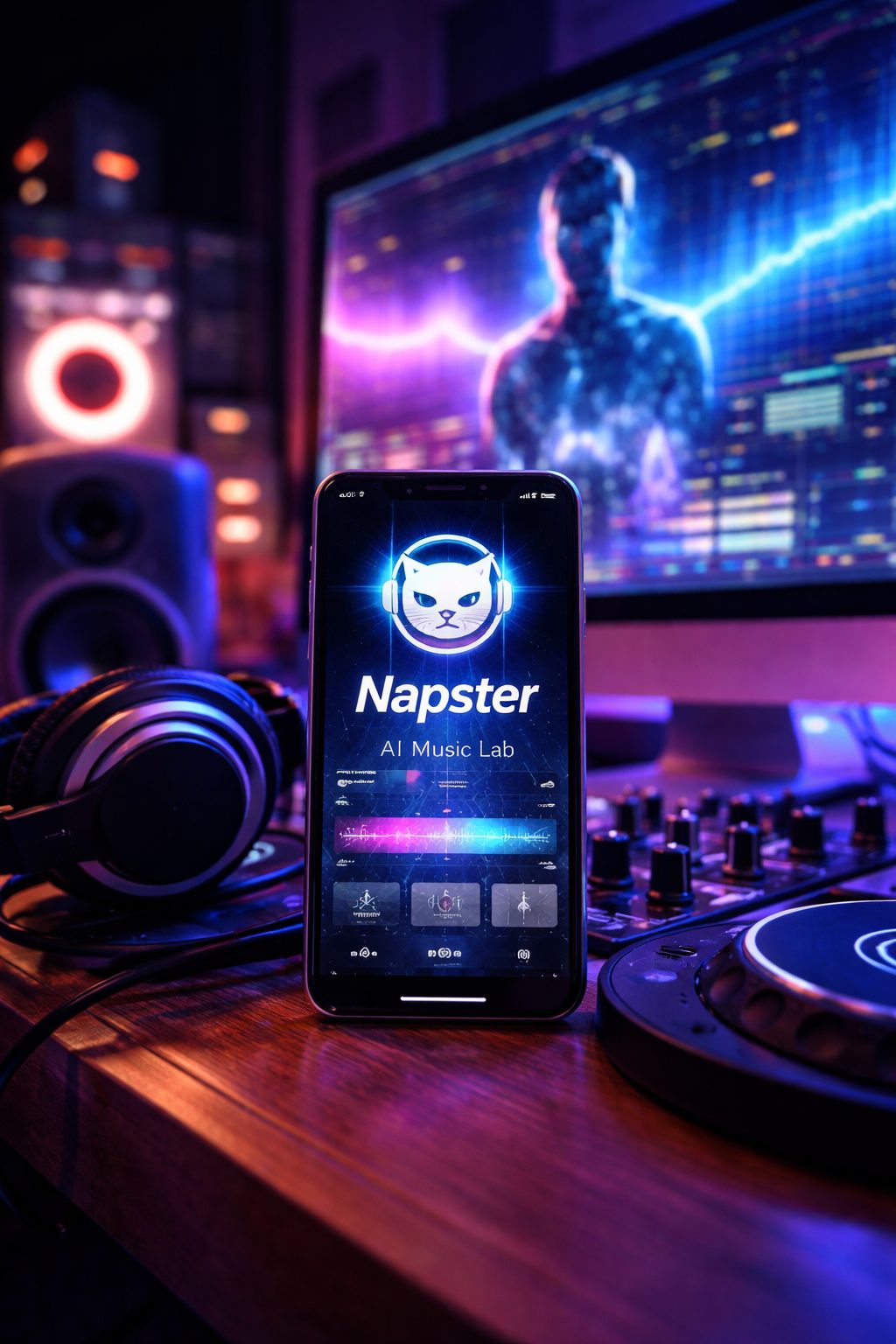
The new Napster aims to reclaim cultural significance by embracing the very force reshaping the industry today: generative AI. Instead of hosting static catalogs, the platform experiments with AI-generated artists, adaptive compositions, and personalized soundscapes that evolve based on user input.
According to early reports, the app allows listeners to influence tempo, mood, instrumentation, and even lyrical themes in real time, effectively turning passive listening into an interactive creative process. This shift positions Napster closer to a creative tool than a conventional streaming platform.
The Rise of AI Artists and Infinite Catalogs
At the heart of Napster’s relaunch is the concept of AI artists — virtual creators capable of producing original music at scale. Unlike traditional recommendation algorithms that surface existing tracks, generative systems synthesize entirely new compositions tailored to listener preferences.
This approach introduces the possibility of an infinite music catalog, where every user session can yield unique variations. For ambient, gaming, wellness, and productivity contexts, such adaptive audio could redefine the role of music as a functional, personalized environment rather than a fixed artistic statement.
Yet this abundance raises critical questions about authorship, originality, and cultural value. If a track is generated on demand, who owns it? If millions of variations exist, which version becomes the “canonical” work? These questions sit at the center of ongoing debates across the music and tech sectors.
Interactive Listening: The End of Passive Streaming?
Napster’s experimental model reflects a broader shift toward interactive media consumption. In gaming, users shape narratives; in social platforms, audiences co-create content. Music, long treated as a finished product, is now entering this participatory paradigm.
By enabling listeners to tweak sonic parameters or request stylistic blends, Napster transforms streaming into a collaborative act. A user might generate a lo-fi hip-hop track infused with Afro-house rhythms for a late-night work session, then reshape it into an orchestral ambient piece for relaxation — all within the same ecosystem.
This level of customization could redefine user expectations. If audiences grow accustomed to music that adapts instantly to their mood, traditional albums and fixed playlists may feel increasingly static.
Industry Implications: Opportunity Meets Uncertainty
Napster’s AI pivot arrives at a moment when streaming platforms are grappling with content saturation, discoverability challenges, and rising operational costs. Generative systems promise efficiency and personalization, but they also threaten existing revenue models built on royalties and licensing.
For independent artists, the emergence of AI creators presents both competition and opportunity. On one hand, algorithmic music could flood platforms with low-cost alternatives. On the other, artists who embrace AI as a collaborative tool may unlock new creative workflows and revenue streams.
Major rights organizations and policymakers are already scrutinizing AI music generation. Questions around copyright, training data, and performer rights remain unresolved, and Napster’s experiment may accelerate regulatory action worldwide.
A Future That May Divide Purists and Innovators
Napster’s transformation into an AI music lab underscores a larger cultural tension. For purists, music is an expression of human experience — flawed, emotional, and irreplaceable. For technologists, it is also data: patterns that can be analyzed, recombined, and generated at scale.
The platform’s success will likely depend on whether it can balance these perspectives. If AI becomes a tool that enhances human creativity rather than replacing it, Napster could help define a new hybrid era of music. If it leans too far into automation, it risks alienating the very communities that give music its meaning.
The Second Disruption
Napster once disrupted the music industry by making songs free and ubiquitous. Its rebirth suggests a second disruption: making music fluid, generative, and interactive. Whether this vision becomes the new standard or remains a niche experiment will depend on how listeners, artists, and regulators respond.
One thing is certain — the streaming era is no longer just about access. It is about participation. And Napster, the original disruptor, is once again betting that the future of music will be shaped not only by what we hear, but by what we help create.