
The playlist ecosystem looks simple from the outside. You submit a track, a curator clicks play, and — if luck is on your side — your song lands in a playlist with thousands of followers. Inside the system, though, nothing is random. The artists who benefit long-term are not the ones who “get placed,” but the ones who understand how placement fits into a wider promotional loop.
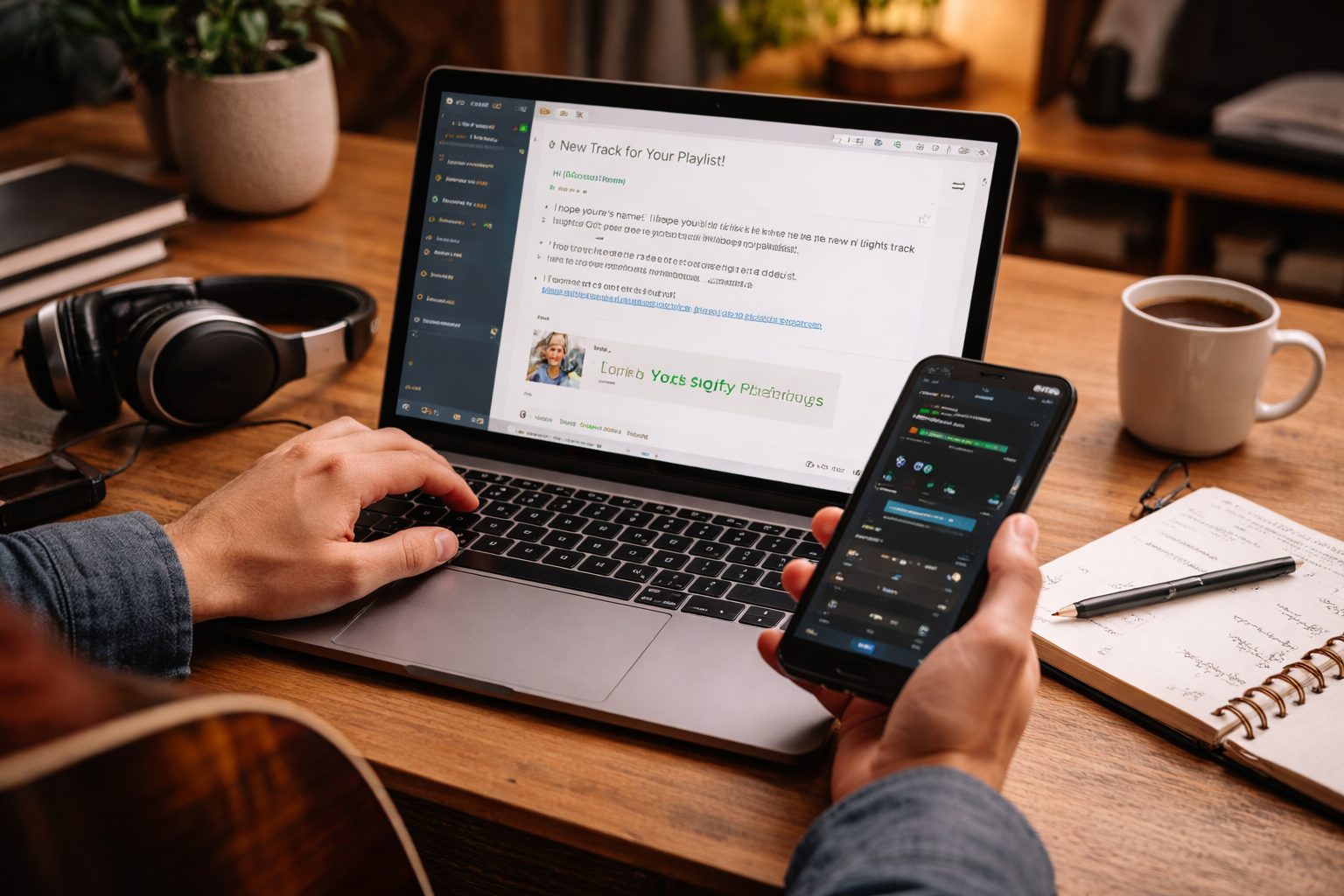
Pitching curators without sounding like a bot starts with one uncomfortable truth: most pitches fail because they talk too much about the artist and not enough about the playlist. Curators don’t wake up hoping to discover you — they wake up responsible for the identity, mood, and credibility of a playlist. A good pitch reads like it was written for that specific playlist, not copy-pasted into fifty inboxes. Referencing a recent update, a recurring vibe, or even the tempo range tells the curator you’ve actually listened. Keep it human, short, and contextual. One track, one reason it fits, one link. Anything more feels automated, even when it isn’t.
Getting placed is not the win. What happens after placement is where most artists disappear — and where the smart ones pull ahead. The first 7 to 14 days matter more than the playlist size itself. Engagement signals during that window help determine whether your track stays visible or quietly sinks. Saves, repeat listens, profile clicks, and low skip rates all reinforce the curator’s decision. Sharing the placement on socials isn’t just vanity; it creates external traffic that feeds those signals back into the platform. When an artist treats placement as a moment instead of a process, the opportunity evaporates.


This is where a curator relationship system becomes invaluable. You don’t need enterprise software or complex dashboards — just a clean, consistent CRM mindset. Track who placed you, when, on which playlist, and how the track performed. A short follow-up after two or three weeks, with real data and genuine thanks, does more than any cold pitch ever will. Curators remember artists who close the loop professionally. Even a simple message saying, “The track held a 35% save rate and strong retention — thanks for the support,” quietly positions you as someone who understands the game.
Over time, these interactions become proof. Playlist proof isn’t about flexing follower counts; it’s about credibility stacking. Screenshots of placements, consistent appearances across similar playlists, and performance metrics can be repurposed into press kits, social content, and future pitches. When a curator sees that others in their niche already trust your music, the barrier to entry drops instantly. Social proof doesn’t shout — it reassures.
The real shift happens when playlisting stops being a goal and becomes infrastructure. Each placement feeds data, relationships, and visibility into the next release. Instead of starting from zero every time, you’re building a network effect around your sound. In a landscape flooded with automated submissions and AI-generated noise, professionalism and follow-through stand out more than ever.
Playlist success isn’t about chasing curators. It’s about becoming the kind of artist curators want to hear from again — not because you asked, but because you delivered.