
Independent artists today are no longer just musicians — they are strategists navigating a fragmented ecosystem where success depends on pleasing two very different audiences. On one side stand real listeners: the fans who save, share, attend shows, and sustain careers. On the other side are platforms: algorithmic systems that reward specific behaviors, engagement signals, and release patterns.
The tension between these two audiences defines modern music promotion. Optimize too heavily for algorithms, and you risk building hollow numbers with no loyalty. Focus only on fans, and you may never reach the visibility needed to grow. Understanding this duality is no longer optional; it is the central challenge of music promotion in 2026.
The Rise of Platform-Centric Promotion
Streaming platforms have become the primary gatekeepers of discovery. Spotify’s editorial playlists, algorithmic surfaces like Release Radar and Discover Weekly, and YouTube Music’s recommendation engine shape what listeners hear long before they actively search for new music.
These systems reward measurable signals: saves, completion rates, repeat listens, shares, and early engagement. Spotify itself explains how these signals influence algorithmic recommendations in its official resources for artists (https://artists.spotify.com).
As a result, artists increasingly design releases to trigger platform visibility. Shorter intros to reduce skips, frequent singles to maintain algorithmic relevance, and strategic release timing are now common tactics. Promotion has shifted from “How do I reach people?” to “How do I generate the right signals?”
Yet the algorithm is not a fan. It does not buy tickets. It does not care about your story.

The Human Audience: Loyalty, Emotion, and Identity
Fans operate on entirely different principles. They connect with narrative, authenticity, and emotional resonance. A listener may discover a track through an algorithm, but they stay for the artist’s identity — the story behind the music, the personality, the sense of belonging.
Research from IFPI’s global music reports (https://www.ifpi.org) consistently shows that fans value connection and authenticity as key drivers of long-term engagement. They follow artists who make them feel part of something larger than a playlist.
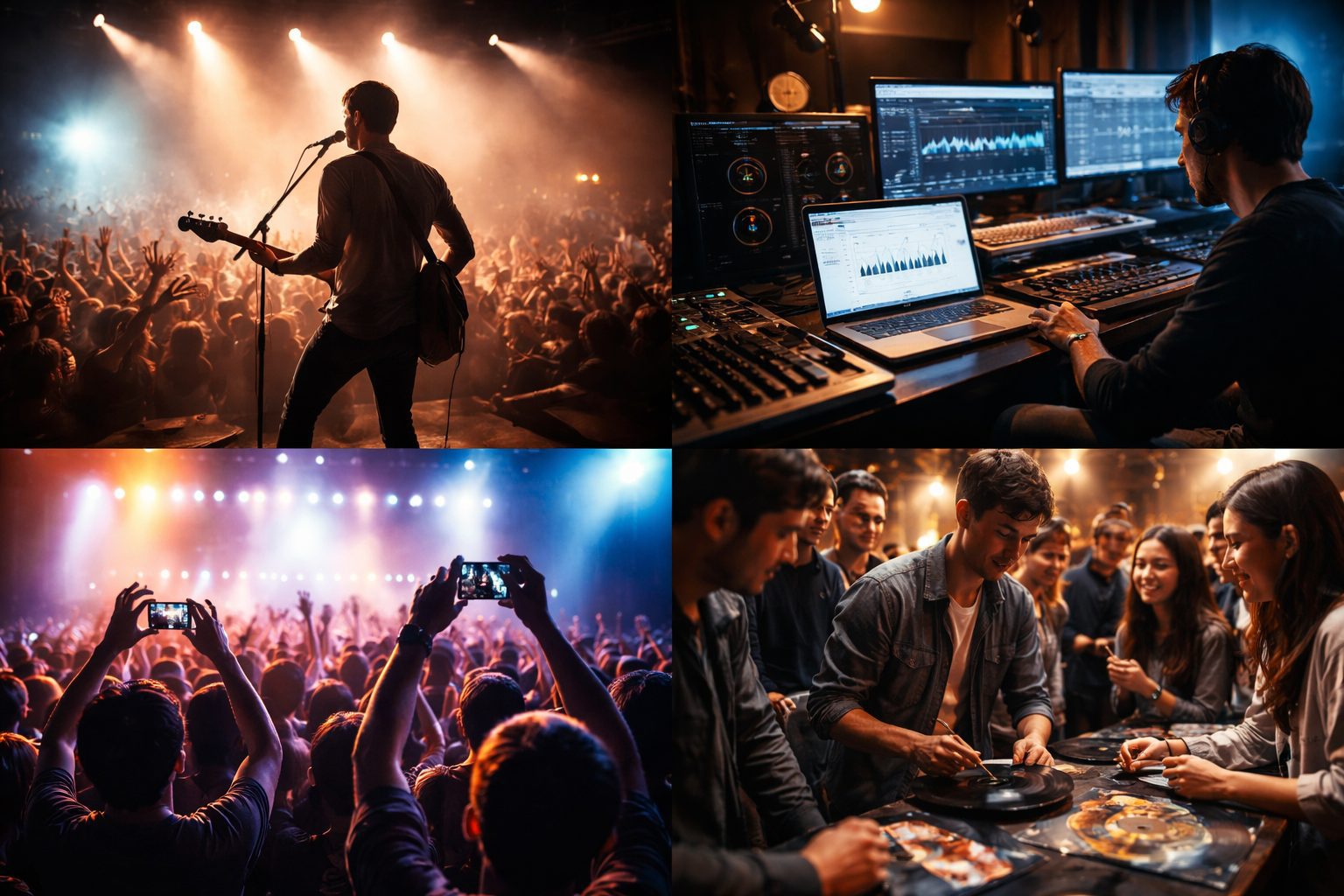
This is why artists with modest streaming numbers can sell out venues, while others with millions of streams struggle to convert listeners into supporters. Streams measure attention; fandom measures commitment.
When Optimization Becomes Self-Sabotage
The danger emerges when artists mistake platform growth for career growth. Metrics rise, but momentum stalls.
An artist chasing algorithmic performance may release music too frequently, diluting impact and overwhelming listeners. Another might tailor their sound to playlist trends, eroding the uniqueness that attracts loyal fans. The result is a paradox: more exposure, less identity.
This phenomenon is increasingly visible across streaming ecosystems. Viral moments produce spikes in plays, but without a narrative or community, those spikes fade quickly. Platforms reward consistency; fans reward meaning.
Designing Promotion for Both Audiences
The solution is not choosing one audience over the other. It is designing a promotional strategy that serves both.
Platforms need signals. Fans need stories.
A release strategy that balances these needs might include early engagement campaigns to trigger algorithms, followed by content that deepens fan connection — behind-the-scenes footage, personal narratives, live sessions, and direct interaction. The algorithm opens the door; the artist invites listeners inside.
This dual approach transforms promotion from a numbers game into a layered experience. The first listen comes from discovery surfaces. The second comes from curiosity. The third comes from emotional investment.
Metrics That Matter — and Metrics That Mislead
Not all metrics are equal. High stream counts without saves or repeat listens signal passive consumption. Strong save rates, playlist adds by users, and direct follows indicate deeper engagement.
Spotify for Artists emphasizes the importance of listener retention and saves as indicators of long-term growth (https://artists.spotify.com). These metrics bridge the gap between platform signals and fan behavior.
Artists who monitor meaningful metrics can identify whether they are attracting real listeners or simply passing through algorithmic currents.

Content Strategy: Speaking Two Languages at Once
Promotion now requires bilingual communication. One language speaks to machines; the other speaks to humans.
For platforms, clarity matters: consistent metadata, strong cover art, release frequency, and early engagement. For fans, nuance matters: storytelling, visual identity, vulnerability, and interaction.
Short-form videos may capture attention, but context builds loyalty. A 15-second hook may trigger discovery, but a live acoustic version can transform a casual listener into a supporter.
The most effective artists treat content as a narrative ecosystem rather than isolated promotional posts.
The Long Game: Building an Algorithm-Proof Career
Platforms evolve constantly. Algorithms change. Editorial priorities shift. What remains stable is the relationship between artist and audience.
Artists who invest in direct channels — newsletters, communities, live experiences, and fan-driven platforms — build resilience against platform volatility. Industry analyses from MIDiA Research (https://www.midiaresearch.com) highlight the growing importance of direct-to-fan ecosystems in sustaining independent careers.
The goal is not to escape platforms but to avoid dependence on them. Visibility may begin with algorithms, but longevity comes from community.
Reframing Success in the Streaming Era
Success in 2026 is no longer defined solely by numbers. It is defined by conversion: listeners to fans, fans to advocates, advocates to supporters.
The “Two Audiences” problem is not a conflict to resolve but a balance to master. Platforms provide reach. Fans provide meaning. One fuels growth; the other sustains it.
Artists who understand this distinction stop chasing vanity metrics and start building ecosystems. They design releases that trigger discovery while cultivating identities that inspire loyalty.
In the end, the algorithm may introduce your music to the world. Only fans will invite you to stay.