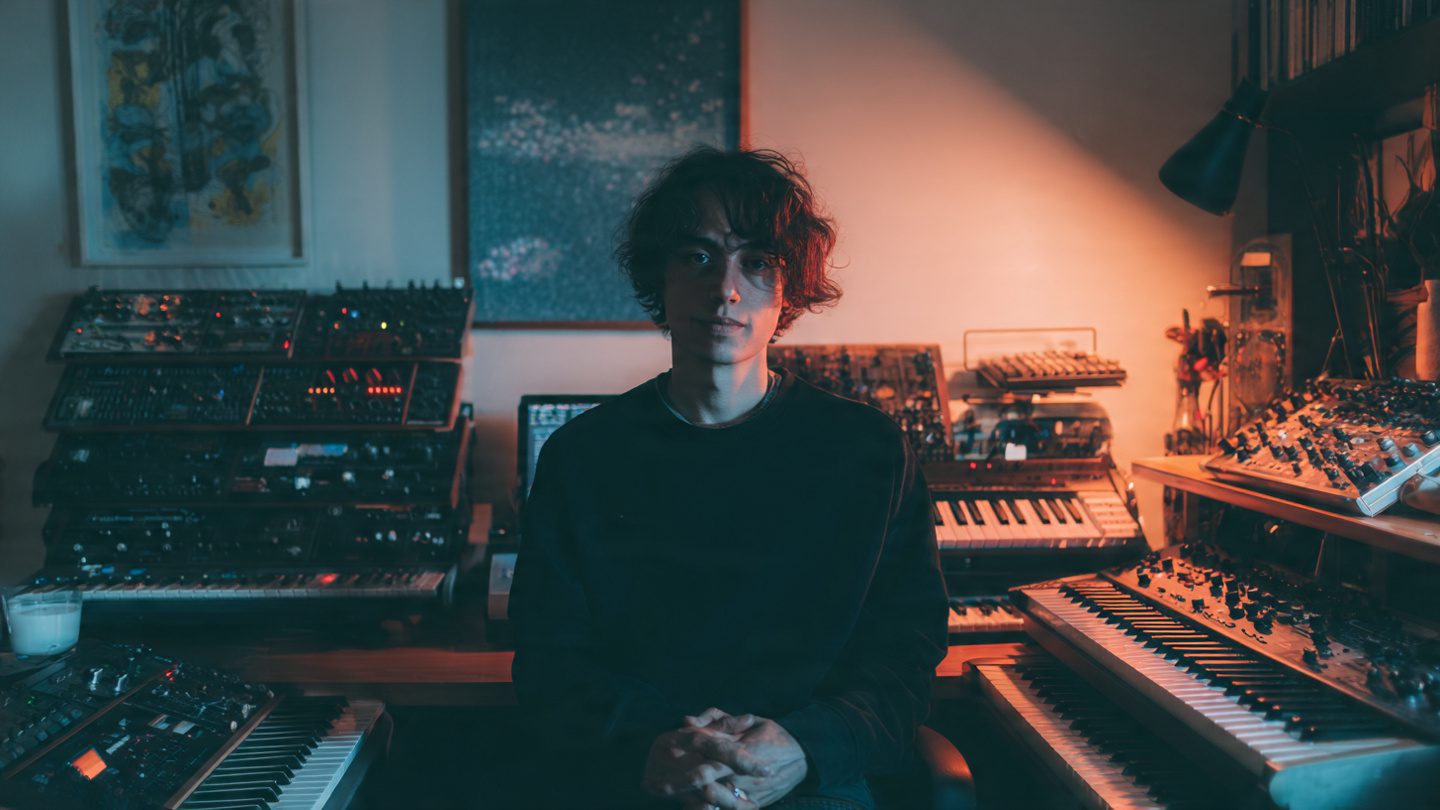

The problem for musicians in 2026 is no longer simple competition. Artists have always competed for attention. What has changed is the texture of that competition. Music now circulates in an environment where polish is cheap, volume is endless, and emotional signals can be simulated with unnerving speed. Songs appear faster, visuals look smoother, personas materialize more easily, and the distance between something that feels human and something that merely imitates human feeling has become harder for casual listeners to measure in a glance.
This has created a new fault line in music culture: the credibility gap. Not a gap in talent, necessarily. Not even always a gap in sound. A gap in trust. A widening distance between music that feels lived-in and music that feels manufactured for surface effect. Between artists who seem to stand behind their work and releases that drift through the feed with the eerie perfection of something assembled without consequence. In that atmosphere, the challenge for real artists is no longer only to be heard. It is to be believed.
That is the strange irony of the current moment. The more tools there are to create polished output, the more valuable credibility becomes. Listeners may still be drawn to a strong hook, a striking mood, or a visually clean release, but increasingly they also want reassurance that there is a real artistic center behind the work. A pulse. A point of view. A reason this music exists beyond its own efficient production. The artists who understand that shift are not simply defending themselves against a changing landscape. They are discovering one of the strongest advantages available to them.
Because in an era of synthetic music, being real is no longer just an identity. It is a strategy.
The new competition is not only musical. It is perceptual.
For decades, artists were taught that if the song was strong enough, the audience would eventually feel it. That belief still contains truth, but it now runs into a harsher reality. The listener’s first encounter with a track is rarely neutral. It arrives inside a blur of content where speed, image, volume, and immediate impression shape judgment before deeper listening has even begun. That means artists are no longer competing only on composition, performance, or production. They are competing on perception.
Does this release feel real? Does the artist feel present? Does the surrounding content suggest craft, context, and intention, or does it feel like another frictionless product moving through the feed? These questions are not always asked consciously, but they influence behavior all the same. A listener may not articulate why one release feels trustworthy and another feels hollow. They simply move toward one and away from the other.
This is where the credibility gap opens. Synthetic music does not just increase supply. It changes the emotional weather around music discovery itself. It makes audiences more skeptical, more pattern-sensitive, and in many cases more drawn to signals of genuine authorship. The old question was whether the music sounded good. The new question is increasingly whether it sounds like it came from somewhere that matters.
Why “real” now has commercial value
Authenticity has always been one of the most abused words in music writing. It is often used so lazily that it starts to mean little more than a flattering mood placed around artists we already like. But in 2026, realness has taken on a more practical weight. It no longer functions only as a cultural compliment. It has become a form of market differentiation.
When listeners are surrounded by frictionless output, proof of humanity becomes more persuasive. Not because audiences are suddenly sentimental purists, but because trust affects behavior. People are more likely to follow artists who feel coherent. More likely to return to music that seems emotionally anchored. More likely to care about a catalog when it reflects a distinct mind rather than an endlessly adjustable surface. More likely to invest time, memory, and attention when the artist feels like a person rather than a product simulation with decent branding.
This is why credibility is not a decorative concept anymore. It influences saves, repeat listening, follow behavior, community response, and long-term retention. It gives artists a way to stand out without shouting louder. In a landscape crowded with synthetic smoothness, credibility can create friction of the right kind: the pause that makes a listener stay, look again, and decide that this is worth trusting.
The credibility gap is not just about sound
Many artists make the mistake of reducing this issue to audio alone. They assume the battle is simply whether a song sounds human enough, textured enough, imperfect enough, or emotionally nuanced enough to distinguish itself from synthetic competitors. Sound matters, of course. But credibility is built across a wider field than the waveform.
It appears in the voice of the artist, literally and figuratively. In the way they speak about the work. In whether their process feels legible. In whether the visuals match the emotional truth of the music. In whether the release exists inside a coherent identity. In whether there is evidence of craft, development, decision, and intent. In whether the artist shows up like someone making something they care about, not just deploying content into circulation.
This is why some artists with relatively simple production still feel more convincing than technically polished competitors. The audience senses continuity. The music belongs to a world. The artist seems to have stakes in the work. Even small details can reinforce that impression. A phrase that feels too specific to be generic. A performance moment that carries tension. A piece of process that reveals struggle, obsession, or revision. These signs matter because they make the release feel inhabited.
Why perfection is becoming suspicious
For years, digital culture trained artists to pursue polish as if polish were synonymous with professionalism. Clean visuals, clean branding, clean audio, clean rollout, clean captions, clean persona. But something has shifted. In the current environment, excessive smoothness can begin to work against the artist if it erases all evidence of life.
That does not mean audiences now prefer sloppy work. It means they are increasingly alert to releases that feel too frictionless, too contextless, too untouched by actual artistic decision-making. Music that arrives fully polished but emotionally anonymous may still attract passive attention, but it often struggles to build durable trust. Listeners can admire the finish without committing to the artist.
Real artists should pay close attention to that distinction. You do not need to market flaws theatrically or dress up roughness as a moral achievement. But you do need to let some trace of human presence survive the packaging. Too much smoothing can sterilize the very thing that makes people remember the music at all.
Process is becoming part of the proof
One of the strongest ways real artists can narrow the credibility gap in their favor is by making process visible. Not every detail, not every session, not every cable and plugin and coffee stain in the studio, but enough to show that the work comes from an actual creative path. Process content matters now because it functions as evidence.
When audiences see how a song evolved, what changed, what nearly failed, what the artist was chasing emotionally, or what detail unlocked the track, they receive more than extra content. They receive a reason to believe. They see that the music did not merely appear fully formed out of a system optimized for endless output. It was shaped. Argued with. Revised. Felt through.
This matters especially because synthetic music often wins on immediacy. It can generate an instant surface. What it tends to struggle with, at least culturally, is the persuasive weight of lived process. Real artists should use that to their advantage. Behind-the-scenes material, writing notes, vocal attempts, arrangement choices, live rehearsals, and creative decision points all help close the gap between listener and maker. And once that gap narrows, the music becomes harder to treat as disposable.
Story is now one of the most important credibility tools
Not every artist likes the language of storytelling, partly because it has been overused by marketing culture until it sometimes sounds like a mandatory accessory sold next to the merch table. But story still matters, and now it matters even more. In a crowded environment, the story does not need to be grand. It needs to be true enough to hold emotional weight.
Why this song? Why this release now? Why this aesthetic? Why this voice? Why this line? What does the artist care about deeply enough that it leaves a mark on the work? These are story questions, and they are also credibility questions. A release without any visible narrative pressure can feel like a product sample. A release with context feels more rooted, more memorable, and more worth entering.
This does not mean inventing mythology around every single. It means giving the audience access to meaning. A song should not only sound like something. It should feel like it comes from somewhere. Story provides that somewhere.
The artist voice matters more than ever
In a world full of generated surfaces, the artist’s voice has become a powerful differentiator. Not just the singing voice, although that obviously matters, but the broader voice: the tone of captions, the way the artist speaks on camera, the language used in a bio, the manner in which releases are framed, the emotional posture behind the work.
This is one reason generic promotional language is more damaging now than many artists realize. When every post sounds interchangeable, the artist begins to disappear behind the campaign. That is dangerous in a credibility economy. The audience needs signs of a mind, not just signs of activity.
Artists who stand out in this environment usually sound like themselves. Their phrasing carries personality. Their communication feels connected to the music. Even when the campaign is strategic, it does not feel fully outsourced to empty promotional instinct. That voice becomes part of the proof that the work belongs to someone real.
Live performance is regaining symbolic power
There is a reason live content continues to matter so much. Performance has always been one of the clearest demonstrations that the music can survive outside its most polished environment. It shows embodiment. Presence. Risk. Timing. Breath. Energy. It reminds the audience that the song is not just a file. It is something that can happen in space.
In an era of synthetic abundance, that symbolic power increases. Even a simple performance clip can reinforce credibility because it proves that the artist is not only presenting a finished object but also inhabiting the music. A live vocal line, a stripped version, a rehearsal moment, a DJ performance, a band take, or even a raw home session can communicate more trustworthiness than an immaculate campaign asset if it carries conviction.
Real artists should not underestimate this. Performance is not merely content. It is evidence of artistic gravity.
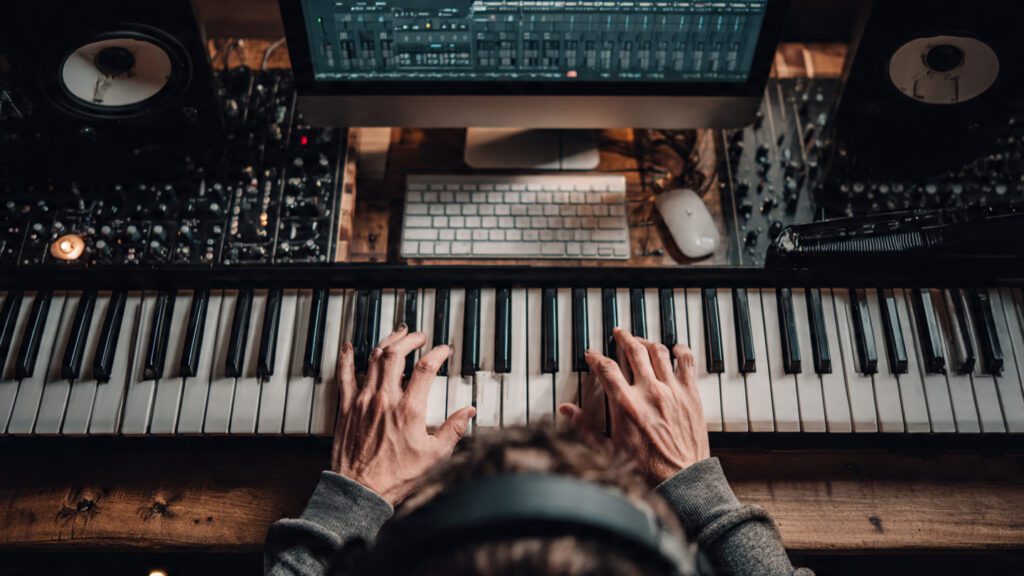
Consistency is one of the great separators
Another major way real artists can distinguish themselves is through consistency of identity. Synthetic music often thrives on rapid production, shifting surfaces, and flexible style. It can mimic almost anything. What it tends to struggle with culturally is the deep accumulation of identity over time. That is where real artists can become far more powerful than they sometimes realize.
A recognizable artistic world builds credibility because it suggests continuity. The releases speak to each other. The visuals feel related. The tone remains legible even when the sound evolves. The audience begins to sense that there is an actual body of work forming, not just a series of isolated assets moving through the feed. That perception matters because it helps the listener trust the next release before hearing it in full.
Consistency does not mean sameness. It means coherence. It means the artist becomes easier to believe because the work keeps returning with a recognizable center.
What real artists should stop doing
They should stop competing on volume alone. That is a losing game. The synthetic side of the landscape will almost always have an advantage if the contest is simply who can produce more, post more, flood more, and remain more relentlessly frictionless. Real artists do not win by mimicking that logic badly. They win by refusing its terms.
They should also stop sanding every rough edge off their identity. Not every hesitation, not every imperfection, not every idiosyncrasy is a weakness. Sometimes these are the very things that make the artist believable. Over-optimization can strip a release of the traces that give it life.
And they should stop thinking credibility is accidental. It is not. It can be built. Through process. Through clear voice. Through better framing. Through better live presence. Through stronger profile coherence. Through thoughtful catalog promotion. Through consistent signals that the work belongs to a person with taste, standards, and something at stake.
Why audiences will keep seeking the human signal
It is easy to become fatalistic about this shift, to imagine a future where speed, scale, and synthetic convenience simply overwhelm everything else. But music has always been more than efficient output. People do not only use it as background. They use it to feel seen, unsettled, remembered, energized, undone, healed, sharpened, or understood. Those needs do not disappear just because the tools change.
In fact, the more synthetic the environment becomes, the more valuable the human signal may become. Not because audiences are naive, but because they are emotionally practical. When they invest attention deeply, they want some confidence that there is someone or something worth investing in. Credibility provides that confidence. It tells the listener that the music may still surprise them, challenge them, or even frustrate them, but it will not feel empty.
This is why the credibility gap, for all its tension, also creates opportunity. It gives real artists a sharper edge than they had before. Not the edge of novelty, but the edge of trust.
The future belongs to artists who can be believed
The next stage of music promotion will not be won by technical polish alone. It will not be won by output speed alone. It will not be won by whoever can most efficiently imitate whatever the feed already rewards. Those things may create visibility, but visibility is not the same as weight.
The artists who last will be the ones who understand that credibility is now part of the art. Not a separate branding exercise, not a moral slogan, but a practical force that shapes how the audience receives everything else. They will know how to make the process visible without turning it into performance theatre. They will know how to frame their work with enough meaning that the music feels rooted. They will know how to let personality, craft, and continuity survive the demands of modern promotion.
Most of all, they will understand that the answer to synthetic music is not panic. It is presence. The more artificial the environment becomes, the more powerful it is to sound, look, and move like someone who means what they make.
And that may turn out to be the central advantage of the era ahead: not merely making music that sounds good, but making music that people believe belongs to a real artist when belief itself has become rare.