
The new competition is sharper, more strategic, and far more revealing. Recommendation systems are becoming visible. Social platforms are being turned into direct listening gateways. AI transparency is moving from industry debate to platform design. And lower-priced subscriptions are being refined with surgical precision. Streaming is no longer only about access. It is about influence.
Spotify Wants to Make the Algorithm Feel Less Mysterious
Spotify’s latest product direction shows a clear understanding of where user expectations are heading. The platform is beginning to open the door on how it interprets listening behavior, giving subscribers more visibility into the signals that shape recommendations. That may sound like a technical tweak, but it reflects something much larger. For more than a decade, recommendation engines have operated like invisible editors. They decide what surfaces, what disappears, and what gets repeated until it feels familiar.
Now, Spotify appears to be acknowledging that passive personalization is no longer enough. Listeners want convenience, but they also want agency. They want to know why a certain mood dominates their feed, why certain genres keep returning, and why some corners of their taste seem trapped in permanent rotation. By allowing users to influence the profile the platform builds around them, Spotify is shifting its algorithm from silent authority to something closer to an interactive guide.
That product push arrives alongside a broader message about economics. Spotify continues to present itself as a platform capable of generating meaningful revenue at scale, particularly for independent artists and labels. Whether one agrees with every aspect of the payout debate or not, the company is working hard to position itself as both a discovery engine and a commercial infrastructure. In a market where criticism of streaming economics remains intense, that dual identity matters.
Apple Music Is Closing the Gap Between Discovery and Full Playback
Apple Music is taking aim at one of the most important friction points in modern listening: the gap between seeing a song and fully entering it. In a digital culture shaped by short-form video, attention often begins on platforms built for scrolling rather than sustained listening. Apple’s latest move is designed to collapse that distance, transforming casual discovery into a more immediate and monetized listening experience.
This matters because today’s music discovery rarely begins inside a traditional streaming app. It begins in motion, inside a feed, between memes, commentary, edits, and micro-trends. The old path from curiosity to stream involved too many steps, and every extra click was a chance to lose the listener. By tightening that connection, Apple is trying to make discovery feel less like a detour and more like a seamless continuation of the same experience.
At the same time, Apple is also making a quiet but meaningful move on AI transparency. As synthetic content becomes harder to identify at a glance, metadata itself is becoming a trust signal. The platform’s approach suggests that the next stage of streaming will not be defined only by access and personalization, but also by credibility. In an era flooded with generated media, the platforms that can create a sense of clarity may gain a serious advantage.
Deezer Is Turning Personalization Into Something Users Can Actually Shape
Deezer may not dominate the global conversation in the same way as Spotify or Apple Music, but its recent direction is unusually sharp. The company is leaning into the idea that recommendation should not remain a sealed system. Instead of asking users to simply trust the machine, Deezer is moving toward a model where listeners can shape the recommendation environment more directly, adjusting genre and style preferences with greater precision.
That shift matters because personalization has long carried an internal contradiction. It promises intimacy, yet often feels repetitive. It claims to understand taste, yet frequently reduces taste to a few persistent patterns. By making that process more visible and more adjustable, Deezer is responding to a frustration many listeners know well: the feeling that an algorithm can recognize your habits without truly understanding your range.
At the same time, Deezer continues to invest in editorial identity and cultural positioning. That is an important reminder that streaming platforms are not neutral delivery systems. They still shape visibility, legitimacy, and representation. Algorithms can optimize behavior, but editorial decisions continue to shape what feels important, current, and worth noticing. In a crowded market, those choices can still make a difference.
YouTube Is Fine-Tuning the Price Ladder
YouTube’s recent subscription changes may seem less glamorous than the personalization race, but they touch a core pressure point in streaming: affordability. As audiences juggle multiple subscriptions across music, video, and entertainment, the lower end of the pricing spectrum has become a strategic battleground. YouTube is refining that space carefully, expanding utility without fully collapsing the distinction between a lighter offer and its full premium music experience.
This is not just about adding convenience. It is about product hierarchy. Platforms increasingly need to persuade users that each tier makes sense, that the jump from one plan to another still feels justified, and that cheaper options do not cannibalize the premium promise. That kind of packaging used to feel secondary. It is now central to retention.
In other words, YouTube is not simply selling playback features. It is testing how much value can be offered before a budget subscription starts to look too complete. That balancing act reveals how mature the market has become. Streaming growth is no longer just about acquisition. It is about segmentation, positioning, and how different kinds of listeners are guided toward different levels of commitment.
The Real Battle Is No Longer the Catalog
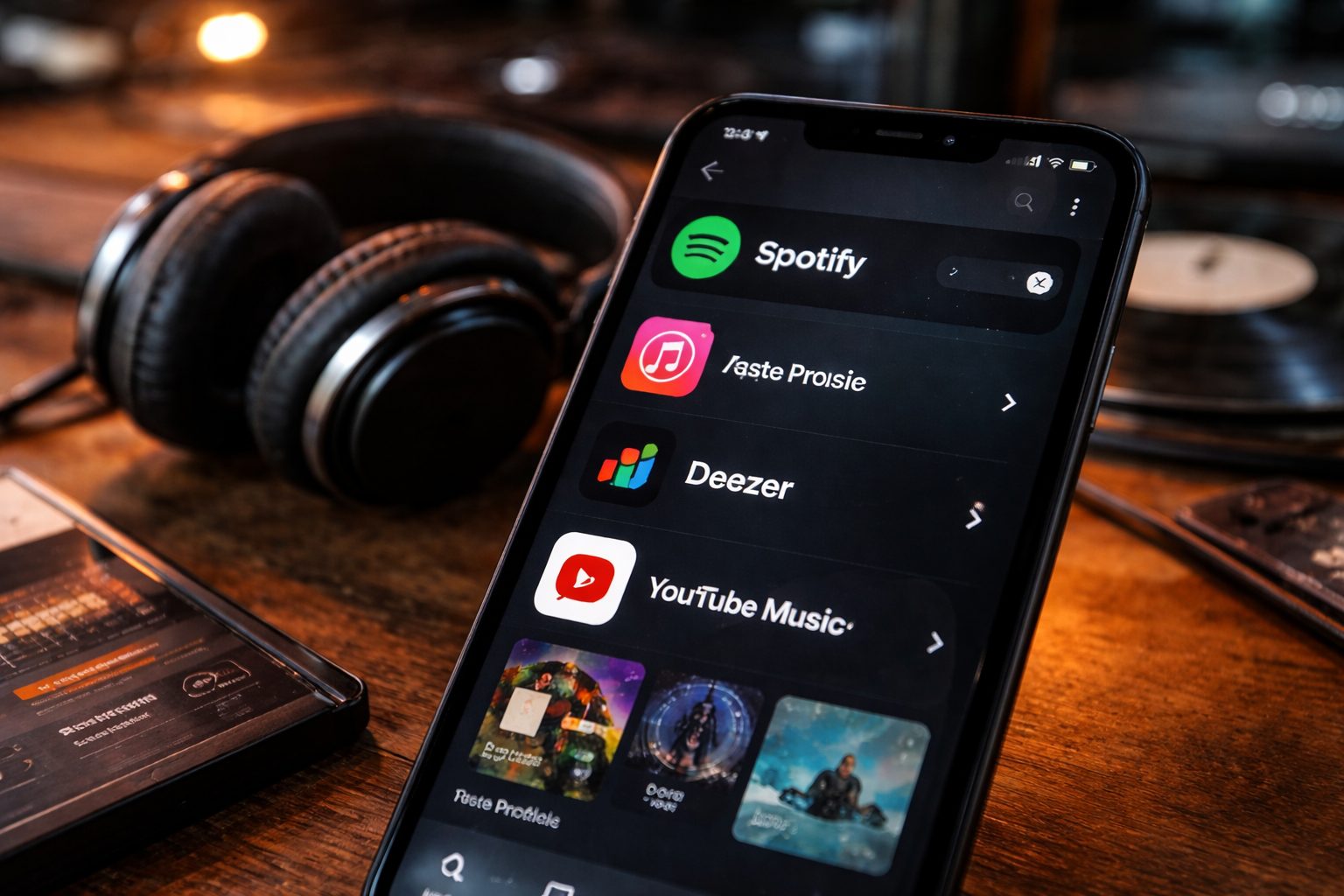
Put these developments together and a clearer picture emerges. Spotify is making recommendation more legible. Apple Music is connecting social discovery more directly to full listening. Deezer is giving listeners more explicit control over personalization. YouTube is recalibrating subscription value in a more price-sensitive environment. Different strategies, same underlying question: how do platforms remain indispensable when access to music is no longer rare?
The answer appears to be a mix of control, context, and trust. Listeners want feeds that feel responsive rather than repetitive. Artists want discovery systems that can turn exposure into durable engagement. Labels want platforms that convert cultural momentum into measurable listening. And everyone, from fans to rights holders, increasingly wants clarity about how AI fits into the ecosystem.
That is why the biggest streaming story right now is not simply technological. It is behavioral. Platforms are learning that abundance alone does not create loyalty. What creates loyalty is orientation: a clearer sense of why something is being recommended, how to act on discovery in the moment, and whether the environment feels human enough to deserve attention.
What This Means for Artists, Labels, and Music Marketers
For the music industry, these shifts are not abstract platform experiments. They change the conditions of visibility. Success on streaming platforms increasingly depends on more than uploading a song and hoping for algorithmic magic. Artists and teams now have to think about how tracks travel across ecosystems, how social moments convert into actual streams, how recommendation signals are shaped, and how brand trust plays into audience retention.
That means release strategy, visual presentation, community engagement, and metadata all matter more than ever. Discovery is becoming more layered, and the platforms are offering new tools while also tightening their own logic. The challenge is no longer just to be present. It is to be positioned correctly inside systems that are constantly learning, filtering, and recalibrating the path between curiosity and loyalty.
For independent artists in particular, this moment offers both pressure and opportunity. The platforms are becoming more complex, but they are also revealing more of the mechanisms that shape listening behavior. That opens the door for smarter strategy, more intentional releases, and better alignment between audience building and platform dynamics.
The Next Era of Streaming Will Be Defined by Trust
The streaming economy has matured beyond its first promise. Unlimited access is no longer enough to feel revolutionary. The next wave of competition will be decided by who can make digital listening feel more intelligible, more immediate, and more trustworthy. That is the real story emerging from the latest platform moves.
After years of training listeners to surrender to the feed, the biggest companies in streaming are beginning to acknowledge a simple truth: people do not just want convenience. They want context. They want influence. They want to know where a recommendation comes from, where a social moment leads, and whether the content in front of them deserves belief.
In 2026, the most powerful platforms are no longer just delivering music. They are redesigning the terms of discovery itself.

- Spotify Wants to Make the Algorithm Feel Less Mysterious
- Apple Music Is Closing the Gap Between Discovery and Full Playback
- Deezer Is Turning Personalization Into Something Users Can Actually Shape
- YouTube Is Fine-Tuning the Price Ladder
- The Real Battle Is No Longer the Catalog
- What This Means for Artists, Labels, and Music Marketers
- The Next Era of Streaming Will Be Defined by Trust