
How Fake Streams Work — and How Innocent Artists Get Burned
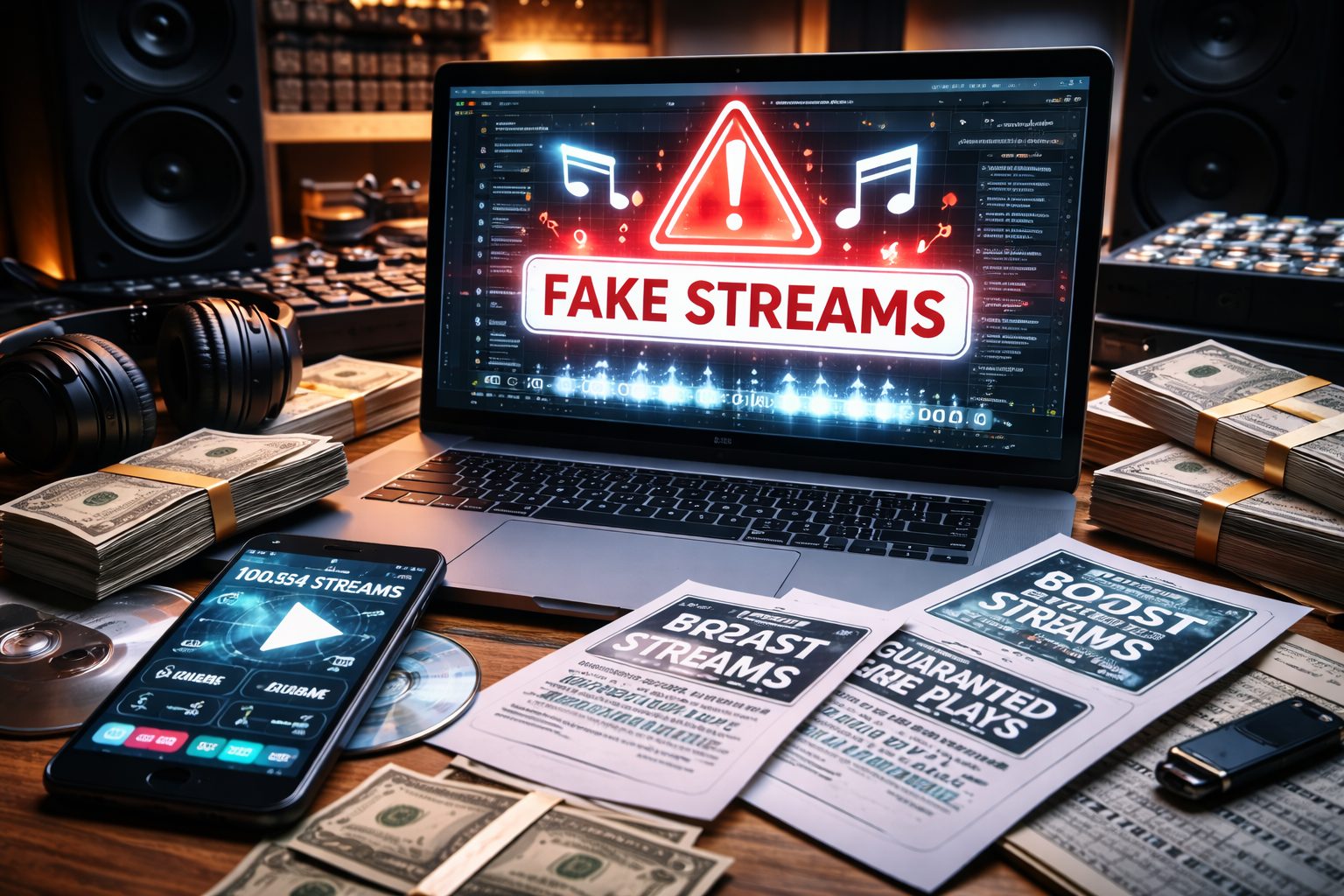
In the modern music economy, streams equal visibility, credibility, and income. That equation has created a shadow industry promising instant growth: guaranteed plays, viral boosts, algorithmic traction. For emerging artists under pressure to show momentum, the offers can be tempting.
- The Fake Stream Economy: Why It Exists
- How Fake Streams Actually Work
- The “Shady Promo” Trap: How Artists Get Pulled In
- Platform Consequences: What Really Happens When Fraud Is Detected
- Why Innocent Artists Get Burned
- The Distributor Factor: How Releases Get Flagged
- How to Spot Risky Promotion Services
- Protecting Your Career: Safer Growth Strategies
- The Long-Term Damage of Artificial Success
- The Bottom Line: If Growth Looks Too Easy, It Probably Isn’t
But behind the glossy dashboards and “organic promotion” claims lies a harsh reality: streaming fraud is one of the fastest ways to damage a career — even when the artist never intended to cheat the system.
Understanding how fake streams work, how platforms detect them, and why innocent artists get caught in the fallout is now essential knowledge in the digital music era.
The Fake Stream Economy: Why It Exists
Streaming platforms reward engagement with visibility. More plays can trigger algorithmic recommendations, editorial consideration, and social proof. This feedback loop has fueled a market for artificial growth services promising to accelerate discovery.

These services operate on a simple premise: simulate listener activity to inflate stream counts. The demand comes from artists seeking validation, labels testing traction, and scammers exploiting a system where numbers influence perception.
The problem is that platforms view artificial activity as manipulation — regardless of intent.
How Fake Streams Actually Work
Fake streaming operations rarely look like obvious bot farms. Many services market themselves as playlist promotion, targeted marketing, or influencer campaigns. The mechanics behind them, however, often rely on automated or coordinated listening patterns.
Common methods include:
Bot Networks
Automated accounts stream tracks repeatedly from data centers or rotating IP addresses. While crude versions are easy to detect, more sophisticated networks simulate human behavior.
Click Farms
Real people are paid to stream tracks in bulk using multiple accounts. This creates activity that appears human but follows unnatural patterns.
Playlist Farms
Curators with large follower counts add tracks to playlists that are primarily followed by bots or inactive accounts. Artists see streams rise but gain no real audience.
Looping Schemes
Streams are generated through background loops on muted devices, often across thousands of virtual machines.
To the artist, the dashboard shows growth. To the platform, the data shows manipulation.
The “Shady Promo” Trap: How Artists Get Pulled In
Few artists wake up intending to commit fraud. Most encounter it through offers framed as legitimate promotion: guaranteed playlist placements, targeted exposure, or “algorithmic boosts.”
Warning signs often include vague marketing language, lack of transparent audience data, promises of specific stream counts, and pricing tiers tied to play volume rather than campaign reach.
The danger is that even indirect participation — hiring a promoter who uses fraudulent methods — can implicate the artist. Platforms evaluate outcomes, not intent.
Platform Consequences: What Really Happens When Fraud Is Detected
Streaming platforms invest heavily in fraud detection systems that analyze listening patterns, device behavior, geographic anomalies, and engagement ratios. When activity is flagged, consequences can escalate quickly.
Stream Removal
Artificial streams may be purged from analytics and royalty calculations, erasing perceived growth.
Revenue Withholding
Platforms may withhold royalties associated with suspicious activity, impacting both the artist and distributors.
Algorithmic Suppression
Tracks flagged for manipulation can be excluded from recommendations, limiting future reach.
Account Warnings or Takedowns
Repeated violations can lead to catalog removal or distributor sanctions.
These measures are designed to protect ecosystem integrity — but they can devastate artists who believed they were investing in legitimate promotion.
Why Innocent Artists Get Burned
Many artists affected by streaming fraud never knowingly purchased fake streams. They hired promoters, joined “exposure networks,” or paid for playlist submissions that turned out to be fraudulent.
Platforms, however, operate on data patterns. If streams originate from suspicious sources, the system does not differentiate between deliberate manipulation and poor vendor choice. Responsibility ultimately falls on the rights holder or distributor account associated with the track.
This creates a painful paradox: artists trying to grow can damage their credibility through the very services they believed would help them.
The Distributor Factor: How Releases Get Flagged
Distributors act as intermediaries between artists and streaming platforms, and they are increasingly pressured to monitor fraudulent activity. If suspicious patterns appear across multiple releases, distributors may issue warnings, freeze payments, or even terminate accounts.
For independent artists, losing distribution access can halt releases, delay income, and disrupt momentum. In severe cases, catalog takedowns can erase years of work from platforms.
How to Spot Risky Promotion Services
Avoiding fraud begins with recognizing red flags. Services that guarantee streams, promise algorithmic placement, or provide bulk numbers without audience insights should be treated with caution.
Legitimate promotion focuses on reach, engagement, and audience targeting — not guaranteed play counts. Real marketing cannot control listener behavior, only exposure.
Transparency is the dividing line between promotion and manipulation.
Protecting Your Career: Safer Growth Strategies
Artists seeking sustainable growth should prioritize methods that build real audiences rather than inflated metrics. Organic playlist pitching, social media storytelling, live performance content, and collaborations create engagement that algorithms reward without triggering fraud detection.
Working with reputable PR firms, verifying playlist authenticity, and tracking audience demographics can help ensure that promotional efforts align with platform guidelines.
Growth that reflects genuine listener interest may be slower, but it builds credibility — the currency that matters most in the long run.
The Long-Term Damage of Artificial Success
Fake streams may create the illusion of momentum, but they distort analytics, mislead industry partners, and undermine trust. Labels, booking agents, and brand partners increasingly scrutinize engagement quality, not just numbers.
An artist with inflated streams but low saves, weak retention, and minimal fan interaction raises red flags. Artificial success doesn’t convert into ticket sales, merchandise revenue, or loyal listeners.
In the data-driven music economy, authenticity is measurable.
The Bottom Line: If Growth Looks Too Easy, It Probably Isn’t
Streaming fraud thrives on urgency — the pressure to grow fast, look successful, and compete in an overcrowded market. But shortcuts often lead to setbacks that take years to repair.
Platforms are not punishing ambition; they are protecting fairness. Artists who understand how fake streams operate can avoid costly mistakes and focus on building real connections with listeners.
The goal isn’t to chase numbers. It’s to build a career that numbers can’t fake.