
Biography, Discography, Death, Conspiracy Theories, and His Lasting Impact on Hip-Hop Culture
Tupac Shakur remains one of the most powerful, contradictory, and magnetic figures in music history. Nearly three decades after his death, his face, voice, lyrics, and legacy still dominate conversations about hip-hop, protest, fame, violence, authenticity, and cultural myth. He was not just a rap star. He was a poet raised in political tension, an actor with rare intensity, a hitmaker with mainstream reach, and a street chronicler capable of tenderness, fury, vulnerability, and threat in the same verse.
To write about Tupac is to write about more than an artist. It is to explore a man who carried several Americas inside him at once: the revolutionary inheritance of the Black Panthers, the emotional scars of poverty, the ambitions of Hollywood, the contradictions of gangsta rap, and the burden of becoming a symbol before turning 25. His story is one of rise, reinvention, brilliance, self-destruction, and unfinished questions.
Tupac Shakur’s Biography: From Harlem to Global Legend
Tupac Amaru Shakur was born on June 16, 1971, in East Harlem, New York, under the name Lesane Parish Crooks before being renamed by his mother, Afeni Shakur. That name alone carried weight. “Tupac Amaru” referenced an Indigenous revolutionary figure, and the politics around him were not decorative. They were part of the atmosphere he was born into. His mother was deeply involved in the Black Panther movement, and the language of resistance, surveillance, oppression, and dignity surrounded his childhood long before he ever entered a studio.
His youth was marked by instability, movement, and hardship, but also by artistic formation. In Baltimore, he attended the Baltimore School for the Arts, where he studied acting, poetry, jazz, and performance. This matters more than many simplified rap biographies admit. Tupac’s theatrical training shaped his voice, his phrasing, his sense of scene, and his emotional range. Even at his most aggressive, he never sounded flat. He performed. He inhabited the line.
After moving to California, he entered music through Digital Underground, first orbiting the group and then appearing on “Same Song,” a key early moment that revealed both his charisma and his hunger. His solo launch came with 2Pacalypse Now in 1991, and from there his trajectory accelerated fast. He became a rapper, film actor, controversy magnet, and voice of urban frustration almost simultaneously. Films such as Juice, Poetic Justice, and Above the Rim proved that he was more than a musician crossing into cinema for branding. He had real screen gravity.
By the mid-1990s, Tupac had become one of the defining artists of his generation. But fame came with chaos: legal troubles, prison time, public feuds, media sensationalism, and growing entanglement with the East Coast-West Coast rap conflict. After leaving prison, he signed with Death Row Records and entered the most commercially explosive and emotionally combustible phase of his career. That phase turned him into a megastar. It also pulled him deeper into the mythology that would later swallow his life story whole.
The Discography: The Albums That Built the Myth
Tupac’s discography is remarkably dense given how short his life was. In just a few years, he moved from socially conscious provocation to blockbuster rap dominance, without ever entirely abandoning his political and emotional core.
Main Studio Albums Released During His Lifetime
- 2Pacalypse Now (1991)
- Strictly 4 My N.I.G.G.A.Z… (1993)
- Thug Life: Volume 1 with Thug Life (1994)
- Me Against the World (1995)
- All Eyez on Me (1996)
- The Don Killuminati: The 7 Day Theory as Makaveli (1996)
Key Posthumous Albums
- R U Still Down? (Remember Me) (1997)
- Greatest Hits (1998)
- Still I Rise with Outlawz (1999)
- Until the End of Time (2001)
- Better Dayz (2002)
- Loyal to the Game (2004)
- Pac’s Life (2006)
2Pacalypse Now introduced Tupac as a fierce and socially aware young rapper unafraid to address police brutality, poverty, and systemic neglect. This was not comfortable radio rap. It was confrontation with structure. Strictly 4 My N.I.G.G.A.Z… widened his reach and sharpened his balance between political commentary and harder street energy.
Me Against the World remains, for many listeners, his most complete album. It is introspective, haunted, wounded, and deeply human. It carries the voice of a man who already felt hunted by his own fame. Then came All Eyez on Me, the giant commercial statement: larger, flashier, more expansive, more aggressive, more performative. It made Tupac feel superhuman. The Don Killuminati: The 7 Day Theory, released under the Makaveli name shortly after his death, darkened the mood again. That record gave fuel to endless theories because it sounded like prophecy, paranoia, war, and afterlife all at once.
Essential Songs and YouTube Videos
These songs trace the different faces of Tupac: the social observer, the son, the superstar, the wounded thinker, and the romantic. Each video below corresponds to a track cited in this article.
“Brenda’s Got a Baby”
One of the earliest and clearest signs that Tupac would not be a conventional rapper, this song tackled teenage pregnancy, poverty, and abandonment with unusual gravity for the era.
“Dear Mama”
A masterpiece of vulnerability, gratitude, and pain, “Dear Mama” remains one of the most human and universally respected songs in rap history.
“California Love”
This is Tupac in full star mode: larger than life, cinematic, defiant, and commercially unstoppable. It helped seal his place in mainstream music history without diluting his aura.
“Changes”
One of the songs most closely tied to Tupac’s social legacy, “Changes” condensed his political clarity, frustration, and enduring relevance into a track that still feels contemporary.
“Do For Love”
Proof that Tupac was never only rage, conflict, and confrontation. He also knew how to bring melodic tenderness and emotional accessibility into his catalog.
The Complete Story of Tupac’s Death
On September 7, 1996, Tupac attended the Mike Tyson fight at the MGM Grand in Las Vegas. That night, an altercation inside the casino involving Tupac and members of his entourage further intensified an already volatile climate. A few hours later, while riding in a car with Suge Knight near the Las Vegas Strip, Tupac was shot in a drive-by attack. He was taken to the hospital in critical condition and died six days later, on September 13, 1996. He was 25 years old.
The death was immediately larger than a criminal case. It became a cultural earthquake. Tupac was not a fading artist or a retired legend discovered late. He died at the height of visibility, in the middle of public conflict, during one of the most intense and commercially explosive periods in rap history. His death therefore did not produce silence. It produced obsession.
For years, the case remained unresolved in the eyes of the public. That vacuum helped transform a murder investigation into a myth machine. Every delay, contradiction, rumor, interview, memoir excerpt, and media reconstruction thickened the fog around what happened. The result is that Tupac’s death has lived in two worlds at once: the world of actual evidence and the world of collective narrative.
The “Conspiracy” Around Tupac’s Death: Facts, Theories, and the Machinery of Myth
Any serious article on Tupac has to confront the conspiracy culture around his death, but it must do so carefully. There is a difference between investigating a mystery and turning speculation into truth by repetition. Theories around Tupac’s death multiplied because the context was combustible: East Coast-West Coast rivalry, gang tensions, label politics, media sensationalism, and a superstar whose own lyrics sometimes sounded like he was predicting his end.
One category of theory focuses on retaliation linked to that night in Las Vegas. Another expands outward into broader industry intrigue, suggesting that rival rap camps, criminal networks, or hidden power brokers shaped the killing behind the scenes. Still others moved fully into mythology, including the idea that Tupac staged his death and survived in secret, helped by the Makaveli persona and the eerie timing of The Don Killuminati: The 7 Day Theory. Those theories persist because Tupac seemed too symbolic, too cinematic, and too prophetic to die an ordinary death.
But symbolic power is not evidence. The most responsible way to address the so-called “complot” is to say this clearly: conspiracy theories became part of the Tupac story because the public had questions, the case stagnated for years, and the artist himself had already become bigger than life. That does not mean every theory deserves equal credibility.
What can be said with confidence is that the case eventually moved again, decades after the murder, and one suspect was charged. Even so, many details that the public has debated for years remain wrapped in contested narratives, dead witnesses, partial testimony, and memory shaped by money, ego, and media performance. That is why Tupac’s death remains both a criminal case and a cultural mirror. People project onto it what they think rap itself was in the 1990s: art, war, business, provocation, exploitation, and tragedy all fused into one frame.
What Tupac Brought to Hip-Hop Culture
Tupac changed hip-hop because he refused to stay in one emotional box. He could record a brutal diss track, then turn around and write a song of tenderness, grief, or political urgency without sounding false in either mode. That range changed the expectations placed on rappers. He made contradiction feel authentic. He made vulnerability dangerous rather than weak. He made anger poetic.
He also expanded the social vocabulary of rap. Tupac did not merely talk about the street. He connected the street to institutions: policing, racism, abandonment, class violence, maternal struggle, and the psychology of survival. Songs like “Brenda’s Got a Baby,” “Keep Ya Head Up,” “So Many Tears,” and “Changes” turned mainstream attention toward realities that American culture often preferred to flatten or ignore. He did not invent social consciousness in rap, but he gave it an unusually emotional and popular form.
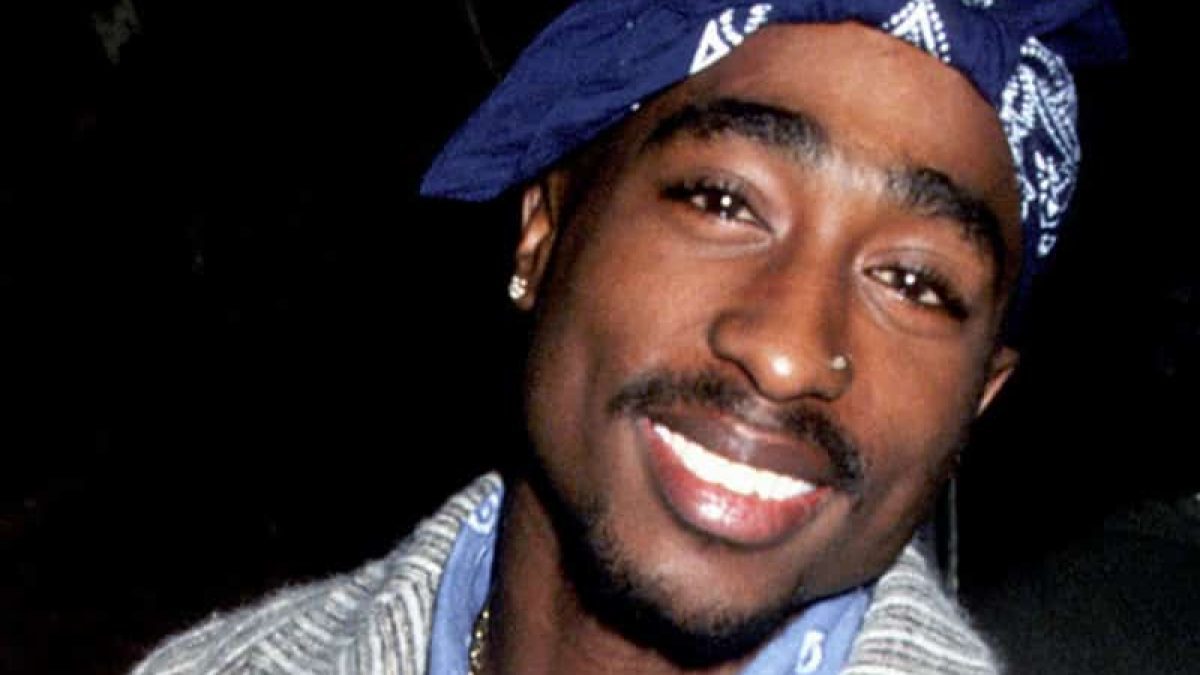
His influence on lifestyle and image was just as significant. The bandana, the tattoos, the stare, the intensity, the interviews, the refusal to speak in polished corporate language — all of that helped define what rap authenticity looked like in the public imagination. He was one of the first artists to embody, at enormous scale, the idea that a rapper could be simultaneously activist, outlaw, sex symbol, movie actor, poet, and martyr. Later generations inherited that blueprint, whether by embracing it or resisting it.
Tupac also helped cement the idea that hip-hop stars could operate as full cultural forces, not just musicians. He was part of the bridge between rap as a genre and rap as a worldview. He influenced music, cinema, political imagery, fashion language, and the emotional ambitions of artists who came after him. You can hear traces of Tupac in socially conscious rap, street rap, emotional rap, mainstream crossover rap, and even in the way modern artists talk about being “real.”
Why Tupac Still Matters
Tupac still matters because he never felt finished. His catalog sounds like a life interrupted in motion. There was no late-career settling, no clean legacy management, no gentle fade into elder statesman status. What remains is concentrated impact: a body of work that feels unfinished because the artist himself was still expanding when everything stopped.
He also remains central because he represents a question hip-hop still asks itself: can an artist be commercially huge, politically alive, emotionally exposed, and dangerously charismatic at the same time? Tupac answered yes, but at enormous cost. That tension is still alive in the genre today.
Institutionally, his legacy has only grown. Culturally, it never really cooled. New generations continue to discover him not as a museum figure, but as a living reference point. They find in him rage, intelligence, softness, defiance, theatrical power, and a voice that still cuts through time with startling directness.
Conclusion
Tupac Shakur did not simply leave behind great records. He left behind an emotional language for hip-hop. His biography explains part of his power, his discography proves his range, the mystery around his death explains the persistence of his myth, and his influence on culture explains why he remains unavoidable.
He was one of the rare artists whose life, work, and death all became chapters of the same legend. The legend sometimes distorts the man, but it also reveals the scale of what he meant. Tupac was not just a rapper from the 1990s. He became one of the central human dramas in the history of hip-hop.