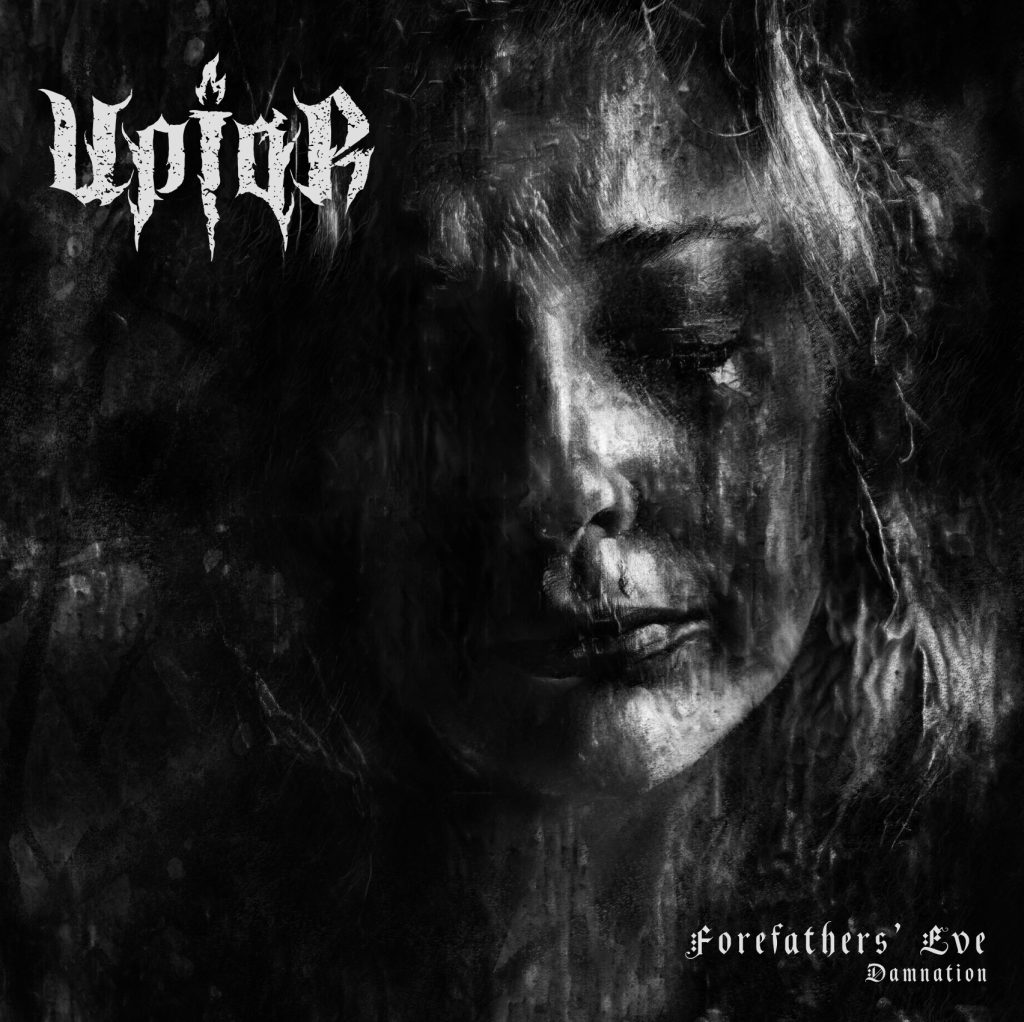
Inspired by Adam Mickiewicz’s Dziady and the poem Upiór, the song reaches into Romantic literature and drags its imagery into a far harsher modern frame. Once again, the cursed soul rises from the grave, suspended between life and death, trapped in a ritual of blood, remorse, hunger, and grief. But this is not a museum-piece retelling. Upiór reshape the legend as something more immediate and more unsettling: a vampiric figure driven not only by monstrous appetite, but by guilt, conscience, and the unbearable weight of recurrence.
A Metal Song Built Like a Curse
What makes Forefathers’ Eve – Part II so compelling is the way it fuses opposites without blunting either side. The riffs are punishing and direct, forged in the language of blackened death metal, yet the song never feels one-dimensional. Around that violent core, Upiór layer orchestration and atmosphere with a clear cinematic instinct. The result is not decorative symphonics for the sake of grandeur. It is tension, shape, and emotional depth carved directly into the song’s structure.
This is where the band’s identity becomes especially potent. Upiór understand that heaviness alone is never enough. Real impact comes from contrast. Here, every blast of aggression is shadowed by mourning, every surge of violence carries the ache of spiritual consequence. The music feels haunted not just by death, but by memory. It moves like something condemned to repeat itself forever.
Violence With a Soul
The track’s emotional force comes from its central idea: damnation as an interior state. The Upiór is not simply a creature of folklore, nor just a gothic monster stalking the edges of the story. He becomes something more psychologically dangerous. He is the embodiment of the shadow within, the violent hunger that cannot be separated from remorse. That duality gives the song its gravity.
Forefathers’ Eve – Part II is therefore not just about fear. It is about conscience. It is about what remains after atrocity, after corruption, after faith has been twisted into punishment. In that sense, the song reaches beyond horror aesthetics and into something more philosophical. It asks what it means to be trapped inside one’s own ruin, and whether the soul can suffer forever not because it was judged, but because it cannot stop remembering.
That is a powerful thematic foundation, and Upiór do not waste it. Instead of reducing the concept to theatrical posturing, they give it weight. The song mourns as much as it attacks. It grieves as much as it destroys. That balance is what makes it linger long after the final note.
A Band Expanding Its Vision
Upiór have already established themselves as a band capable of pairing devastation with atmosphere. Their debut full-length, The Forest That Grieves, introduced a sound shaped by symphonic ambition and crushing intensity, while later releases pushed that identity further. What makes the current era especially intriguing is the scale of the vision behind it. Forefathers’ Eve is presented as a dual work, split into parallel interpretations of the same ritual world: one symphonic and haunted, the other raw, merciless, and more openly violent.
That duality suits the band perfectly. Upiór are at their best when they move between beauty and brutality without treating either as a gimmick. There is a seriousness to the project, a sense that the music is trying to build a fully inhabited world rather than just compile impressive genre ingredients. Forefathers’ Eve – Part II captures that ambition with striking clarity. It feels like a chapter in something larger, but it also stands on its own as a complete descent.
A Line-Up Built for Extremity and Scale
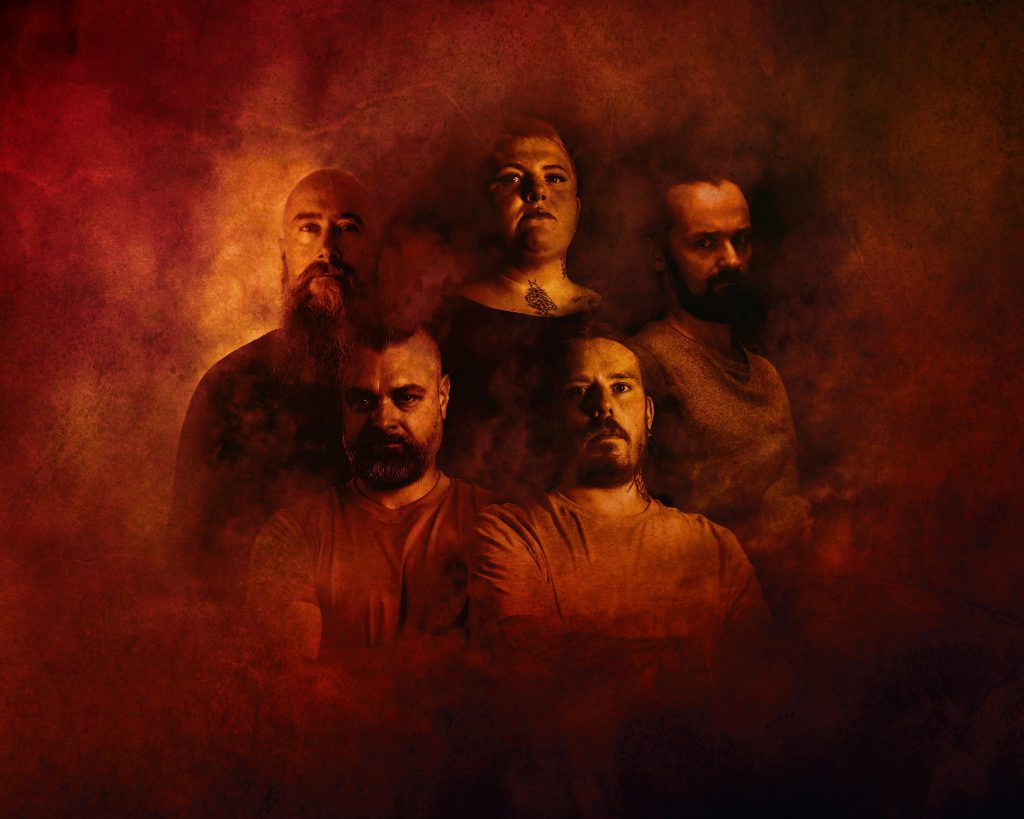
The musicians involved give the track even more weight. Tomasz Jaskuła handles guitars and keyboards, shaping the balance between aggression and atmosphere at the center of the band’s sound. Chris Bone brings the vocal intensity required for music this severe, while Sarah de Cort adds another layer to the band’s dramatic palette. On drums, Kévin Paradis injects the kind of precision and force that extreme metal demands, and Ben “Barby” Claus on bass helps anchor the song’s impact with a dense, muscular undercurrent.
That line-up helps explain why Upiór sound so controlled even at their most explosive. Nothing feels loose. Nothing feels accidental. The band play with the discipline of musicians who understand that extremity works best when every element has purpose.
Romantic Darkness Reimagined for the Present
One of the most impressive aspects of Forefathers’ Eve – Part II is how naturally it translates literary inspiration into contemporary metal language. Too often, ambitious concept material can feel trapped between scholarship and spectacle. Upiór avoid that trap completely. They do not adapt Mickiewicz by flattening him into a slogan, nor by burying the listener under references. Instead, they preserve the emotional architecture of the source material and reframe it through modern extremity.
That makes the song feel timeless and current at once. Its imagery is ancient, but its emotional logic is modern: guilt that does not fade, identity fractured by violence, the self turned into its own punisher. In that sense, the track succeeds not just as symphonic blackened death metal, but as narrative art. It creates atmosphere, yes, but it also creates meaning.
A New Peak in Upiór’s Ritual World
With Forefathers’ Eve – Part II, Upiór deliver a song that is as devastating as it is thoughtful. It is heavy without becoming numb, cinematic without becoming bloated, literary without losing urgency. Most importantly, it understands that true darkness in music is never just about sound. It is about consequence. It is about what the violence means. It is about what remains after the scream.
That is what gives this track its staying power. It does not settle for being impressive. It aims to be immersive, unsettling, and spiritually corrosive in the best possible sense. Upiór are not merely writing songs. They are building rites.
Listen to Upiór
Follow Upiór
Instagram |
Facebook |
YouTube Channel |
TikTok |
X / Twitter |
Bandcamp Profile
Forefathers’ Eve – Part II is not just another extreme metal release. It is a ritual in motion, a song of punishment and memory, and one of Upiór’s most gripping statements to date. Brutal, sorrowful, and rich with shadow, it proves that the band’s vision is only growing darker, deeper, and more compelling.