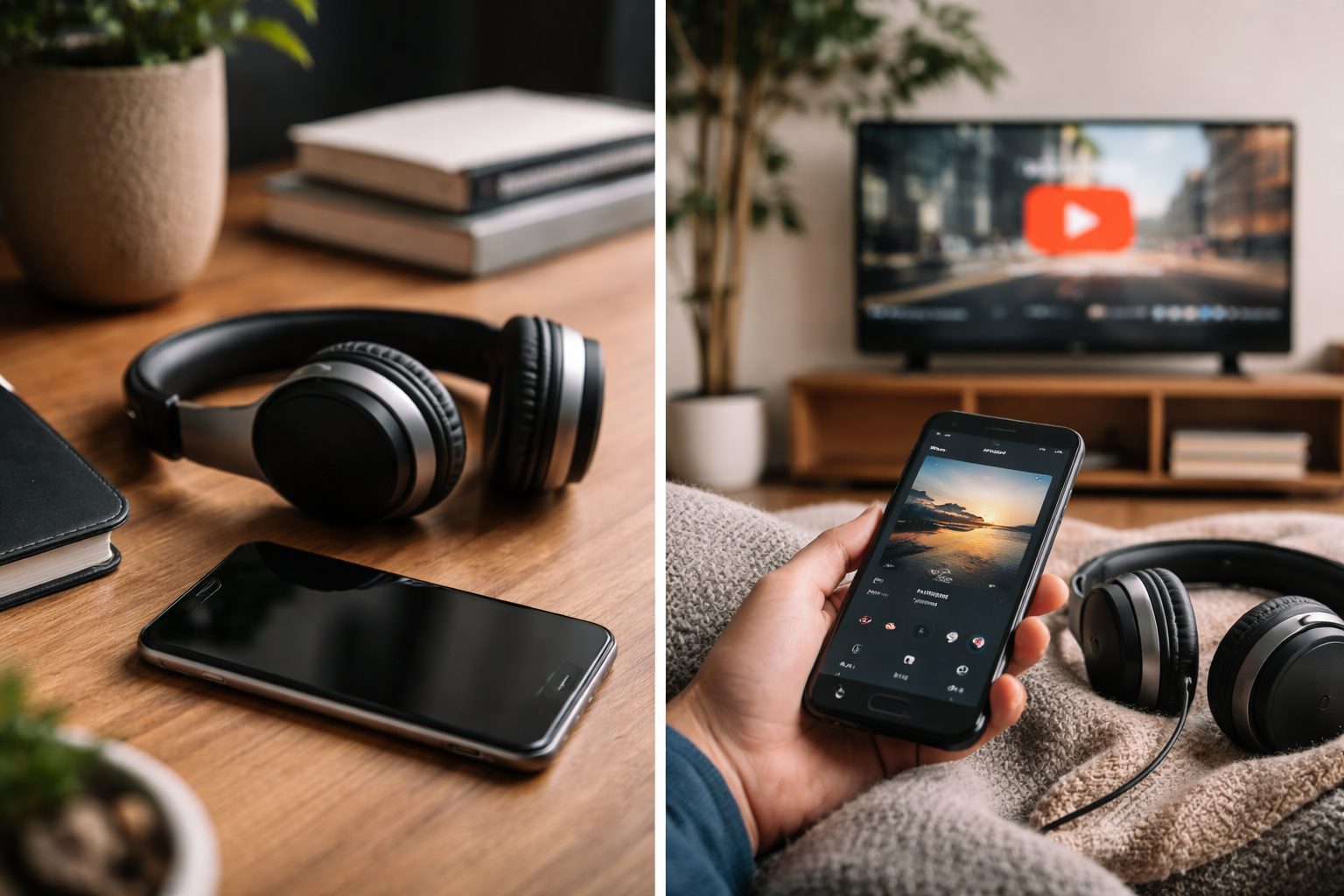

YouTube is once again reminding users who’s in charge of the rules of the game. Over the past few days, the platform has begun enforcing stricter blocks on background playback through mobile browsers — a long-standing workaround used by listeners who wanted music or podcasts playing with the screen off, without paying. This time, the loophole is closing for good. Background playback is being actively restricted unless you’re logged in with a paying subscription. No warning banner, no drama — just silence when the screen locks. Classic YouTube, efficient and unapologetic.
This move is not about punishing users; it’s about restoring scarcity to a feature that has quietly leaked into the free tier for years. Background listening is not a “nice-to-have” anymore — it’s one of the strongest psychological triggers for upgrading. Music, long-form interviews, DJ sets, ambient playlists: these are formats designed to live in the background of daily life. Letting them run freely undermines the very logic of Premium. From YouTube’s perspective, the clampdown isn’t aggressive — it’s overdue.
What makes this timing particularly interesting is that the crackdown coincides with another, more subtle experiment: YouTube Premium is being tested in some markets without YouTube Music included. On paper, that might sound counterintuitive. In reality, it’s a revealing signal.
For years, YouTube Premium has been positioned as a bundle: ad-free video, background playback, offline downloads — plus YouTube Music whether you wanted it or not. But user behavior has shifted. A significant portion of Premium subscribers are not “music subscribers” in the Spotify sense. They’re video-first users who want uninterrupted viewing, picture-in-picture, and the freedom to lock their phone without killing a podcast or long video essay. For them, YouTube Music isn’t a bonus — it’s ballast.

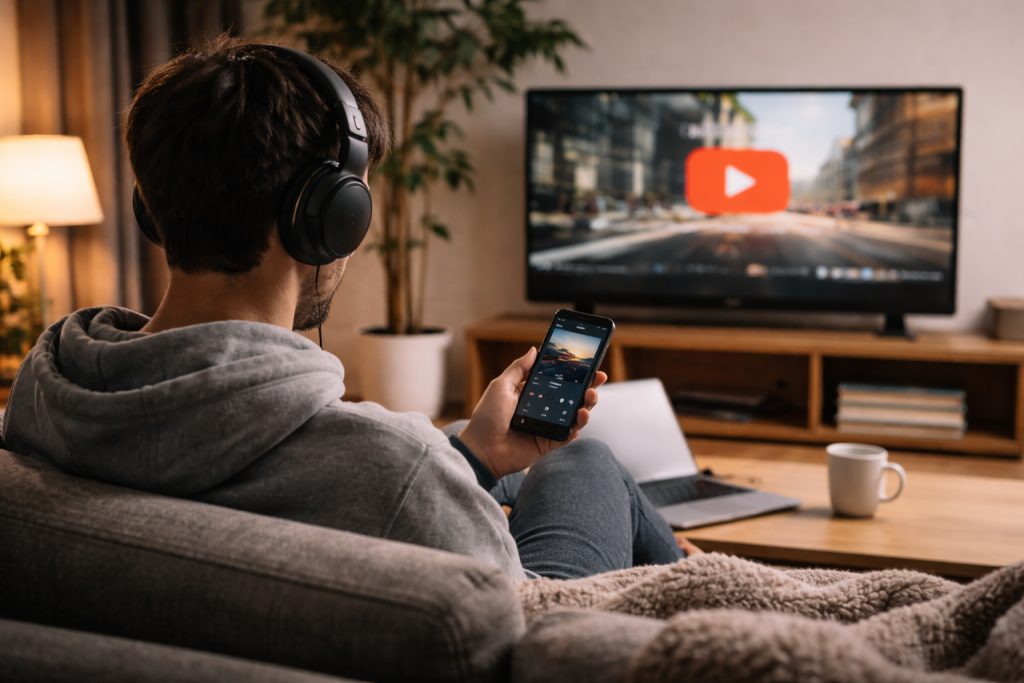
Decoupling music from Premium is YouTube testing price elasticity in real time. Can it convert more users by offering a cheaper, video-only Premium tier? Can it reduce churn among those who never opened the Music app once? And perhaps more importantly: can it push music-focused listeners toward a more explicit choice rather than an automatic bundle?
The implications go beyond pricing. This experiment subtly acknowledges what the market has been showing for years: YouTube is not one product. It’s a video platform, a podcast hub, a music service, a social network, and increasingly a long-form listening environment. Trying to sell all of that as a single “Premium” experience may no longer reflect how people actually use it.
Put the two moves together — the shutdown of background-playback workarounds and the unbundling test — and a clear strategy emerges. YouTube is drawing sharper borders between free and paid usage, while simultaneously reshaping what “paid” even means. Less generosity by accident, more intention by design.
For creators and music professionals, this matters. Background playback restrictions reinforce the value of YouTube as a listening platform — but only for paying users. At the same time, separating YouTube Music from Premium could eventually affect discovery, usage patterns, and how music competes inside Google’s ecosystem alongside Spotify and Apple Music. For users, it’s the end of a gray zone and the beginning of clearer choices.
In short, YouTube isn’t just tightening the screws. It’s recalibrating its entire value proposition. And as always, it’s doing it quietly — letting behavior, not announcements, tell the story.