
Same Track, Different Copyright Rules — Here’s Why
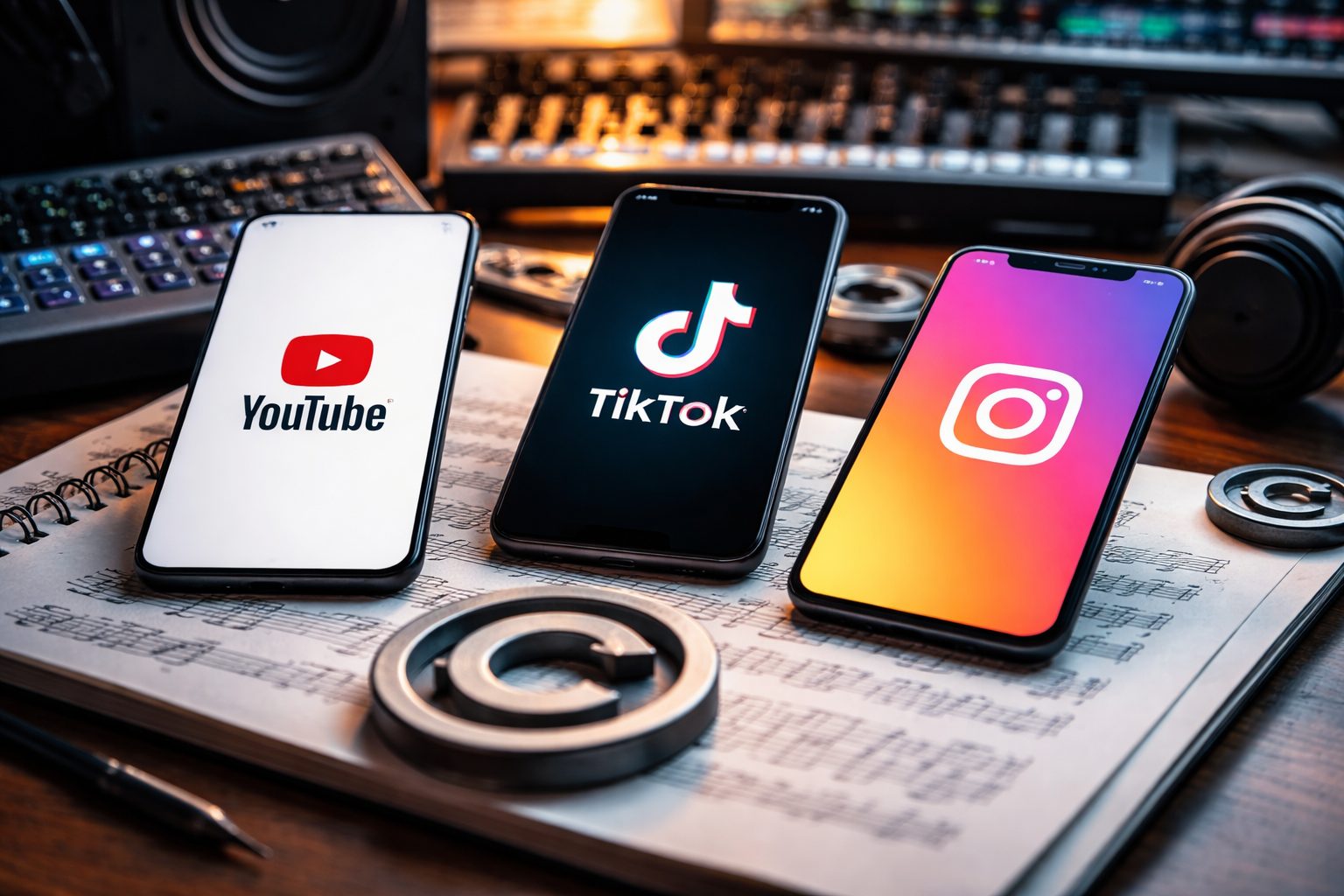
Upload the same song to YouTube, TikTok, and Instagram, and you may encounter three completely different outcomes: monetized on one platform, muted on another, and flagged with a claim somewhere else. This isn’t inconsistency — it’s the result of three distinct ecosystems built on different licensing agreements, detection technologies, and risk management strategies.
- Copyright Is Universal — Platform Rules Are Not
- YouTube: The Most Advanced Copyright Detection Ecosystem
- TikTok: Music-First Platform with a Commercial Use Divide
- Instagram: Context Determines Everything
- Why the Same Track Gets Different Outcomes
- The Smart Publishing Strategy for Modern Creators
- Platform-Licensed Music: Fast but Limited
- Properly Licensed Music: Stable and Scalable
- Original Music: Maximum Control
- The Bottom Line: Copyright Is Stable — Platforms Are Not
For artists, producers, brands, and content creators, understanding these differences isn’t optional anymore. It’s a core part of modern music distribution.
Copyright Is Universal — Platform Rules Are Not
Copyright law itself doesn’t change from platform to platform. If you use music you don’t own or haven’t licensed, you are technically at risk everywhere. What differs is how each platform enforces rights at scale.
Platforms rely on two main systems:
- pre-licensed music libraries available within their tools
- automated detection systems that scan uploads and apply rights-holder policies
Your audio isn’t judged by artistic intent. It’s judged by contracts, fingerprints, and platform policy.
YouTube: The Most Advanced Copyright Detection Ecosystem
YouTube operates one of the most sophisticated copyright enforcement systems in the world. Its fingerprinting technology scans uploaded audio against a massive database of registered works. When a match is detected, the rights holder decides what happens next: monetize the video, track its performance, or block it.
A crucial distinction: a claim is not the same as a strike. Many claims simply redirect ad revenue to the rights owner while leaving the video online. Strikes, on the other hand, involve takedowns and can threaten channel status.
Short-form content adds nuance. YouTube encourages the use of its internal music libraries, where rights are pre-cleared. Using external music — even “royalty-free” tracks — can still trigger claims if the audio matches registered fingerprints.
Publishing insight:
YouTube rewards clean rights management. If monetization matters, treat music licensing as seriously as video production.
TikTok: Music-First Platform with a Commercial Use Divide
TikTok’s identity is built on music, but its licensing structure is more segmented than it appears. The key distinction lies between casual creator use and commercial usage.
Music available through TikTok’s in-app tools is generally cleared for personal content. However, when content promotes a product, service, or brand — including sponsored posts — different rules apply. In commercial contexts, creators are expected to use tracks cleared for business use or music they have the rights to.
This distinction explains why a track may work perfectly in a personal post but create issues in a branded campaign. TikTok’s platform encourages creativity, but its legal framework protects rights holders through defined usage categories.
Publishing insight:
If money is involved, treat TikTok like a commercial sync environment. Use cleared music or your own compositions.
Instagram: Context Determines Everything
Instagram’s music rules are heavily context-dependent. What you can use — and how — often depends on the format (Reels, Stories, posts), your account type, and whether the content is promotional.
Instagram’s in-app music features rely on licensing agreements that vary by region and usage type. That’s why a track may be available in one country but not another, or work in Reels but not in ads. Business accounts may face stricter limitations than personal accounts due to commercial usage restrictions.
For brands, Meta provides dedicated libraries designed to reduce copyright risks in promotional content. Using these resources helps avoid muting, takedowns, or restricted distribution.
Publishing insight:
On Instagram, assume that rights vary by format and purpose. What works in a Reel may not be safe in an ad.
Why the Same Track Gets Different Outcomes
Three key factors explain the platform differences:
Licensing Agreements
Each platform negotiates its own deals with rights holders. These agreements often cover specific uses — such as user-generated content — but exclude commercial advertising or cross-platform distribution.
Detection Technology
YouTube’s detection system is highly automated and enforcement-driven. TikTok and Instagram also detect copyrighted audio, but consequences often depend on context, usage type, and licensing availability.
Risk Tolerance
YouTube prioritizes monetization control. TikTok prioritizes cultural velocity but draws clear commercial boundaries. Instagram balances user creativity with licensing constraints tied to format and account type.
Same track. Three ecosystems. Three risk models.
The Smart Publishing Strategy for Modern Creators
Navigating these differences requires a deliberate approach. Successful creators treat music rights as part of their content strategy, not an afterthought.
Platform-Licensed Music: Fast but Limited
In-app libraries offer convenience and built-in clearance for certain uses. However, they may restrict commercial usage, cross-posting, or long-term campaigns.
Properly Licensed Music: Stable and Scalable
For branded content, ads, or flagship releases, licensed music provides clarity and protection. Documentation matters — especially if disputes arise.
Original Music: Maximum Control
Original compositions offer the greatest flexibility. They reduce claims, strengthen branding, and ensure consistency across platforms. In an era of increasing automation and AI-generated content, a recognizable sonic identity is a competitive advantage.
The Bottom Line: Copyright Is Stable — Platforms Are Not
Creators often ask which platform is the safest. The more relevant question is which platform aligns with your goals and risk tolerance.
YouTube offers predictable enforcement and strong monetization controls. TikTok thrives on music culture but enforces clear boundaries for commercial use. Instagram operates within licensing frameworks that vary by format and account type.
Understanding these differences transforms copyright from a barrier into a strategic tool. Your track can be identical everywhere — but your outcomes don’t have to be.
In the modern creator economy, success isn’t just about what you publish. It’s about how and where you publish it.