
For a beginner stepping into music production, the plugin world can feel like a supermarket with no exit. Every week brings a new “must-have” synthesizer, a new miracle compressor, a new saturation tool supposedly capable of turning any rough demo into a polished release. It is exciting, but it is also a trap. Many new producers spend more time downloading tools than learning how to use them.
The truth is far less glamorous and much more useful: you do not need hundreds of plugins to start making strong music. You need a small set of reliable tools that cover the essentials — sound design, EQ, compression, reverb, delay, metering, and a few creative textures. With the right free plugins, a beginner can already build a professional-looking workflow and produce tracks that sound serious from the start.
What matters is not the size of the plugin folder. It is knowing what each tool does, why it matters, and how it can improve your production choices.
Vital: A Serious Free Synth for Modern Production
Every producer needs at least one synthesizer that can do more than the basics. That is where Vital enters the picture. It is one of the most impressive free synths available today, and in many beginner studios, it becomes the center of the creative process almost immediately.
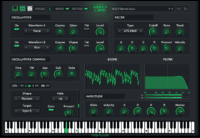
Vital is a wavetable synthesizer, which means it can create a huge range of sounds: deep basses, bright leads, soft pads, plucks, atmospheric textures, and aggressive electronic tones. Its interface is modern, visual, and remarkably approachable for newcomers. You can actually see how modulation affects the sound, which makes learning synthesis much less abstract.
For beginners working in house, EDM, trap, synthwave, ambient, or cinematic electronic music, Vital is not just a free option. It is a real instrument capable of carrying full productions.
Spitfire LABS: Instant Atmosphere and Musical Depth
Not every track begins with a synth. Sometimes what a beginner needs most is a beautiful sound that sparks emotion immediately. Spitfire LABS has built its reputation on exactly that.
LABS is a collection of free virtual instruments ranging from soft pianos and strings to unusual textures and intimate acoustic sounds. The strength of LABS is not technical complexity. It is mood. These instruments are often inspiring from the first note, which makes them ideal for beginners still developing arrangement instincts.
For producers interested in lo-fi, cinematic music, pop, indie, or ambient work, LABS can bring warmth and depth to a track without requiring advanced programming skills. It also helps beginners understand the role of texture in production — a lesson that often matters more than another loud preset.
https://labs.spitfireaudio.com/
TDR Nova: The EQ That Teaches You to Hear Better
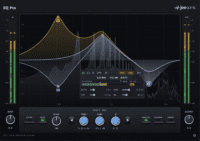
Equalization is one of the first real turning points in production. It is the moment when a producer stops piling sounds together and starts creating space between them. TDR Nova is one of the best free tools for learning that discipline properly.
It is a dynamic EQ, which means it can behave like a regular equalizer while also reacting to the signal in a more intelligent and controlled way. For a beginner, that opens the door to solving common problems: harsh frequencies, muddy mids, excessive resonance, or vocals that jump out too aggressively in one area.
What makes TDR Nova so valuable is that it is not a toy. It looks and behaves like a serious mixing tool. It encourages careful listening rather than random boosting, and that habit alone can improve a producer’s mixes faster than another dozen free presets ever will.
https://www.tokyodawn.net/tdr-nova/
TDR Kotelnikov: Clean Compression Without the Confusion
Compression is often where beginners start sweating a little. Attack, release, ratio, threshold — the vocabulary alone can make the process sound more complicated than it really is. A great compressor for learning should be transparent, musical, and flexible enough to grow with the user. TDR Kotelnikov fits that role perfectly.
It is designed for clean dynamic control, which makes it ideal for smoothing vocals, taming synths, controlling buses, or adding a bit of discipline to a mix without crushing it. Unlike flashy compressors that are all attitude and color, Kotelnikov teaches balance. It helps beginners hear what compression is actually doing instead of just making things louder and calling it a day.
That kind of clarity is gold in the early stages of production.
https://www.tokyodawn.net/tdr-kotelnikov/
Valhalla Supermassive: Big Space, Zero Cost
Sooner or later, every producer wants width, depth, and atmosphere. A dry mix can feel lifeless, while the right space can make a track feel cinematic, emotional, or massive. Valhalla Supermassive is one of the most generous free plugins in modern production because it gives beginners access to world-class spatial effects without charging a cent.
It blends delay and reverb in ways that can go from subtle and dreamy to huge and experimental. Pads become wider, transitions feel larger, lead sounds gain emotion, and breakdowns suddenly start breathing. It is especially effective for ambient textures, electronic builds, melodic house, synthwave, lo-fi, and cinematic passages.
More importantly, it encourages experimentation. And beginners need that. Production gets better when the tools invite curiosity.
https://valhalladsp.com/shop/reverb/valhalla-supermassive/
OTT: The Shortcut to Modern Energy
Some plugins become famous because they solve a very specific problem in a very obvious way. OTT, made available for free by Xfer Records, is one of those plugins. Originally inspired by aggressive multiband upward and downward compression techniques, it became a staple in modern electronic production because it can add brightness, density, and edge in seconds.
Used carefully, OTT can make synths pop, bring life to dull layers, and help certain sounds cut through a dense arrangement. Used recklessly, it can also flatten a mix into shiny chaos. That is precisely why it is useful for beginners: it teaches restraint.
It is not a plugin for every channel or every genre, but it is one of the fastest ways to understand how aggressive processing can shape tone and perceived energy.
https://xferrecords.com/freeware
Kilohearts Transient Shaper: More Punch, Less Guesswork
A lot of beginner mixes suffer from weak transients. Kicks feel soft, snares feel blurry, percussion lacks definition. Before reaching for more EQ or volume, it often helps to shape the very front edge of the sound. Kilohearts Transient Shaper is excellent for that.
This plugin allows producers to control the attack and sustain of a sound independently. A snare can become sharper. A kick can hit harder. A pluck can feel more defined. It is one of the simplest ways to improve impact without overcomplicating the chain.
For beginners making house, techno, pop, trap, or any style where rhythm matters, a transient shaper quickly becomes one of those tools that quietly solves problems before they spread through the mix.
https://kilohearts.com/products/transient_shaper
Youlean Loudness Meter: The Plugin That Brings Perspective
A surprising number of mix decisions go wrong because producers lose perspective on loudness. One sound gets boosted, then another, then the master gets pushed, and suddenly the entire session feels louder but not better. Youlean Loudness Meter helps stop that spiral.
This free metering plugin is widely respected because it gives clear loudness information using modern standards, including LUFS. That matters for streaming, mastering, and general mix awareness. It helps beginners understand how loud their track really is instead of relying only on ear fatigue and guesswork.
It is not glamorous, but it is useful in the way a compass is useful. It keeps the session honest.
https://youlean.co/youlean-loudness-meter/
Voxengo SPAN: A Better Look at Your Frequency Balance
Hearing is always more important than seeing, but in music production, the visual side can support the ear brilliantly when used with intelligence. Voxengo SPAN remains one of the most trusted free spectrum analyzers because it makes frequency balance easier to understand without turning mixing into a video game.
For beginners, SPAN is especially useful when learning how bass interacts with kick drums, how much information is building up in the low mids, or whether a mix is excessively bright or dark compared to references. It does not make decisions for you, and that is precisely why it is valuable. It gives you information, not illusions.
The smartest producers use tools like this to confirm what they hear, not replace it.
https://www.voxengo.com/product/span/
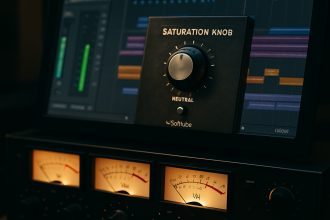
Softube Saturation Knob: Simple Color That Still Works
Not every production tool needs a dozen modes and a futuristic interface. Sometimes one knob is enough. Softube Saturation Knob has stayed relevant for years because it does one job well: adding analog-style harmonic richness and presence.
A little saturation can help bass feel fuller, drums feel warmer, synths feel thicker, and even vocals gain presence without heavy EQ. For beginners, this plugin is a good introduction to the idea that tone is not only about level and frequency. Harmonics matter. Character matters. A mix can feel more alive not because it is louder, but because it is richer.
That lesson tends to arrive at exactly the right moment in a producer’s development.
https://www.softube.com/saturationknob
Why These Plugins Matter More Than a Giant Collection
The real value of these free plugins is not that they cost nothing. It is that together, they form a strong beginner toolkit with very little wasted space.
Vital covers synthesis. LABS brings musical texture. TDR Nova and Kotelnikov handle essential mixing duties. Valhalla Supermassive opens up depth and atmosphere. OTT and Saturation Knob introduce color and energy. Kilohearts Transient Shaper improves punch. Youlean Loudness Meter and Voxengo SPAN help develop judgment.
That is already enough to write, shape, mix, and refine real productions.
Too many beginners get stuck in the endless search for better tools before learning the tools they already have. A strong free setup solves that problem. It removes the excuse, reduces distraction, and puts the focus back where it belongs: on the music.
Final Thoughts
Free plugins have never been better than they are now. In many cases, they are no longer “good for free.” They are simply good. Some of them are powerful enough to remain in a producer’s workflow for years, even after the studio grows and paid plugins start entering the picture.
For a beginner, that is incredibly good news. You can start seriously, learn properly, and build a capable production environment without blowing your budget on software you do not yet understand.
The smartest move is not to install everything. It is to install the right things, learn them deeply, and let your ears catch up with your ambition.
That is how real progress begins.