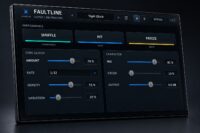

The company’s response has been unusually direct. Deezer detects and tags fully AI-generated music, removes it from algorithmic recommendations and editorial playlists, demonetizes fraudulent streams, and has stopped storing hi-res versions of AI tracks. Now it has gone further by launching a free tool that allows users of major streaming services to scan their playlists for synthetic music.
This is more than a product feature. It is a public pressure campaign, a technology test, and a cultural statement about what streaming should become. Deezer is effectively asking listeners, artists, labels, publishers and rival platforms to face the same uncomfortable reality: if almost half of new daily uploads can be synthetic, music discovery is no longer just about taste. It is about trust.
The Scale of the Problem Is No Longer Abstract
For a long time, synthetic music felt like a future problem. It lived in demos, viral clips, experimental tools and isolated controversies. The language around it was often speculative: what might happen, what could happen, what the industry should prepare for.
Deezer’s numbers change the tone. Nearly 75,000 AI-generated tracks per day is not a warning flare. It is the fire itself.
At that scale, the issue is no longer whether a listener occasionally encounters synthetic music. The issue is whether streaming platforms can protect the integrity of discovery when industrial volumes of low-cost audio are delivered into the system every day. A human artist may spend weeks, months or years developing a song. A synthetic content operator can generate, package and upload tracks at a speed no traditional music workflow can match.
That imbalance matters because streaming is not an empty warehouse. Every new track competes for indexing, attention, recommendation slots, playlist consideration and royalty pool value. When synthetic music arrives in bulk, it does not simply sit quietly in the background. It creates pressure on the entire system.
Why Deezer Chose Detection Over Silence
Many platforms have treated AI music with caution, partly because the legal, technical and commercial issues are difficult. Deezer has taken a more visible path. The company built a detection system, began tagging fully AI-generated tracks, and positioned transparency as a central part of its strategy.
This matters because the music industry often hides its hardest problems behind private dashboards, vague policy language and quiet enforcement. Deezer is doing something different. By publishing numbers and giving users a way to scan playlists, it is turning an internal moderation issue into a public debate.
The move is not purely altruistic. Deezer benefits from presenting itself as the platform that protects human creativity, especially at a time when rivals are developing their own AI policies, licensing models and creator tools. But the strategic value does not make the issue less real. If anything, it shows that transparency itself is becoming a competitive asset.
Streaming services used to compete on catalog size, price, recommendations and audio quality. They may soon compete on authenticity.
The New Detector Puts Listeners Inside the Debate
Deezer’s free AI music detector changes the relationship between users and platform accountability. Until now, most listeners depended entirely on streaming services to decide what was visible, labeled, recommended or hidden. The new tool gives users a more active role. They can scan playlists from major streaming services and see whether synthetic music appears in their own listening environment.
That is a clever move because it makes the issue personal. A debate about 75,000 daily uploads can feel distant. A synthetic track inside your own playlist feels different. It turns the abstract flood into something visible, searchable and shareable.
For Deezer, this is also a way of applying pressure to competitors. If rival platforms rely mainly on voluntary labels or less visible policy systems, Deezer can present its own detection approach as more concrete. The message is clear: if users can check their playlists themselves, platforms may have a harder time avoiding the transparency question.
Fraud Is the Hidden Engine Behind the Upload Boom
The public conversation often frames AI music as a creative debate. Can a machine make a good song? Should synthetic music be allowed on streaming platforms? Can listeners hear the difference?
Those questions matter, but they do not fully explain the urgency. Deezer’s concern is also economic. The company says a majority of streams generated by fully AI-generated tracks are detected as fraudulent. That detail cuts through the romantic language around innovation. A large part of this problem is not about artistic experimentation. It is about money.
Streaming fraud already existed before generative music became widely accessible. Bad actors used fake accounts, bot farms, playlist manipulation and catalog stuffing to extract revenue from royalty systems. AI music makes that playbook easier to scale. If someone can generate thousands of tracks cheaply, upload them through distribution channels, then drive artificial streams toward them, the royalty pool becomes a target.
That is why Deezer’s policy goes beyond labeling. The platform removes detected AI tracks from algorithmic recommendations and editorial playlists. It also excludes fraudulent streams from royalty payments. In other words, the company is trying to limit both visibility and financial leakage.
The phrase “royalty dilution” may sound technical, but for working artists it is painfully simple. If fake or synthetic catalog spam absorbs attention and money, human creators earn less from a system that is already difficult to survive in.
The Hi-Res Decision Sends a Quiet but Powerful Message
One of Deezer’s more interesting moves is its decision to stop storing hi-res versions of AI-generated tracks. This may sound like a small infrastructure detail, but symbolically it matters.
Hi-res audio is part of Deezer’s identity. The platform has long positioned itself around sound quality and a more music-focused experience. By refusing to store high-resolution versions of fully AI-generated tracks, Deezer is drawing a line between availability and endorsement.
The tracks may still exist on the platform, but they are not being treated with the same premium infrastructure as human-made music. That distinction is subtle, but meaningful. Deezer is not simply asking whether synthetic music should be banned. It is asking how much platform value synthetic music should receive.
That question will become increasingly important. Platforms may not remove all AI-generated music. Some listeners may want it. Some artists may use AI tools responsibly. Some labels may license synthetic experiments. But platforms can still decide how such content is stored, recommended, monetized, ranked and presented.
Labeling Is Becoming the Minimum Standard
Listeners are not asking for philosophical essays before every song. They are asking for basic clarity. If a track is fully AI-generated, they want to know.
That desire is understandable. Music is not only audio. It carries identity, labor, performance, biography and emotional context. A listener may enjoy synthetic music in certain settings, but still want to distinguish it from a song written, sung, played and produced by humans.
Labeling does not solve every problem. A tag can be ignored. It can be missed. It can be applied inconsistently. It can also become politically charged, especially when music is partially AI-assisted rather than fully generated. But labeling is still the starting point. Without it, users cannot make informed choices.
Deezer’s position is that transparency should not depend on voluntary disclosure alone. That is where its detection system becomes important. If platforms wait for uploaders to identify synthetic music honestly, the system will be vulnerable from the beginning. Bad actors rarely fill out forms with noble precision. They are not exactly known for sending handwritten apologies with their bot traffic.
The Difference Between AI-Assisted and Fully AI-Generated Music
The industry will need to become much more precise in its language. Not all uses of AI in music are the same.
An artist using a stem separator, a mastering assistant, a lyric brainstorming tool or a noise reduction system is not the same as an operator generating thousands of complete tracks with no meaningful human performance or composition. A producer using technology as part of a creative process is not the same as a content farm designed to exploit the economics of streaming.
This distinction is essential because the debate can easily become lazy. Some people treat all AI-related music as fraud. Others treat all criticism as fear of progress. Both positions are too blunt for the reality of modern production.
Deezer’s strongest stance is against fully AI-generated music at scale, especially when tied to fraud, deceptive distribution and royalty manipulation. That is where the platform sees the clearest threat. The future policy challenge will be handling the grey zones: AI-assisted vocals, synthetic session players, generated backing tracks, cloned styles, post-production tools and hybrid creative workflows.
The industry does not need panic. It needs definitions.
What This Means for Independent Artists
For independent artists, Deezer’s strategy should be read as both a warning and an opportunity.
The warning is obvious. The streaming market is becoming more crowded, more automated and more vulnerable to synthetic catalog pressure. Independent musicians already fight for attention against major labels, playlist gatekeepers, social algorithms and marketing budgets. Now they are also competing against industrial-scale music generation.
The opportunity is more subtle. As synthetic content multiplies, human identity becomes more valuable. Real artists who can show a coherent story, authentic visuals, live presence, clear credits, consistent branding and direct communication with fans may stand out more strongly. In a world full of anonymous uploads, proof of humanity becomes part of the marketing strategy.
Independent artists should not rely only on platform algorithms. They need stronger external ecosystems: websites, mailing lists, press kits, social channels, videos, interviews, behind-the-scenes material, live footage, artist statements and curator relationships. The less transparent streaming becomes, the more important artist identity becomes outside the platform.
Curators Are Becoming Trust Filters
Curators are also affected. Playlist owners, music bloggers, radio programmers and independent tastemakers are receiving more submissions than ever, including tracks that are fully or partially generated, poorly labeled or deliberately misleading.
That changes the job. Curation is no longer just about taste. It is about verification.
A curator who accepts submissions must now listen differently. Does the artist profile look real? Is there a history of releases? Are the visuals coherent? Does the voice sound synthetic? Does the track appear on platforms with AI labeling? Is the artist reachable? Is there a press kit, a biography, a website, a social presence?
This does not mean curators should become detectives with trench coats and dramatic rain, although the music business is doing its best to deserve the costume. It means the human layer of music discovery is becoming more important, not less.
Why Rival Platforms Cannot Stay Neutral Forever
Deezer’s decision to make detection visible creates a challenge for larger competitors. Spotify, Apple Music, YouTube Music, Amazon Music and others must all decide how far they want to go in detecting, labeling and controlling synthetic content.
Neutrality will become harder to defend. If one platform labels AI-generated tracks and another does not, listeners may begin asking why. If one service removes synthetic tracks from recommendations and another lets them circulate freely, artists may question the fairness of the system. If detection tools exist but are not used, transparency becomes a choice rather than a technical limitation.
There is also a business risk. Platforms that allow synthetic catalog spam to grow unchecked may damage their recommendation quality. Users do not subscribe to streaming services to be buried under disposable tracks engineered for background consumption and royalty extraction. They subscribe because they want discovery, emotion, identity and connection.
Once trust breaks, even the smartest algorithm starts to look like a vending machine with a jazz hat.
The Royalty Pool Is the Real Battlefield
The fight over AI music is often presented as a cultural debate, but the royalty pool is where the conflict becomes concrete.
Streaming royalties are finite within each payout structure. When fraudulent streams enter the system, they distort distribution. When mass-produced synthetic tracks generate artificial activity, they can siphon value away from legitimate artists, songwriters and rightsholders. Even if the percentage of total listening remains relatively low, the risk is serious because the model can scale quickly.
Deezer’s approach is built around reducing that risk. By tagging AI-generated tracks, limiting recommendation exposure and demonetizing fraudulent activity, the company is trying to prevent synthetic catalog operators from gaming the system.
This is one reason the issue should matter even to artists whose music has nothing to do with AI. The problem is not only whether someone likes synthetic songs. The problem is whether their presence can distort the economics that human artists depend on.
Transparency May Become a Platform Feature
In the next phase of streaming, transparency could become as important as audio quality or playlist personalization. Listeners may want to know whether a track is fully human-made, AI-assisted, fully AI-generated, licensed, cloned, remixed, synthetic or fraud-linked. Artists may demand visibility into how their music is categorized. Labels and distributors may need stronger reporting tools.
This would mark a major shift. For years, streaming platforms optimized for seamlessness. The ideal experience was frictionless listening: press play, let the system continue, never think too hard about what happens behind the interface.
The AI music crisis may force platforms to add friction back into the experience. Not annoying friction, but meaningful context. Labels, tags, credits, creation disclosures and authenticity signals could become part of the user experience. The challenge will be presenting that information clearly without turning every playlist into a legal filing with a bassline.
The Human Artist Needs a Stronger Digital Identity
For real musicians, the response should not be fear. It should be strategy.
Artists need to make themselves recognizable. That means stronger photos, better biographies, verified profiles, consistent cover art, official websites, real social presence and clear release narratives. Music alone still matters, of course, but context now matters more than ever.
In an overcrowded streaming economy, a track without identity can disappear quickly. A track attached to a real story, a real artist and a visible creative world has a better chance of surviving the noise.
This is especially important for independent artists. Major labels can use marketing budgets to create visibility. Independent musicians must build trust more deliberately. Every profile, playlist pitch, press feature, video and post should reinforce the same message: there is a human being behind this music.
Deezer Is Forcing the Industry to Pick a Side
The most important part of Deezer’s strategy may be its refusal to treat synthetic music as just another content category. By publishing numbers, labeling tracks, removing them from recommendations, targeting fraud and giving users a detector, the platform is forcing a broader conversation.
That conversation will not be comfortable. Some artists will argue that AI music should be banned entirely from streaming platforms. Some technologists will argue that synthetic music is simply another creative tool. Some labels will push for licensing models. Some platforms will prefer quiet, flexible policies that avoid public conflict.
But the scale of uploads makes silence difficult. If 44% of new daily music deliveries on one platform can be fully AI-generated, then every streaming service needs a position. Not a vague statement about innovation and creativity. A real policy.
A New Era of Music Discovery
Deezer’s move points toward a future where music discovery is filtered not only by genre, mood, popularity and listening behavior, but also by origin. Human-made, AI-assisted and fully AI-generated music may increasingly occupy different spaces within streaming platforms.
That future could be positive if it gives listeners choice and protects artists from fraud. It could be damaging if platforms use opaque systems, inconsistent labels or weak enforcement. The difference will come down to transparency, technical accuracy and economic fairness.
For now, Deezer has placed itself at the center of the debate. The company may not be the largest streaming platform in the world, but it has become one of the loudest voices on one of the industry’s most urgent issues. Its message is simple: synthetic music is no longer marginal, and pretending otherwise will not protect artists, listeners or the royalty system.
The Streaming Question Has Changed
The streaming economy used to ask whether artists could be discovered. Then it asked whether they could be paid fairly. Now it must ask whether the system can still distinguish human creativity from industrially generated content at scale.
Deezer’s AI music detector does not solve everything. No single tool can. Detection systems can make mistakes. Policies will need refinement. Hybrid music will complicate definitions. Bad actors will adapt. The problem will keep evolving.
But Deezer has done something important. It has made the invisible visible. It has turned a hidden catalog problem into a measurable public issue. It has given listeners a way to look inside their own playlists. It has told the industry that the flood is real, and that transparency can no longer be optional.
For artists, the lesson is sharp but useful: authenticity must be protected, documented and promoted. For platforms, the message is even clearer: discovery without trust is not discovery. It is noise with a subscription fee.
The next battle in streaming will not only be about who has the biggest catalog. It will be about who can prove what is inside it.
Try it