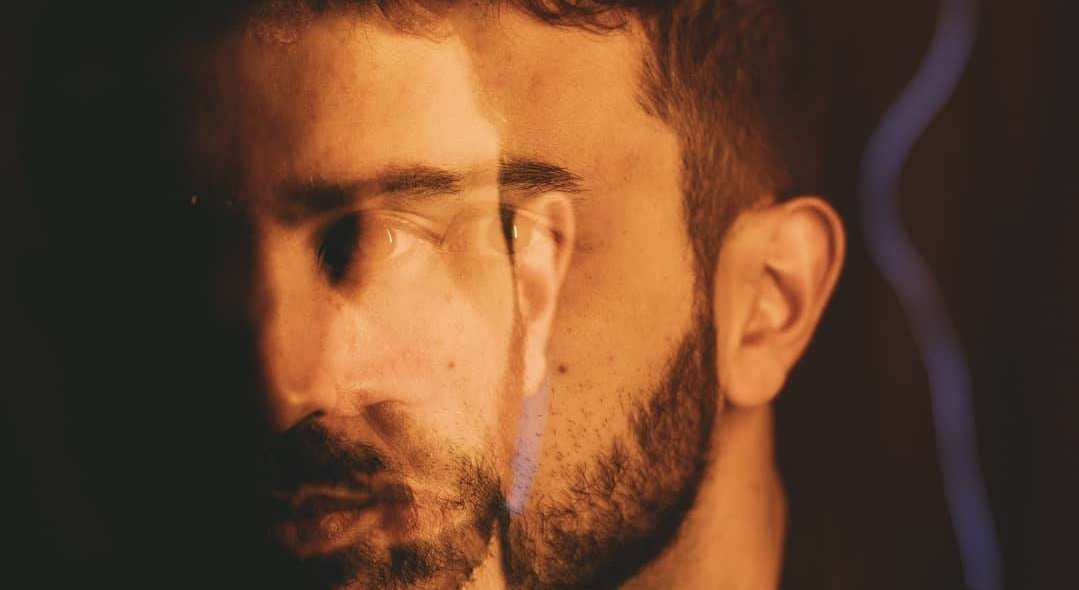
To mark the release of “Balorda Nostalgia”, Michele Blasco looks back on his musical universe, his connection with the Italian indie pop scene, and his relationship with words, memories, and melody. Originally from Rome, the artist places his music within an intimate sensitivity, shaped by singer-songwriter traditions, indie atmospheres, and a constant desire to create a sincere connection with listeners.
In this interview, Michele Blasco shares the intentions behind his reinterpretation of “Balorda Nostalgia”, while also opening up about the themes that run through his personal work: time, love, loss, memory, and that particular kind of nostalgia that continues to live inside songs long after the music has ended.
A musical identity connected to Roman indie pop
How would you describe your music and its connection to the Italian indie pop scene?
My music is connected to the Italian indie pop and singer-songwriter scene, particularly the Roman one. I am an artist from Rome. I am very moved by indie atmospheres and by lyrics that offer a deeper reading. That is what I try to bring through my music.
At the moment, I have tried to do this through reinterpretations of covers by artists who are close to me, artists I really liked and whose messages felt close to my own.
What is your musical universe, and what do you try to express through your songs?
My musical universe is clearly filled with sounds typical of indie and singer-songwriter music. I really like communicating with the people who listen to my music and leaving them with a message, so that my music can be useful to those who hear it. I love melodies, and sometimes I have also tried to communicate without words, through purely instrumental pieces.
“Balorda Nostalgia”, a cover chosen through emotional closeness
Can you tell us about your latest track, “Balorda Nostalgia”?
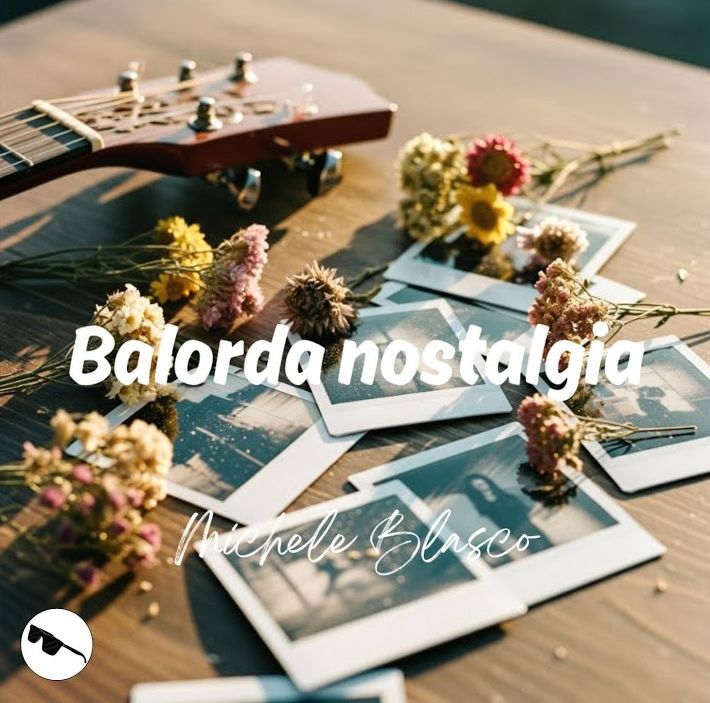
The latest track I released is called “Balorda Nostalgia”. It is my reinterpretation of Olly’s song, which I chose because I felt it was very close to my genre and to my way of expressing myself. I felt that the song reflected me, through its lyrics, its way of communicating, and its emotion. In addition, the themes of time, love, and memory are central to my music.
How did you work on the production and interpretation of this cover?
I tried to recreate the musical backing of the song in a way that was quite faithful to the original because I really liked its original atmosphere. I wanted to focus on the melody and on my personal vocal interpretation, in order to convey to the listener my own way of feeling the song.
What does the word “nostalgia” represent for you in this track?
The word nostalgia certainly carries a great emotional weight. The nostalgia expressed in the song is linked to a past love, and is therefore connected to memories and to the sense of absence that has been created.
Did you compose this song yourself?
The track is a cover, so I did not compose it directly myself. I produced my version independently, while asking for external help during certain stages.
What emotions would you like to leave with listeners through this song?
The emotions I hope the song leaves with listeners are connected precisely to the feeling of nostalgia and memory. In the verses, this feeling is experienced in a more melancholic way, while in the chorus it is experienced with much more energy, with a melody that remains catchy for those who listen to the song.
The central role of lyrics and memory
How important are lyrics in your music?
Lyrics are generally important in my songs, and I chose to release this cover precisely because I was very struck by the simplicity of the lyrics. I believe they express, with simplicity, various emotional states connected to the area of memory.
Do your songs usually come from personal experiences or from your imagination?
Usually, I write both by referring to personal matters and by drawing on my imagination.
Which artists inspire you the most?
I really like many artists who are part of the Roman indie singer-songwriter scene, such as Gazzelle, Fulminacci, Ultimo, Fabrizio Moro, Coez, and many others.
Sincere beginnings and gradual evolution
Can you look back on your first release, “Ti aspetterò per anni”?
In my first release, I published a demo titled “Ti aspetterò per anni”. It was a song I had made partly based on a personal situation. I did not have much experience in music production, and I simply wanted to publish it in order to begin making my voice heard and to share my story.
I then improved the production level in the following songs, but I still care about maintaining an essential and simple sound in the arrangement, so that I can communicate with listeners in the best possible way.
What does your creative process look like when you work on a new song?
When I work on a new song, the creative process can vary. Sometimes the atmosphere comes first, sometimes the melody, sometimes both together.
What is your favorite moment in “Balorda Nostalgia”?
My favorite moment in “Balorda Nostalgia” is the chorus. I really like the energy of the chorus and the simplicity of its melody. I also really like the second verse, because through simple images it recalls everyday situations or sensations in which I, or anyone listening, can recognize themselves.
For example: “I turn on the TV just to keep myself company”, “does it seem like the right way to you, to go and leave me here”, “I still set one extra plate when I lay the table for dinner”.
“Io ti perderò”, the next personal chapter
What will probably be your next song?
My song “Io ti perderò” will very likely be the next one to come out in the coming months. I wrote it a long time ago, and it was one of the first songs I made. That track also recalls past moments and memories, focusing mainly on the sense of loss rather than on the theme of nostalgia.
Is there a connection between “Balorda Nostalgia” and “Io ti perderò”?
Both songs are based on the themes of memory and loss. “Io ti perderò” was one of the first songs I wrote, and it is mainly focused on the theme of memory and loss.
What themes will be explored in “Io ti perderò”?
The themes explored in “Io ti perderò” are memory, love, time, and the loss of the loved person.
Will this next track help listeners better understand your artistic identity?
This new track will bring out my personal musical approach more clearly, and that approach will then emerge more and more in the following original songs I have written.
Music imagined as a message to share
What would you like listeners to remember after hearing your music?
I would like people to keep a message with them after listening to my music. I would like everyone to find their own meaning and to identify with the words according to their own experiences.
What are your goals for the coming years?
In the coming years, I would like to share more and more of my original songs with listeners, in order to create a stronger connection and better communicate the messages I want to share with them.
Where can people follow your news and listen to your music?
Listeners can follow me on all social networks: Instagram, TikTok, Facebook, X, and Threads, as well as on YouTube and, of course, on Spotify, Apple Music, YouTube Music, Amazon Music, and all the other streaming platforms.
In my Linktree, connected to my Instagram page, they can find all the platforms where they can follow me, with the latest news I have published at the top: Michele Blasco | TikTok, Instagram, X, Facebook, Threads | Linktree.
Conclusion
With “Balorda Nostalgia”, Michele Blasco is not simply covering a well-known song, he is inhabiting it with his own sensitivity. His interpretation highlights an artist attached to words, melodies, and emotions that are simple yet profound, the kind that speak about passing time, past loves, and memories that remain suspended somewhere between melancholy and the lift of a chorus.
This interview also reveals an artistic path still in progress, but already guided by a clear direction: creating sincere, accessible, and emotional music, able to touch listeners without unnecessary artifice. Between the Roman indie pop scene, Italian singer-songwriter tradition, and his future original songs, Michele Blasco moves forward with a personal voice, discreet yet deeply felt, as if each song became an elegant way of saying what memories whisper when the music begins.