RVRSE is a free reverse reverb riser and impact generator developed by composer and producer Samuel Ferraz-Leite, also known as SamuFL. The plugin transforms any compatible one-shot sample into a tempo-synchronized transition that builds naturally toward the original sound.
Instead of applying reverb, rendering the result, reversing the audio, stretching it and manually aligning the impact, producers can load a sample into RVRSE and trigger the complete effect from a MIDI note. The plugin is available at €0 through a pay-what-you-want download, with no mandatory contribution or user account required.
What Is RVRSE?
RVRSE is a sample-based transition designer. Load a WAV or AIFF one-shot, play a MIDI note and the plugin generates a processed build-up that reaches the original hit on a synchronized beat boundary.
The riser is created from the source sample itself. RVRSE applies reverb, reverses the processed signal and stretches it to match the selected musical length. Because the transition and impact share the same timbre, the result often sounds more connected to the production than a generic riser taken from an unrelated sample pack.
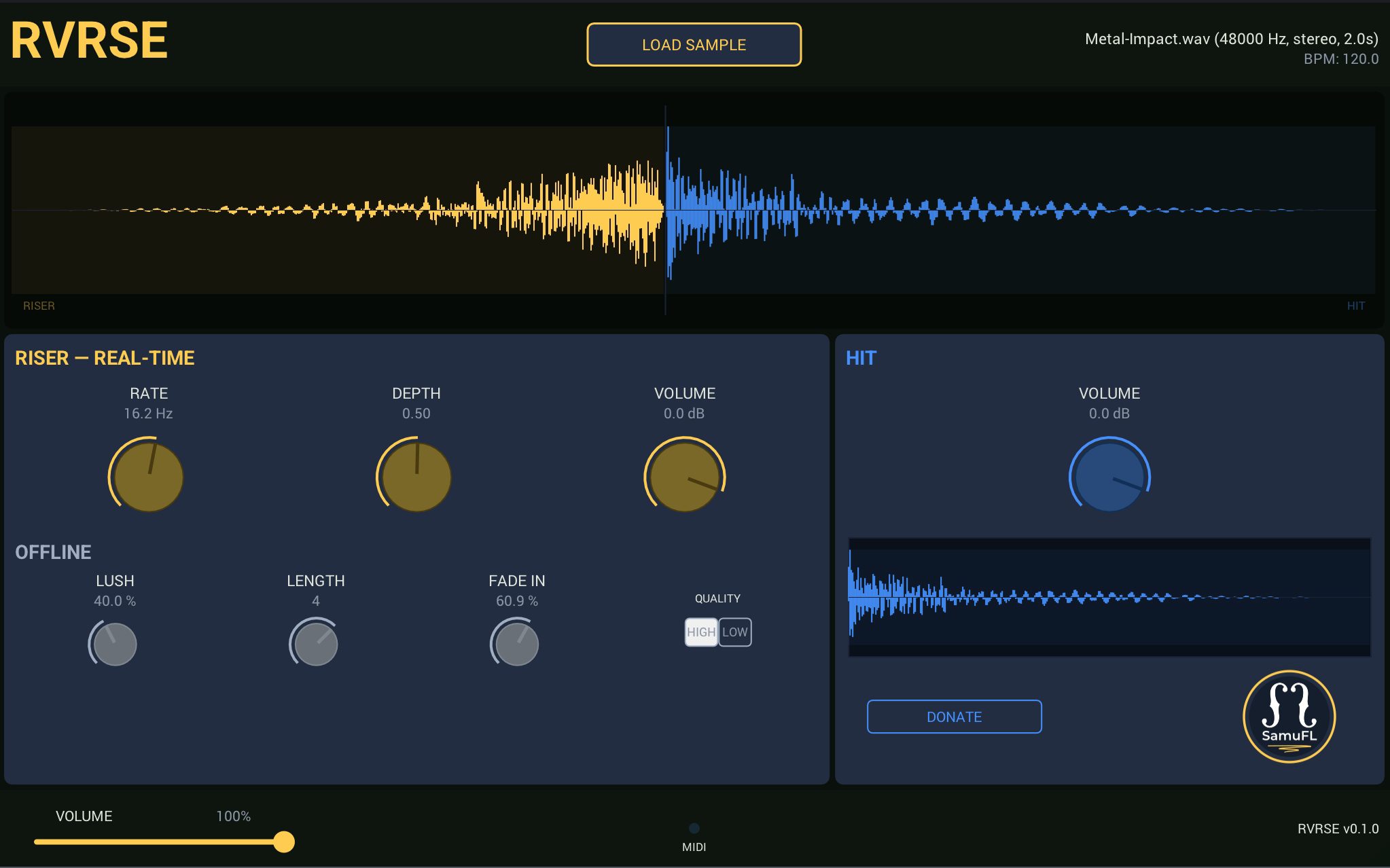
The plugin can work with drum hits, cymbals, piano notes, bass sounds, synth stabs, vocal fragments, pads and other short audio files. The source material remains visible in the waveform display, alongside the generated reverse section.
Main Features
- Reverse reverb risers generated from user samples
- Automatic synchronization with the DAW tempo
- Selectable riser lengths
- Separate volume controls for the riser and original hit
- Lush control for adjusting the reverb character
- Fade-in shaping
- Built-in rhythmic stutter effect
- High-quality time-stretching mode
- MIDI-triggered playback
- Full DAW parameter automation
- WAV and AIFF sample loading
- Standalone version for use outside a DAW
Why RVRSE Is Useful in 2026
Transitions remain essential in House, Techno, Drum & Bass, Trap, cinematic music, electronic Pop and modern hybrid productions. The problem is that many producers repeatedly use the same noise sweeps, reverse cymbals and impact samples.
RVRSE provides a more personalized alternative because every transition begins with material selected by the producer. A snare can become a short build into a drop, a vocal can produce an atmospheric reverse phrase, and a synth chord can generate a tonal sweep that already matches the harmonic character of the track.
The workflow also saves time. Reverse reverb effects are not technically difficult to create manually, but repeating the complete render, reverse, stretch and alignment process during every session quickly becomes tedious.
Best Uses
For electronic music, load the impact or chord that appears on the first beat of a new section. Set the riser length to four or eight beats and trigger RVRSE before the transition. The generated build will lead naturally into the selected hit.
Shorter settings work well for drum fills, vocal effects and smaller arrangement changes. Longer settings can create cinematic tension, breakdown textures and extended rises before a drop or chorus.
The built-in stutter section can add rhythmic movement to the reverse signal. Moderate settings create subtle pulses, while stronger modulation can produce glitch effects, chopped builds and more experimental transitions.
Production Tips
Choose source samples with a clear tonal or transient identity. A cymbal produces a broad noise-based sweep, while a piano note, vocal or synth stab creates a more recognizable harmonic transition.
Use the separate riser and hit levels to maintain control over the final impact. The reverse section should create tension without masking the drums, vocal or bass that enter at the section change.
For cleaner low end, avoid feeding very long sub-heavy samples into the plugin unless the result is filtered afterward. Reverse bass energy can accumulate before the downbeat and reduce the impact of the kick.
Automate the stutter depth or rate during the final part of the build. A transition that becomes gradually more rhythmic often feels more intentional than one using the same effect for its entire duration.
RVRSE makes transition design faster, but restraint still matters. Placing a sixteen-bar reverse reverb before every hi-hat variation may cause the arrangement to file a formal complaint.
Compatibility and Licensing
RVRSE is available for 64-bit Windows and Apple Silicon macOS systems. The official release includes VST3, Audio Unit and standalone formats. Windows 10 or newer and macOS 11 Big Sur or newer are listed as the minimum operating systems.
The plugin works in compatible DAWs such as Studio One, Cubase, Reaper, Ableton Live, Logic Pro and other hosts supporting VST3 or Audio Units.
RVRSE is free and open source under the MIT License. The software may be used for personal and commercial production without royalty payments to the developer. The licence applies to the plugin software, not to third-party samples loaded into it. Producers must therefore ensure that their source audio is original or properly licensed.
Official Video
Final Verdict
RVRSE is a focused free plugin that removes several repetitive steps from transition design. Its sample-based workflow creates rises and impacts that naturally share the same character, while tempo synchronization, stuttering and automation provide enough flexibility for modern electronic, urban and cinematic production.
It is not a large multi-effect or a complete sound library. It solves one specific problem quickly, which is often more valuable than another plugin promising to master, compose and emotionally support the entire project.
Download RVRSE from the official website:
https://samufl.com/tools/rvrse/