
Chop, pitch, time-stretch, resample — when theory becomes a gesture
Sampling has always been a natural escape from music theory. Long before grids, tutorials, and so-called intelligent tools, producers were already building full tracks from fragments measured in seconds. Not because they lacked knowledge, but because they trusted their ears. Sampling is not a shortcut. It is a creative language of its own.
- Chop, pitch, time-stretch, resample — when theory becomes a gesture
- Why sampling makes theory irrelevant
- Choosing the right two seconds
- Chopping until the original meaning disappears
- Pitching by instinct, not mathematics
- Time-stretching as sound design
- Resampling: where identity is forged
- From loop to full track
- Why sampling remains deeply human
- Conclusion: sound first, rules later
Working with samples shifts the center of gravity of music-making. Harmony is no longer calculated; it is touched, bent, and reshaped. Two seconds are enough to create a mood, a groove, even a full identity — as long as sound is treated as living material rather than abstract information.
Why sampling makes theory irrelevant
A sample already contains pitch, rhythm, texture, and emotion. Somewhere, someone has already done the theoretical work. The producer’s role becomes interpretative rather than analytical.
The creative question changes instantly. Instead of asking whether something is correct, you ask whether it feels right. This shift unlocks speed, confidence, and personality. It explains why entire genres — hip-hop, house, techno, lo-fi, jungle — were built without formal theory at their core.

Choosing the right two seconds
Great sampled tracks rarely start with perfect sounds. They start with intriguing ones. A vocal breath, a guitar tail, a dusty chord, a drum fill that feels unfinished. Emotion matters more than clarity.
Short fragments with character offer more creative freedom later. Noise, imperfections, and ambiguity leave room for transformation, which is why raw recordings often age better than polished ones.
Reliable sources for usable material include:
Splice – https://splice.com
A professional sample library covering modern electronic and urban genres.
Sample Focus – https://samplefocus.com
Concise, musical samples designed for chopping and looping.
Freesound – https://freesound.org
Field recordings, textures, and experimental sounds released under Creative Commons licenses.
Chopping until the original meaning disappears
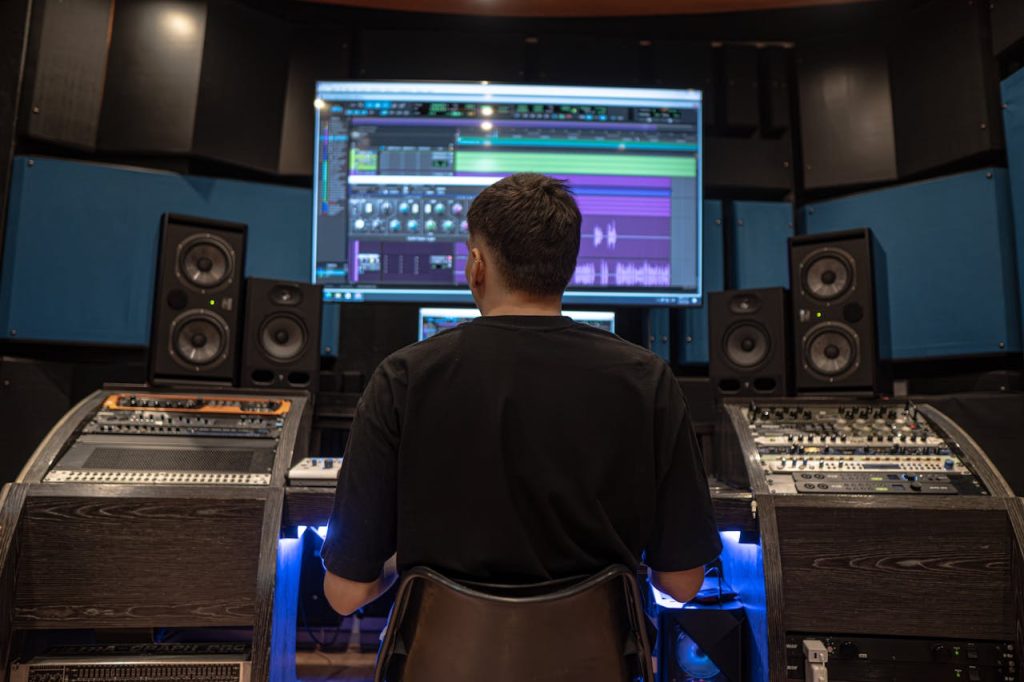
Chopping is where theory truly dissolves. At this stage, you are no longer dealing with melodies or chords but with rhythm and movement. Slice aggressively. Ignore tempo. Forget pitch. Think in accents, gaps, and momentum.
The goal is to erase the origin of the sound. When the sample becomes unrecognizable, it becomes yours.
Several free tools support this hands-on approach:
Sitala (Decomposer) – https://decomposer.de/sitala/
A fast, intuitive sampler ideal for turning fragments into playable kits.
TX16Wx Software Sampler – https://www.tx16wx.com/
A powerful free sampler offering deep control over slices and playback.
Momentum (Big Fish Audio) – https://www.bigfishaudio.com/momentum.html
A modern sampler designed for quick, fluid workflows.
Pitching by instinct, not mathematics
Pitch is emotional before it is technical. Raising pitch can introduce lightness or tension. Lowering it adds weight, intimacy, or darkness. You don’t need to understand why it works — only when it does.
Many samples that feel out of place simply live in the wrong register. Pitching often solves problems theory would try to explain.
Useful free tools include:
Pitchproof (Aegean Music) – https://aegeanmusic.com/pitchproof-specs/
A simple, musical pitch-shifting plugin.
MFreeFXBundle (MeldaProduction) – https://www.meldaproduction.com/MFreeFXBundle
A comprehensive free effects bundle including pitch and modulation tools.
Time-stretching as sound design
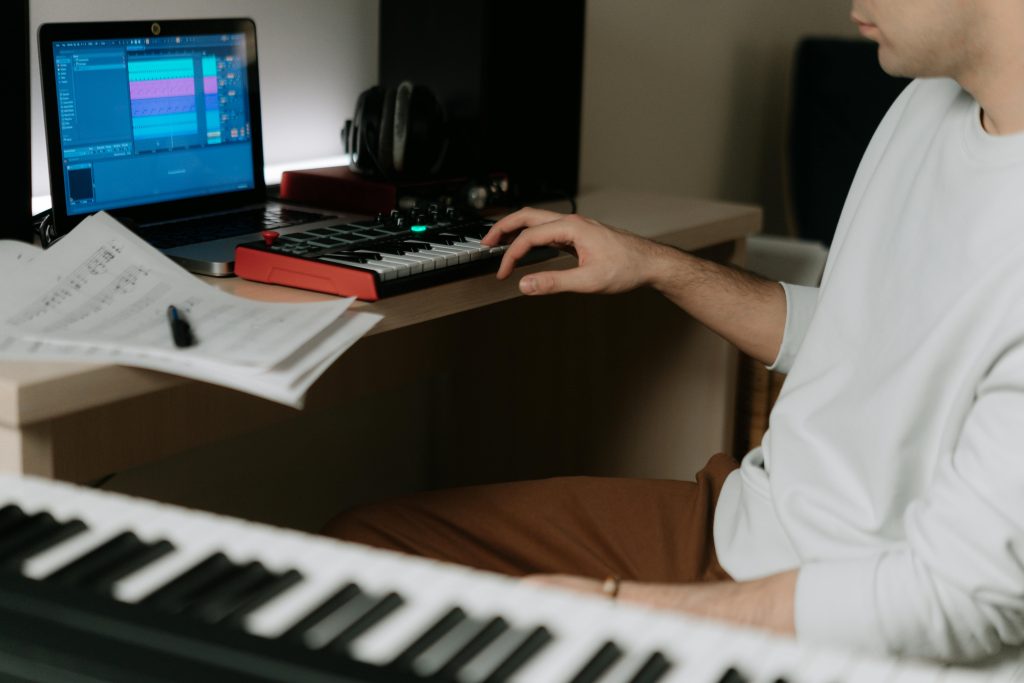
Time-stretching is not just about matching tempo. Extreme stretching reveals grain, artifacts, and hidden harmonics. Texture replaces harmony.
Slow a chord until it becomes a pad. Stretch a vocal into a drone. Speed fragments up until they behave like percussion. At this point, theory no longer applies — only sound does.
Essential free tools for this stage include:
PaulStretch (Xenakios) – https://xenakios.wordpress.com/paulxstretch-plugin/
A legendary tool for transforming tiny sounds into vast atmospheres.
iZotope Vinyl – https://www.izotope.com/en/products/vinyl.html
Adds pitch drift, timing instability, and vintage character.
Resampling: where identity is forged
Resampling is where chaos becomes control. Bounce your processed audio. Import it again. Chop it again. Pitch it again. Each generation pushes the sound further from its source and closer to your own signature.
This loop — process, bounce, repeat — is how sampled music gains personality. You are not decorating sound. You are evolving it.
Most DAWs support internal resampling, but tools like ReaSamplomatic5000 from the REAPER ReaPlugs suite (https://www.reaper.fm/reaplugs/) are more than enough to build complex instruments from resampled audio.
From loop to full track
Once the loop feels alive, structure emerges naturally. Instead of adding harmonic complexity, shape energy. Remove elements. Bring them back altered. Let silence do part of the work.
Sampling-based music thrives on variation rather than progression. Movement comes from texture, rhythm, and contrast — not from theoretical changes.
Why sampling remains deeply human
Sampling without theory reconnects music with touch. You manipulate sound directly, like clay. Every cut, stretch, and bounce leaves fingerprints. No algorithm predicts the outcome.
In an era of instant generation, this approach stands out because it is slow, imperfect, and intentional.
Conclusion: sound first, rules later
Sampling proves that music does not begin with knowledge. It begins with listening. Chop, pitch, stretch, resample — repeat. Over time, your ear sharpens, your instincts improve, and theory becomes optional.
Two seconds are not a limitation. They are the starting point of a track that sounds like you.