
The music industry has spent the last two years arguing over artificial intelligence as if it were a storm on the horizon. That storm is no longer on the horizon. It is inside the streaming platforms, inside the licensing departments, inside the artist contracts, inside the fan experience, and now, inside one of the most influential deals of the modern streaming era.
This is not a small product experiment. It is a signal. Spotify wants to become a licensed arena for fan made music creation before unauthorized AI remix culture defines the market without the music business at the table. Universal Music Group, after years of fighting unlicensed AI training and synthetic music tools, appears ready to build a regulated version of the same future it once warned against.
The result could reshape how fans engage with music, how artists earn from derivative works, and how streaming platforms position themselves in the next phase of digital music. It may also open a difficult question that will not disappear: when a song becomes interactive, who truly controls its future?
A Deal Built Around Fan Made Covers and Remixes
The agreement between Spotify and Universal Music Group covers both recorded music and music publishing rights, an essential detail in a field where the master recording and the underlying composition often belong to different parties. Without both sides of the rights equation, a remix tool would be legally fragile before the first beat dropped.
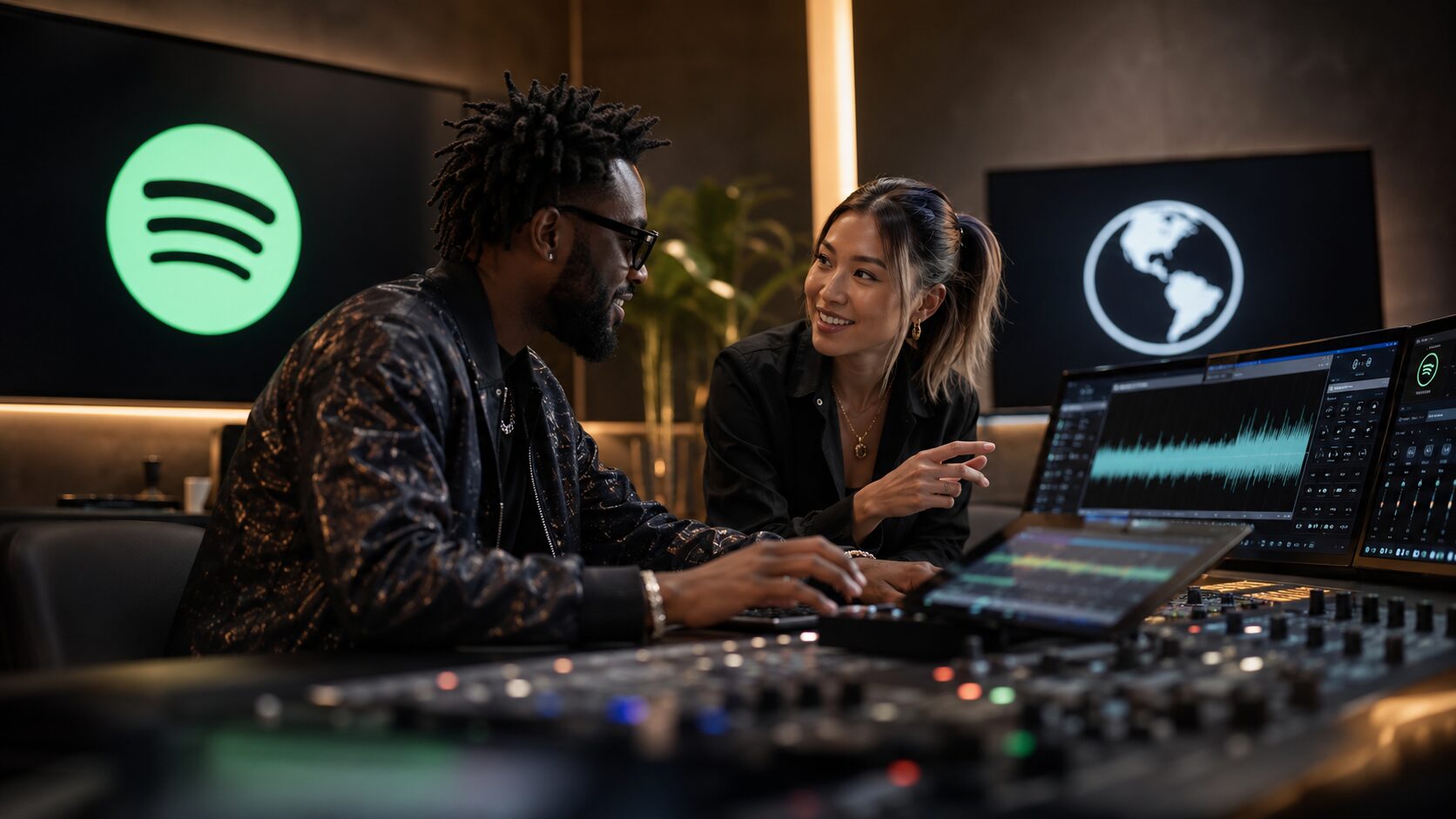
Spotify says the upcoming tool will allow Premium subscribers to create covers and remixes from songs by participating artists and songwriters. The emphasis on participation matters. This is not being presented as an open system where any song can be transformed by any user. It is designed as an opt in framework, which means artists and rightsholders are expected to have a role in deciding whether their music can be used.
That distinction is central to the business model. For years, the music industry has been flooded by unauthorized edits, unofficial remixes, voice clones, mashups and synthetic covers. Some of them gained millions of views before being removed. Others lived in the grey zone of social platforms and short form video culture. Spotify and Universal are trying to bring that behavior into a licensed environment where the platform, the label, the publisher and the artist can all participate in the value chain.
In plain terms, Spotify is not simply reacting to AI music. It is attempting to domesticate it.
Why Spotify Wants to Control the Remix Economy
For Spotify, the commercial logic is obvious. The company already dominates music discovery, playlist behavior and subscription listening. But streaming has a problem: listening alone is becoming harder to monetize at scale. Subscription prices rise slowly, royalty debates remain intense, and users expect more features without always wanting to pay more for them.
A paid add on for AI powered music creation gives Spotify a new layer of monetization. It does not replace subscriptions. It sits on top of them. That is strategically important. Instead of asking users only to pay for access, Spotify can begin charging for interaction.
In the old streaming model, a listener pressed play. In the new model, the listener may ask for a different version, a different vocal treatment, a slower tempo, a club edit, an acoustic feel, or a cover style built from licensed material. The song becomes less like a fixed recording and more like a flexible experience.
That flexibility is where Spotify sees the next frontier. The company has already invested heavily in personalization through features such as algorithmic playlists, AI DJ and recommendation systems. A remix creation tool takes that logic further. Instead of only personalizing what listeners hear, Spotify can personalize what the music becomes.
Universal Music Group’s Strategic Pivot
Universal Music Group’s role in this deal is just as important as Spotify’s. UMG has been one of the most vocal forces in the fight against unlicensed AI music tools. The company has challenged platforms, startups and services that it believes exploit copyrighted recordings without permission. Its position has been clear: technological innovation cannot come at the expense of artists, songwriters and rights holders.
The Spotify agreement shows a more pragmatic next step. Universal is not rejecting AI music tools outright. It is trying to shape the terms under which they can exist.
That is a major shift. The industry is moving from pure resistance to controlled licensing. Instead of allowing third party AI companies to build products from scraped catalogs and then fight over damages later, UMG is helping create an authorized model from the beginning. The message is simple: if fan made AI covers and remixes are going to happen anyway, the rights holders want them inside a system where permission, attribution and payment are built into the architecture.
This is not only a legal move. It is a cultural one. Universal is betting that some fans do not merely want to consume songs, they want to participate in them. The label wants that participation to happen under rules it can negotiate, not in the chaos of unauthorized uploads and viral clones.
The Three Words That Define the Deal: Consent, Credit and Compensation
The phrase “consent, credit and compensation” has become the music industry’s preferred response to the AI debate. It sounds clean, almost too clean. But each word carries real weight.
Consent
Consent means that artists and songwriters should not be forced into AI remix tools without permission. In theory, participation should be a choice. That matters because artists do not all see their catalogs the same way. A dance producer may welcome remix culture as part of their creative DNA. A singer songwriter may be less comfortable with fans generating hundreds of alternate versions of a deeply personal track. A legacy artist’s estate may have different concerns again.
The success of the model will depend on whether consent is meaningful, transparent and easy to manage. If artists feel pressured by labels, platforms or commercial expectations, the promise of choice will begin to look fragile.
Credit
Credit is more complicated than it sounds. Traditional music credit already struggles to capture the full reality of modern creation. Producers, topliners, session musicians, mix engineers and sample creators are often hidden from casual listeners. AI generated covers and remixes could make attribution even more complex.
If a fan creates a new version of a song through Spotify’s tool, the platform will need to show clearly who owns the original recording, who wrote the composition, who performed the source material and how the new version relates to the original work. Without that transparency, the system risks creating a fog of derivative content where the original artist becomes less visible, not more.
Compensation
Compensation is the real battlefield. A paid add on creates revenue, but how that revenue is divided will matter more than the press release language. Artists and songwriters will want to know whether payments are meaningful or symbolic, whether revenue is tied to creation, streaming, sharing, usage frequency or subscription income, and whether the model favors superstars over smaller artists.
The music business has heard promises of new revenue streams before. Some became important. Others became small coins rattling around in a very expensive machine. For this model to gain trust, the payout structure will need to be clear enough for creators to understand and strong enough for them to care.
A New Kind of Superfan Product
The most interesting part of the agreement is not the technology itself. It is the idea of the superfan.
For years, platforms have spoken about superfans as the next great opportunity in streaming. A casual listener streams a track. A superfan buys merch, attends concerts, collects vinyl, joins communities, watches interviews, shares clips and builds identity around an artist. The problem is that streaming platforms have not always captured that deeper relationship effectively.
An AI remix tool could become a superfan product because it gives committed listeners a new form of participation. A fan may not only replay a song, they may create a version for a party, a workout, a wedding video, a social post or a private playlist. If the system is built correctly, that activity could deepen the relationship between artist and audience.
But there is a risk. If every fan can generate endless versions of a song, scarcity disappears. The original recording may become just one version among many. That could expand the life of a song, but it could also dilute its identity. The line between engagement and overproduction will be thin.
The Threat of Musical Saturation
Streaming already suffers from overload. Every day, platforms receive enormous volumes of new music, including human made tracks, AI assisted productions, spam uploads, functional background music and catalog recycling. Discovery is more competitive than ever. Artists struggle to stand out in a sea of releases that grows faster than listener attention.
AI powered remixes could intensify that pressure if not carefully controlled. If a single song can produce thousands of user generated variations, platforms will need strict rules about where those versions appear, how they are indexed, whether they enter recommendations, and how they affect the original artist’s catalog.
The ideal version of the system creates value without flooding the platform. The worst version turns streaming into an infinite remix landfill, with every song multiplied into endless variations that confuse listeners and bury original releases under derivative noise.
That is why curation and product design will be decisive. Spotify must decide whether these fan made versions are private, semi public, fully streamable, playlist eligible, searchable, shareable or contained within specific areas of the app. Each choice will shape the cultural impact of the tool.
What This Means for Independent Artists
Independent artists should watch this deal closely, even if it begins with Universal Music Group. Major label agreements often become templates for the wider industry. If Spotify proves that licensed AI covers and remixes can generate engagement and revenue, independent distributors, labels and publishers will likely want access to similar tools.
For independent musicians, the opportunity is real. A controlled remix tool could allow fans to interact with songs in ways that expand reach, revive older tracks and create new discovery moments. An underground house track could find new life through fan made edits. A pop song could travel through different tempos and moods. A catalog track could become active again without requiring the artist to release a formal remix package.
But the risks are equally real. Independent artists often have less leverage, weaker legal support and less visibility into platform terms. If AI remix tools expand beyond major labels, artists will need clear participation settings, transparent royalty information and the ability to decide which tracks are eligible.
The worst outcome would be an opt out system hidden behind distributor dashboards and unread emails. The best outcome would be a visible, artist controlled permission layer where creators decide exactly how their songs can be transformed.
The Platform Is Becoming the Studio
The Spotify and UMG deal reflects a deeper transformation: the platform is becoming the studio.
For decades, music creation happened before distribution. Artists wrote, recorded, produced, mixed, mastered and delivered finished tracks to platforms. Streaming services then distributed the result. That boundary is beginning to collapse. If Spotify users can generate covers and remixes inside the app, creation becomes part of the listening environment.
This has enormous implications. The platform no longer sits after the creative process. It becomes part of the creative process. It provides the tool, controls the interface, manages the licensing, hosts the output, tracks the data and potentially shares the revenue.
That gives Spotify new power. It also gives the company new responsibility. Once a streaming platform becomes a creation platform, it must answer questions that traditional streaming never fully faced. How are derivative works governed? How are rights split? How are artist identities protected? How are vocals, likeness and style handled? How are abuses prevented? How does the platform avoid turning music into disposable content paste?
The Legal Model Will Matter More Than the Technology
The technical ability to generate covers and remixes is no longer surprising. The more important question is whether the legal and economic model can support the creative community rather than undermine it.
This is why Spotify and Universal are framing the tool as licensed and responsible. The industry has seen what happens when music AI develops outside permission based systems. Lawsuits follow. Artists protest. Labels demand takedowns. Platforms face reputational pressure. Fans enjoy the novelty, but the business foundation remains unstable.
A licensed model gives the industry a cleaner path. It does not solve every problem, but it moves the conversation away from piracy dressed as innovation and toward structured participation. That may be the only way AI music tools survive inside mainstream platforms.
A Controlled Future, or Just a Better Packaged One?
The optimistic reading of this deal is simple: Spotify and UMG are building a legal alternative to unauthorized AI music. Artists can choose to participate, fans get creative tools, songwriters are credited, and new revenue flows into the ecosystem.
The skeptical reading is just as important: the deal could normalize a future where platforms and major labels define how music is transformed, while artists are asked to trust yet another royalty system they did not design. If the details are vague, if payouts are small, or if participation becomes commercially pressured, the language of empowerment could start to sound like old platform economics in a shiny new jacket.
Both readings can be true at the same time. The deal may be more responsible than the unauthorized chaos outside it, while still raising serious questions about control, transparency and long term artistic value.
What Artists Should Do Now
Artists should not panic. They should pay attention.
The first step is rights clarity. Artists need to know who controls their masters, who controls their publishing, what their distributor agreements allow, and whether future platform tools can use their music in derivative experiences. For independent artists, that means reading contracts more carefully and keeping ownership records clean.
The second step is catalog strategy. Not every track should necessarily be open to fan made transformation. Some songs may benefit from remix culture. Others may depend on a specific vocal performance, emotional tone or artistic context. Artists should think of AI remix permission as a creative and commercial decision, not a default setting.
The third step is identity protection. As music becomes easier to reshape, artists will need stronger branding, verified profiles, official visuals, consistent metadata and clear communication with fans. Human identity will become a competitive advantage in a market where synthetic and derivative content grows rapidly.
The Beginning of Interactive Streaming
The Spotify and Universal Music Group agreement may be remembered as one of the first major attempts to turn AI remix culture into a licensed streaming product. It is not the end of the debate. It is the beginning of a new phase.
Streaming started as access. Then it became personalization. Now it is moving toward interaction. The listener is no longer only a listener. The fan may become a participant, a remixer, a curator of alternate versions and a paying user of creative tools built directly into the platform.
For the music industry, that future is both exciting and dangerous. It could create new income, new discovery and new fan relationships. It could also increase saturation, weaken the identity of original works and give platforms even more control over how music circulates.
The success of this model will depend on whether consent is real, credit is visible and compensation is meaningful. Those words cannot remain press release decoration. They must become product design, contract language and royalty logic.
If Spotify and Universal get it right, licensed fan made remixes could become a legitimate new chapter in music engagement. If they get it wrong, the industry may discover that putting a paywall around the remix machine does not automatically make it artist friendly.
Either way, one thing is clear: the streaming era is no longer just about playing songs. It is about who gets to reshape them, who gets paid when they change, and who still has the final say when music becomes interactive.