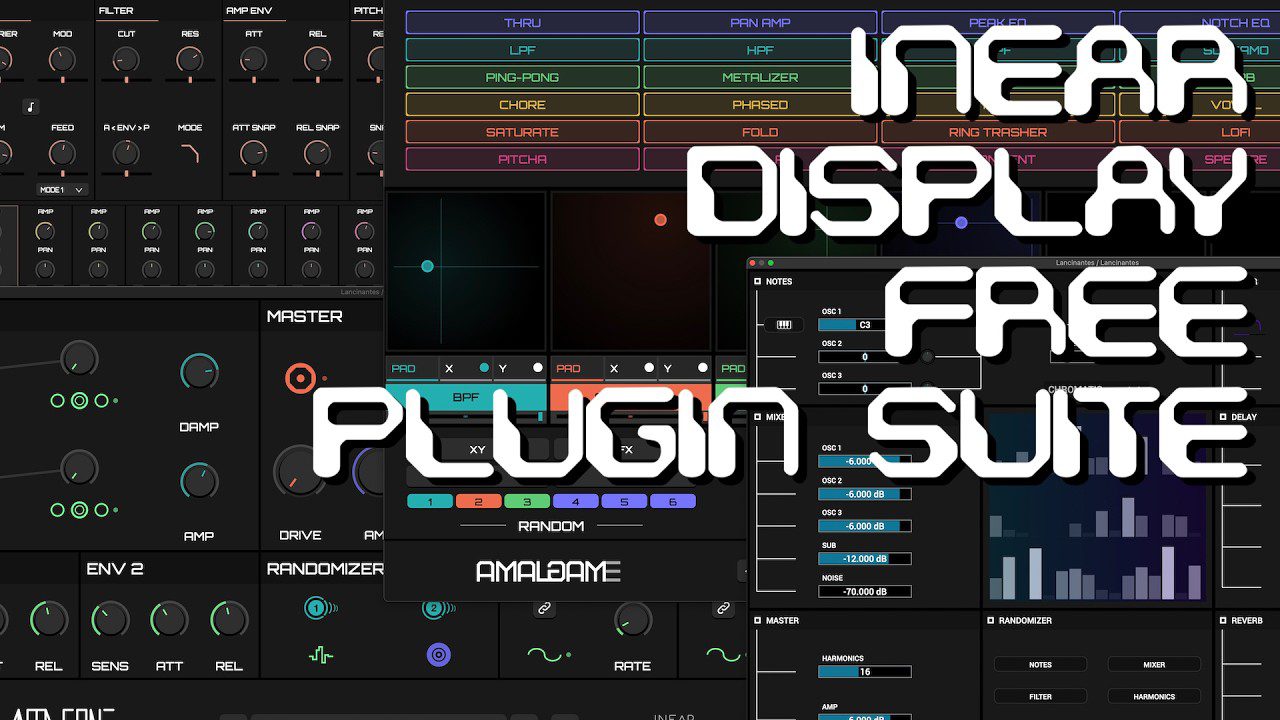
Antagone by Inear Display is a free glitch delay VST plugin built for producers, sound designers, electronic musicians and experimental artists who want delay processing that does more than repeat audio in a polite straight line. Now available through Inear Display’s pay-what-you-want catalogue, Antagone turns incoming sounds into fractured echoes, unstable feedback trails, distorted delay chains and chaotic rhythmic movement.
This is not a traditional delay plugin designed only for clean vocal throws, dub repeats or simple slapback. Antagone is a dual delay sound mangler built for glitch, noise, modulation and creative destruction. For IDM, industrial techno, ambient, experimental hip-hop, dark electronic music, cinematic sound design and sample mangling, it offers a focused free audio plugin with a strong personality.
What Is Antagone by Inear Display?
Antagone is a glitch-focused dual delay effect from Inear Display. It is designed to process audio through two delay lines, then combine those delay signals using different routing and mixing modes. The plugin is built for sound design, unpredictable echoes, modulated feedback and distorted delay textures.
Antagone is a complete rewrite of Bucephal, an earlier Inear Display effect. The current version keeps the original spirit of delay-based audio mangling while adding a redesigned interface, rewritten processing and damping filters in the feedback paths.
The plugin is available as a 64-bit VST3 and AU effect for compatible Windows and macOS systems. Through the current Inear Display pay-what-you-want model, producers can download it for free while still having the option to support the developer.
Why This Free Glitch Delay VST Plugin Matters
The free glitch delay VST plugin category is not as crowded as standard delay effects. There are many free plugins that create clean echoes, tape-style repeats or basic ping-pong delay. Antagone takes a more aggressive and experimental route.
Its purpose is not only to add space. It is designed to reshape rhythm, create unstable feedback, distort repeats and turn simple audio into something that feels alive, broken or unpredictable. In modern production, that kind of processing can be more valuable than another perfectly clean delay.
For producers working with loops, vocal chops, synth lines, percussion, field recordings and resampled textures, Antagone can create movement that feels less obvious than normal automation. It can transform a short sound into a full texture, a drum hit into a glitch pattern or a synth phrase into a strange echo structure.
Main Features
- Free glitch delay VST plugin available through Inear Display’s pay-what-you-want catalogue.
- Two delay lines for complex echo structures and sound mangling.
- Delay time control from very short echoes to longer delay effects.
- Feedback control for building repeating textures and chaotic delay trails.
- Damping filters in the delay feedback paths for tonal control.
- Amplitude control for each delay line.
- Six signal routing modes for combining both delay outputs in different ways.
- Four output distortion types for adding saturation, grit and more aggressive character.
- Two envelope follower modulation sources for dynamic movement based on the input signal.
- Two LFO modulation sources for rhythmic or audio movement.
- Optional host clock sync for tempo-locked LFO rates.
- Dry/wet control for balancing original and processed signal.
- Flexible randomizer section for fast experimental results.
- Factory preset bank for quick creative starting points.
- Resizable interface for modern production workflows.
- Cross-platform preset system for easier preset management.
- VST3 and AU formats for compatible DAWs on Windows and macOS.
A Delay Plugin Built for Chaos
Antagone’s strength is the way it treats delay as a destructive sound design process. Instead of simply repeating the incoming signal, it lets users push the delay lines into unstable interactions, modulated timing, distorted output stages and unusual routing combinations.
On drums, it can create broken rhythmic trails, metallic stutters, glitch percussion and noisy fills. On synths, it can create unstable echoes that move around the original sound. On vocals, it can turn short phrases into fragmented background textures, distorted delay throws or strange transition elements.
This makes Antagone useful for producers who want controlled disorder. It is not only an effect for adding space. It is an effect for making audio misbehave in a musically useful way.
Two Delay Lines With Multiple Routing Modes
The heart of Antagone is its dual delay structure. Each delay line includes time, feedback, damping and amplitude controls. This gives producers independent control over how each side of the effect behaves before the two signals are combined.
The six routing modes are what make the plugin more interesting than a standard dual delay. Different routing configurations change how the two delay lines interact, which can produce everything from wider echo patterns to more chaotic feedback behavior.
Short delay times can create comb-like textures, metallic tones and glitch fragments. Longer delay times can create evolving echoes, broken rhythmic trails and unstable soundscapes. When modulation is added, the result can move far beyond classic delay territory.
Damping, Distortion and Feedback Control
The damping filters inside the feedback paths are important because they help shape how the repeats evolve. Without damping, heavy feedback can quickly become harsh or messy. With damping, the user can control how much high-frequency energy remains as the delay repeats continue.
The output distortion section gives Antagone another layer of personality. Instead of keeping the delayed signal clean, the plugin can add saturation and more aggressive edge after the delay lines are combined. This is useful for industrial textures, glitch effects, damaged vocals and distorted rhythmic echoes.
Feedback is where the plugin can become truly intense. Carefully managed feedback can create evolving textures and long tails. Pushed harder, it can produce chaotic delay networks that feel more like sound design than traditional echo processing.
Modulation for Moving Delay Effects
Antagone includes two envelope follower modulation sources and two LFO modulation sources. These can be used to animate delay behavior and create movement that reacts either rhythmically or dynamically to the input signal.
Envelope followers are especially useful because they make the effect respond to the audio itself. A drum loop can trigger movement based on its transients. A vocal phrase can shape the behavior of the delay through its performance dynamics. A synth stab can cause the effect to jump, bend or shift in response to its own energy.
The LFOs can add more predictable movement, especially when synchronized to the host tempo. This makes Antagone useful for rhythmic modulation, pulsing echoes and evolving glitch patterns that stay connected to the track.
Randomization as a Creative Tool
The randomizer is one of Antagone’s most useful features. Glitch sound design often works best when the process produces results that are hard to predict. Antagone lets producers randomize parameters to discover unexpected delay structures quickly.
This does not replace careful editing. It gives users a fast way to find starting points. A random patch might produce a strange rhythmic trail, a broken feedback texture or a distorted transition that would take much longer to design manually.
The best workflow is often simple: randomize, listen, refine, then resample. Antagone is the sort of plugin that can turn one small sound into ten usable pieces of sound design, which is rather generous for something that appears to enjoy chaos so much.
Sound and Creative Use
Antagone is especially strong on material with clear transients or repeated movement. Drum loops, percussion hits, synth sequences, plucks, vocal chops and short FX sounds are all good sources. The plugin can stretch these sounds into echoes, break them into fragments or push them into distorted rhythmic patterns.
On ambient material, Antagone can create unstable layers and strange evolving backgrounds. On industrial or dark electronic tracks, it can add metallic edge and damaged delay motion. On cinematic sound design, it can produce tension, corrupted trails and unusual transition effects.
It is also powerful as a resampling processor. Print an Antagone pass to audio, cut the most interesting sections, then use those fragments as fills, impacts, risers or texture layers. In this workflow, the plugin becomes less of a delay and more of a factory for strange audio events.
Why Glitch Delay Still Matters
Delay is one of the most familiar effects in music production, but glitch delay remains one of the most effective ways to make a track feel less predictable. It adds movement, surprise and controlled instability.
Antagone matters because it gives producers access to delay-based sound design without requiring a complex modular setup. Its dual delay lines, routing modes, modulation, distortion and randomizer provide enough depth to create unusual results while keeping the workflow focused.
In a production landscape where many artists use similar loops, synth presets and sample packs, creative effects can help build a stronger sonic identity. Antagone can take ordinary source material and make it feel damaged, alive and personal.
Who Should Use Antagone?
Antagone is ideal for electronic producers, glitch musicians, IDM artists, industrial techno creators, ambient composers, sound designers, beatmakers and home studio users who want a free audio plugin for experimental delay processing.
It is useful for anyone who wants delays that react, distort, fragment and evolve. Producers who enjoy modulation, resampling and unpredictable effects will likely get the most from it.
It is less suited to users who only need a clean vocal delay or simple mixing utility. Antagone can create subtler effects, but its real identity lives in the dangerous zone between echo and audio vandalism.
Best Use Cases for Producers
Glitch Drum Processing
Use Antagone on percussion loops, drum fills or one-shots to create broken echoes, stutters and chaotic rhythmic trails.
Industrial Delay Textures
Push feedback and output distortion to create metallic echoes, aggressive delay layers and darker electronic movement.
Vocal Chop Mangling
Process short vocal phrases through the dual delay lines to create corrupted ad-libs, strange transitions and fragmented hooks.
Synth Sequence Mutation
Place Antagone on arpeggios, plucks or synth stabs to add modulated delay movement and unpredictable rhythmic variation.
Ambient Sound Design
Use longer delay times and controlled feedback to create evolving atmospheres, unstable pads and unusual background textures.
Cinematic Transitions
Process impacts, risers, field recordings or reversed sounds to create strange tails and glitchy movement for scene changes or drops.
Creative Resampling
Record Antagone’s output to audio, then chop, reverse, stretch or layer the best fragments into new sound design material.
Compatibility and Download Details
Antagone is available as a 64-bit VST3 and AU plugin for compatible Windows and macOS systems. It can be downloaded from Inear Display’s official Gumroad catalogue through a pay-what-you-want model.
- Official website: Inear Display Creative Audio Tools
- Download: Download Antagone for free
Industry Impact: Free Delay Effects Are Getting Wilder
Antagone shows how free and pay-what-you-want plugins are no longer limited to simple studio utilities. Producers can now access creative effects with modulation, routing, distortion, randomization and strong sound design value without buying a premium bundle.
This is important for independent artists because sound identity often comes from processing choices. A clean delay can be useful, but a glitch delay can become part of the track’s character. Antagone gives producers a way to make echoes sound less predictable and more expressive.
The wider availability of Inear Display’s catalogue also gives experimental tools a new audience. Antagone may have existed before this free-friendly period, but its current accessibility makes it highly relevant for producers building modern creative plugin folders.
What Happens Next
Antagone is likely to appeal to producers who want more aggressive delay processing than standard plugins provide. Its long-term value will come from how users integrate it into resampling chains, live modulation setups, glitch workflows and cinematic sound design sessions.
The best way to test it is simple: load it on a drum loop, synth pattern, vocal chop or field recording, then explore the routing modes, feedback, damping, modulation and randomizer. If the echoes begin to fracture in interesting ways, Antagone is doing exactly what it was designed to do.
Final Verdict
Antagone by Inear Display is a powerful free glitch delay VST plugin for producers who want chaotic echoes, dual delay processing, modulation, distortion and experimental sound design inside the DAW.
With two delay lines, damping filters, six routing modes, four distortion types, envelope followers, LFOs, dry/wet control and a flexible randomizer, Antagone offers far more than a basic delay effect. It is a focused audio mangler for producers who want movement, damage and surprise.
For glitch, IDM, industrial techno, ambient, cinematic sound design and creative resampling, Antagone is absolutely worth downloading. If your home studio needs a free audio plugin that can turn ordinary echoes into controlled chaos, this one belongs in your delay folder.