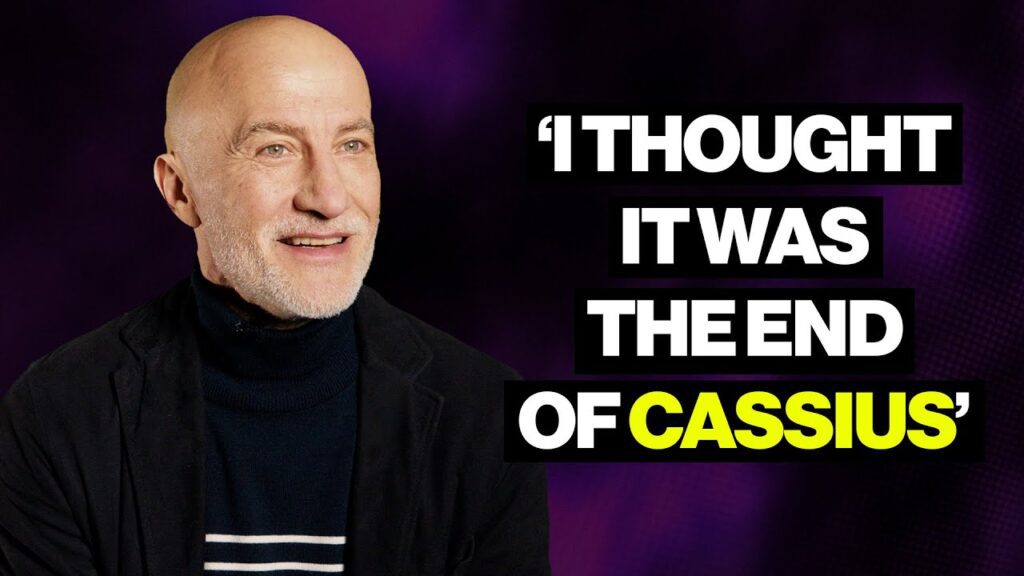
In DJ Mag’s The Making Of A House Classic, Hubert Blanc-Francard, better known as Boombass, looks back on the story behind Feeling For You, one of Cassius’ most loved tracks. The conversation is not only about the technical creation of a house anthem. It is also about childhood, musical inheritance, French hip-hop, friendship, grief, and the lasting bond between Boombass and the late Philippe Zdar.
Featured on Cassius’ debut album 1999, Feeling For You represents everything that made the duo so important: a deep love of samples, a playful approach to groove, a strong sense of rhythm, and a natural ability to turn fragments of older records into something new, bright, and unmistakably French.
Hubert Boombass: A Life Shaped by the Studio
To understand Feeling For You, it helps to understand Hubert Blanc-Francard’s relationship with music. His story begins long before Cassius became one of the central names of French house. Boombass grew up close to the studio environment, with early memories of time spent around his father’s work in music. That exposure gave him a direct connection to sound, recording, instruments, and the invisible magic that happens when ideas become records.
For many artists, the studio is discovered later as a professional space. For Boombass, it was part of the landscape of childhood. That matters. It gave him an instinctive understanding of how music is built, not only as performance, but as texture, arrangement, atmosphere, and production.
This background would later become essential to his work. Cassius’ music often feels spontaneous and joyful, but underneath that energy is a strong studio intelligence. The samples are not chosen randomly. The grooves are not accidental. The records feel immediate because the production decisions are precise.
From French Hip-Hop to La Funk Mob
Before Cassius became a house music reference, Boombass and Philippe Zdar were already making noise in French hip-hop. Their project La Funk Mob gave them international recognition and placed them inside a creative moment where French producers were beginning to build a distinctive sound of their own.
This hip-hop background is crucial. Sampling, chopping, looping, groove construction, drum programming, and the art of transforming existing records into new musical forms are central to both hip-hop and house. The move from hip-hop to dance music was not a complete rupture. It was more like a change of tempo, energy, and destination.
With La Funk Mob, Boombass and Zdar developed a language based on rhythm, texture, and sample manipulation. When they later formed Cassius, they carried that knowledge with them. The tools remained familiar, but the emotional direction changed. Hip-hop’s beat science moved toward the open release of house music.
Cassius: When Hip-Hop Producers Entered the House
Cassius was born from the creative chemistry between Boombass and Philippe Zdar. Together, they helped define a French touch sound that was funky, filtered, compressed, sample-driven, and full of attitude. Alongside artists such as Daft Punk, Étienne de Crécy, Alan Braxe, and others, Cassius became part of a French electronic movement that reshaped club music in the late 1990s.
What made Cassius special was the balance between roughness and elegance. Their music had the direct impact of club records, but also the playful imagination of producers who loved digging into older sounds. They understood that a loop could become addictive if treated correctly. They knew how to make repetition feel alive.
Feeling For You is one of the clearest examples of that vision. It does not try to hide its sample-based identity. It celebrates it. The track is built around transformation: taking a soulful source, speeding it up, placing it over an irresistible groove, and turning it into a house record that feels both familiar and brand new.
The Sample That Became a House Anthem
At the center of Feeling For You is a Gwen McCrae sample, accelerated, reshaped, and placed inside a groove that captures the excitement of late-1990s French house. The method may sound simple on paper, but the result depends entirely on taste. Sampling is not only about taking a piece of music. It is about hearing the future inside the past.
Boombass and Zdar understood how to make a sample move differently. By speeding it up and surrounding it with a strong rhythmic structure, they changed its emotional temperature. What may have existed originally as soul became, in the hands of Cassius, a rush of house euphoria.
This is one of the defining features of the French touch era. Producers treated old records not as museum pieces, but as living material. Disco, funk, soul, and R&B fragments were filtered, looped, compressed, and pushed into new club shapes. The result was music that felt nostalgic and futuristic at the same time.
Why Feeling For You Still Works
Feeling For You still works because it understands the body before it tries to impress the brain. The groove is immediate. The vocal sample is infectious. The rhythm keeps pushing forward. The track does not need excessive complexity to be effective. Its power lies in repetition, energy, and emotional brightness.
Many house classics survive because they contain a simple idea executed perfectly. Feeling For You is exactly that kind of record. It has the confidence to stay focused. It does not overexplain itself. It grabs the dancefloor and keeps moving.
The track also carries a very French sense of style. It has funk, humor, speed, and elegance. It sounds polished without becoming sterile. It feels joyful without becoming lightweight. That balance is difficult to achieve, and Cassius made it feel effortless.
1999 and the French Touch Moment
The inclusion of Feeling For You on Cassius’ debut album 1999 places the track inside one of the most important periods in French electronic music. The late 1990s were a moment of international visibility for French producers, DJs, and labels. French house was no longer a local movement. It became a global sound.
1999 helped establish Cassius as one of the essential names of that scene. The album connected club culture, sample-based production, house grooves, and a pop sense of immediacy. It sounded accessible without losing its underground roots.
In that context, Feeling For You became more than a standout single. It became a signature. It captured the identity of Cassius and the wider energy of a generation of French producers who were rewriting the language of dance music with samplers, filters, and attitude.
Philippe Zdar: Friendship, Loss, and Legacy
The story of Cassius cannot be told without Philippe Zdar. His partnership with Boombass was not simply professional. It was built on decades of friendship, shared musical instinct, and creative trust. Together, they moved from early production work to La Funk Mob, then to Cassius, building a catalog that became central to French electronic music.
Zdar’s tragic passing in 2019 gave the Cassius story a painful emotional dimension. For Boombass, continuing to speak about the project means also speaking about grief, memory, and the strength required to carry forward a musical legacy built with someone so close.
This makes the renewed attention around Cassius deeply moving. The music is joyful, but behind it is also the weight of loss. To continue performing under the Cassius name is not only an artistic decision. It is an act of remembrance, a way of honoring 30 years of friendship and music.
Carrying Cassius Forward
Boombass’ limited run of shows under the Cassius name, including dates in New York, Paris, and London, carries symbolic importance. These performances are not just nostalgia trips. They are a way of allowing the music to breathe again in physical spaces, in front of people who understand what Cassius represents.
House music was made for shared experience. A record like Feeling For You cannot be fully reduced to streaming numbers or archive status. It needs movement, volume, bodies, and collective energy. Bringing Cassius back to the stage gives the music the environment it was built for.
It also connects generations. Some listeners discovered Cassius when 1999 first arrived. Others may have found the tracks later through playlists, DJ sets, samples, documentaries, or French touch retrospectives. The shows allow those different audiences to meet in the same groove.
The Lasting Influence of Cassius
Cassius’ influence can still be heard across modern house, disco-house, filter house, French touch revival sounds, and sample-based electronic music. Their records taught producers that dance music could be fun, stylish, raw, soulful, and clever at the same time.
They also helped prove that French electronic music had its own identity. It did not need to copy Chicago, Detroit, New York, or London to matter. It could absorb influences from all those places and return something with a distinctly French accent: filtered, funky, cinematic, and slightly mischievous.
Feeling For You remains one of the clearest examples of that identity. It is not heavy-handed. It does not announce its importance. It simply works, again and again, every time the groove starts.
Why Feeling For You Is a House Classic
A true house classic does not depend only on age. It survives because it still creates a reaction. Feeling For You continues to make sense because its ingredients are timeless: a strong sample, a powerful groove, a bright emotional lift, and a production style that feels alive.
The track also captures the essence of sample culture at its best. It does not erase the past. It reactivates it. It takes an older musical fragment and gives it a new dancefloor life. That is one of house music’s greatest gifts: the ability to turn memory into motion.
For Cassius, that gift became part of their identity. They did not simply make records for clubs. They made records that felt like celebrations of music itself, full of references, energy, friendship, and love for the studio process.
Conclusion: A Groove Built on Friendship and Memory
Feeling For You is more than a beloved house anthem. It is a reminder of what made Cassius special: the friendship between Hubert Boombass and Philippe Zdar, the bridge between hip-hop and house, the power of sampling, and the joy of turning a musical idea into something that lives on dancefloors for decades.
Hubert Blanc-Francard’s reflection on the track reveals the human story behind the classic. It is about childhood memories in the studio, early production work, the evolution from La Funk Mob to Cassius, the creative spark of French touch, and the grief of continuing after the loss of a close friend and collaborator.
Nearly 30 years after Cassius helped shape a new era of French electronic music, Feeling For You still sounds alive. It still carries warmth, speed, soul, and movement. It still reminds us that a great house record does not only make people dance. It preserves friendship, history, and feeling inside the groove.
YouTube link: Watch Cassius ‘Feeling For You’ | The Making Of A House Classic on YouTube