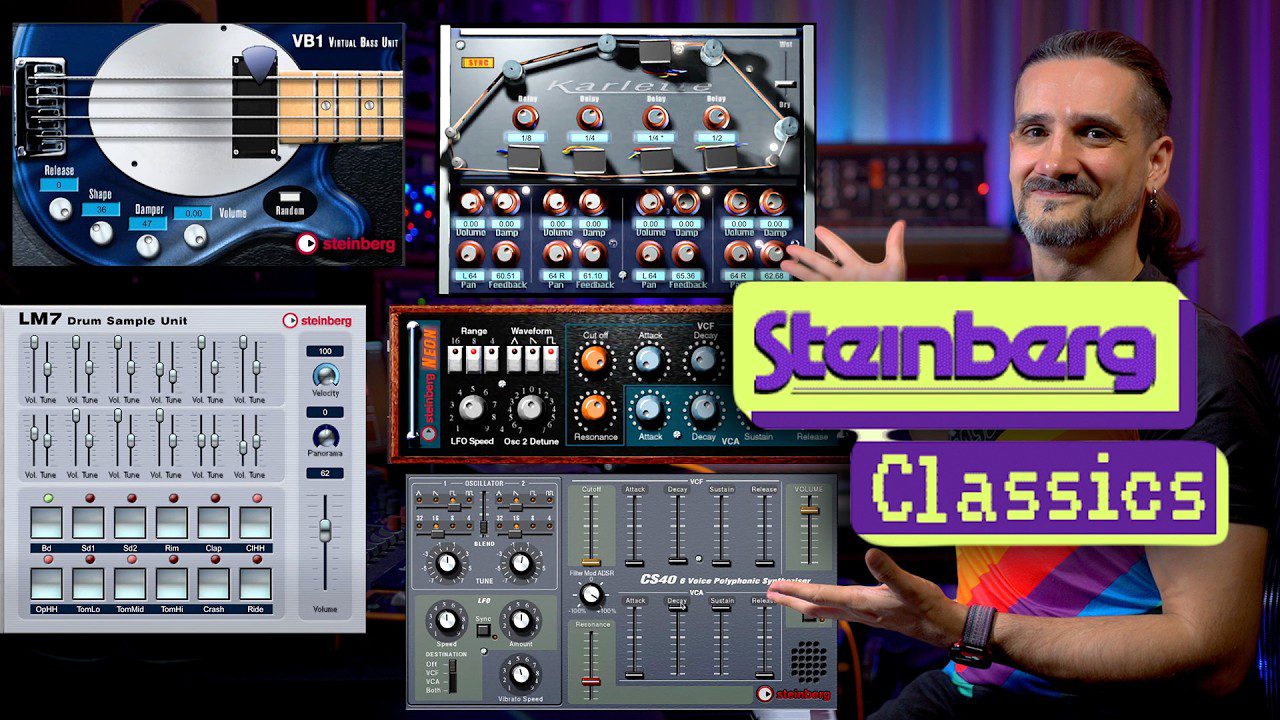

CS-40 by Steinberg: A Free Vintage Synth VST
A revived early-2000s virtual synthesizer for warm pads, expressive leads and straightforward subtractive sound design.
CS-40 by Steinberg is a free virtual synthesizer originally released during the early 2000s and now updated for modern VST3-compatible music production systems.
The instrument returns as part of the free Steinberg Classics Collection, released to celebrate the 30th anniversary of the VST plugin format. The collection brings several early Steinberg instruments and effects to current Windows and macOS computers.
CS-40 is designed around a traditional synthesizer workflow, making it suitable for producers who want to create warm pads, vintage leads, basses and electronic textures without navigating through a large multi-page interface.
Completely free: CS-40 is included in the Steinberg Classics Collection at no cost. A Steinberg account, product registration and online activation are required during installation.
What Is Steinberg CS-40?
CS-40 is a polyphonic virtual synthesizer created during the earlier years of software-based music production. Steinberg describes it as an instrument with warm, expressive tones and a distinctly vintage character.
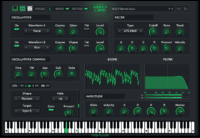
Unlike modern synthesizers filled with several synthesis engines, sample layers and deeply nested modulation pages, CS-40 follows a more immediate approach. Its interface presents the essential sections needed to shape electronic sounds without hiding them behind multiple menus.
The instrument is particularly well suited to classic subtractive synthesis, where an oscillator-based sound is shaped with filtering, envelopes and modulation.
Main appeal: CS-40 offers the fast workflow and distinctive visual character of an early software synthesizer while supporting the modern VST3 format.
Why Has Steinberg Brought It Back?
Steinberg introduced the Virtual Studio Technology format in 1996. VST allowed virtual instruments and audio effects to run directly inside compatible digital audio workstations, helping software plugins become a central part of modern music production.
To celebrate 30 years of VST, Steinberg revived five of its early instruments and effects in the Steinberg Classics Collection:
- CS-40: Vintage-style polyphonic synthesizer
- Neon: Early virtual analog synthesizer
- LM7: Sample-based retro drum machine
- VB-1: Virtual electric bass instrument
- Karlette: Multi-head tape delay effect
The updated versions preserve their original concepts while making them accessible inside current VST3-compatible hosts.
Main Features
- Polyphonic virtual synthesizer
- Classic subtractive synthesis workflow
- Warm and expressive vintage character
- Suitable for pads, leads, basses and electronic textures
- Direct access to essential synthesis parameters
- Resizable modern plugin hosting through VST3
- 64-bit Windows and macOS compatibility
- Included in the free Steinberg Classics Collection
- Compact 43 MB collection download
Warm Pads and Vintage Textures
Steinberg highlights smooth pads as one of the main strengths of CS-40. The synth can create sustained sounds that work behind melodies, vocals or more detailed electronic arrangements.
Longer envelope settings can produce softer entrances and evolving tails, while gentle filter movement can introduce subtle variation throughout a chord.
These characteristics make CS-40 useful for Synthwave, Ambient, Downtempo, Electronica and cinematic production. The sound can also work in modern House and Pop arrangements when a cleaner digital synthesizer feels too polished.
Sound-design idea: Begin with a simple sustained patch, lower the filter brightness and extend the release. Add an external chorus or reverb to create a wider atmospheric layer.
Leads and Melodic Sounds
CS-40 can also produce more focused lead sounds. Shorter envelopes and brighter filter settings can help a patch cut through drums, bass and layered synthesizers.
The instrument’s comparatively simple structure encourages producers to concentrate on the musical role of the patch rather than adding modulation simply because another empty slot remains available.
For a stronger melodic sound, use a short attack, moderate release and enough filter movement to preserve definition. External delay can add rhythm and space without making the original patch unnecessarily complicated.
Bass Sounds
Although Steinberg mainly presents CS-40 as a source of pads and leads, its subtractive architecture can also be used for bass sounds.
Short envelope settings and restrained high frequencies can create straightforward electronic basses suitable for retro Pop, Synthwave and minimal House arrangements.
When using CS-40 for low-end material, keep the sound focused before adding stereo effects. Chorus and wide reverbs can be effective on upper layers, but the fundamental bass information should remain stable.
Mixing reminder: Check bass patches in mono and remove unnecessary sub frequencies. Vintage character is useful; vintage low-end confusion is rather less collectible.
Why Simple Synths Still Matter
Modern software synthesizers can combine wavetable, granular, additive and sample-based engines inside one enormous instrument. That flexibility is valuable, but it can also slow down the writing process.
CS-40 offers the opposite experience. Its limited architecture can help producers reach a usable sound quickly and return to writing melodies, chords and arrangements.
Simple synthesizers are also useful for learning. Oscillators, filters, envelopes and modulation are easier to understand when they are presented clearly rather than distributed across several pages.
Best suited to:
- Synthwave and retro electronic music
- Ambient pads and cinematic backgrounds
- House and melodic electronic production
- Vintage-style Pop arrangements
- Simple lead and bass sound design
- Learning subtractive synthesis
Official Steinberg Classics Video
The official Steinberg video below introduces the complete Steinberg Classics Collection and presents the historic plugins revived for the 30th anniversary of VST.
Celebrating 30 Years of VST with Steinberg Classics
Compatibility
The revived Steinberg Classics are provided as 64-bit VST3 plugins for current Windows and macOS systems.
- Windows: 64-bit Windows 10 version 21H2 or later
- Windows 11: Version 21H2 or later
- macOS: Big Sur, Monterey, Ventura, Sonoma, Sequoia and Tahoe
- Windows plugin format: VST3
- macOS plugin format: VST3
- Disk space: Approximately 43 MB for the complete collection
- Linux: No official version listed
- Internet connection: Required for download, registration and activation
Important: The current release is VST3 only. Your DAW must support the VST3 plugin format.
How to Download CS-40
CS-40 is supplied through the official Steinberg Classics product page rather than as an isolated third-party download.
- Open the official Steinberg Classics page.
- Sign in or create a Steinberg ID.
- Register the free collection when requested.
- Install the Steinberg Download Assistant.
- Download and install the Steinberg Classics Collection.
- Complete the online activation process.
- Open your DAW and rescan the VST3 plugin folder if necessary.
Final Verdict
CS-40 is an interesting free synthesizer for producers who appreciate direct controls, compact instruments and early software-synthesis character.
It does not attempt to compete with modern multi-engine synthesizers or provide an enormous preset ecosystem. Its value comes from a focused workflow and a sound designed around pads, leads and vintage electronic textures.
The VST3 update makes the instrument usable inside current DAWs, while the small collection size makes it easy to install alongside a larger production setup.
CS-40 is old enough to remember when opening one plugin felt exciting rather than the beginning of an administrative project. That simplicity remains surprisingly useful.
Download CS-40 for Free
Get CS-40 and the complete Steinberg Classics Collection from the official Steinberg website.