

From the breakthrough of Space Oddity to the creation of Ziggy Stardust, from the soul-inspired period of Young Americans to the artistic transformation of the Berlin era, from stadium rock to electronic experimentation, Bowie never allowed himself to remain trapped inside one image. He treated music as a living form, something that had to evolve, break, mutate, and renew itself.
His influence reaches far beyond rock music. Bowie shaped the language of visual identity, challenged gender codes, blurred the line between character and performer, and inspired generations of musicians, producers, actors, designers, and independent artists. His legacy is not only a catalog of classic songs. It is a creative philosophy based on movement, risk, curiosity, and the refusal to become too comfortable.
That philosophy is at the heart of his advice to young artists, taken from excerpts of Michael Apted’s 2002 DVD Inspirations, where Bowie discusses why artists create and what creativity truly means. In a few direct sentences, he delivers one of the clearest lessons any young musician, producer, writer, or creator can receive: do not work only to satisfy others, and do not confuse safety with artistic truth.
The Artist Behind the Advice
To understand the strength of Bowie’s advice, it is important to understand the artist who gives it. Bowie’s career was never based on repeating a formula. Every major phase of his work seemed to arrive with a new visual language, a new sound, and a new version of himself. He was not simply changing style for attention. He was using transformation as a method of survival and discovery.
Ziggy Stardust turned rock performance into theatre. The Thin White Duke explored cold elegance, alienation, and controlled intensity. The Berlin period brought atmosphere, fragmentation, electronic textures, and artistic risk into the center of his work. Later decades showed an artist still willing to experiment with pop, industrial music, drum and bass influences, and reflective songwriting.
This constant movement made Bowie more than a performer. He became a model for artistic freedom. He showed that identity could be fluid, that success did not have to become a prison, and that an artist could challenge an audience instead of simply serving it.
Never Work Only for Other People
One of the most striking ideas in Bowie’s advice is his warning against working only for other people. This does not mean artists should reject collaboration, audiences, producers, labels, or professional opportunities. Bowie himself collaborated throughout his career and understood the power of creative exchange.
His point is deeper. An artist should not build an entire creative life around external approval. When music is created only to satisfy trends, playlists, labels, algorithms, critics, or fans, the work can become efficient but empty. It may be polished, but not personal. It may perform well for a moment, but fail to leave a lasting mark.
Bowie’s message is a reminder that true creativity begins with inner necessity. The artist must feel that the work has a reason to exist beyond strategy. A song, album, image, or performance should not simply ask: will people like this? It should also ask: does this reveal something real?
The Danger of Feeling Too Safe
Bowie’s famous idea that if an artist feels safe in the area they are working in, they may not be in the right area, remains one of the most important creative lessons of his career. Safety can be comfortable, but it can also become a warning sign. It may mean the artist is repeating familiar gestures instead of discovering something new.
For young artists, this is especially relevant. Early success can easily become a cage. Once a sound works, the temptation is to repeat it. Once an image attracts attention, the pressure is to preserve it. Once an audience expects a certain style, the artist may become afraid to disappoint them.
But creative growth rarely happens in complete comfort. It happens at the edge of uncertainty, where the artist does not fully know what the result will be. That space can feel unstable, but it is often where the most original work begins.
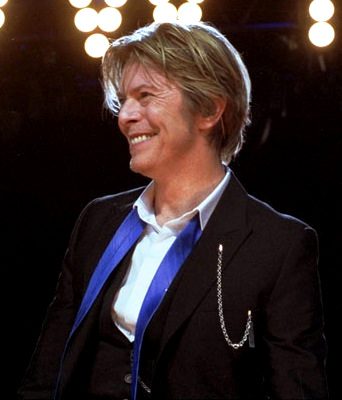
Bowie’s Career as a Living Example of Creative Risk
David Bowie did not simply speak about risk. He built his career on it. He repeatedly abandoned successful formulas at the moment when other artists might have protected them. After becoming identified with glam rock, he moved elsewhere. After establishing one sound, he searched for another. After creating one persona, he destroyed it and invented a new one.
This willingness to move forward is one reason his work still feels alive. Bowie understood that an artist can become trapped by their own success. The public may love a version of you, but that version can become a mask you are no longer able to remove.
His creative courage came from the refusal to let public expectation decide the boundaries of his imagination. He treated discomfort not as failure, but as a sign that the work was still alive.
Creativity Begins at the Edge
Bowie’s advice suggests that the most interesting creative work often begins when the artist moves slightly beyond what they already understand. This does not mean chasing chaos for no reason. It means entering a space where discovery is still possible.
An artist who always knows exactly what they are doing may be working too safely. The best ideas often appear when the process becomes uncertain: a strange chord, an uncomfortable lyric, a new production method, a visual direction that feels risky, or a subject that is difficult to explain.
For Bowie, the edge was not a place of danger for its own sake. It was a place of transformation. That is where the artist meets the unknown and finds a new language.
A Lesson for Independent Artists Today
Bowie’s advice feels particularly powerful in the streaming era. Independent artists today face constant pressure to produce content, feed social media, follow trends, pitch playlists, study algorithms, and remain visible. The risk is that creativity becomes shaped more by performance metrics than by artistic instinct.
This can create music that is optimized but forgettable. A song may have the right structure, the right sound palette, the right cover art, and the right promotion strategy, yet still lack identity. Bowie’s philosophy reminds artists that strategy should support vision, not replace it.
For modern independent musicians, the lesson is clear: learn the tools, understand the industry, promote your work professionally, but do not let the system decide who you are. The artist must remain more important than the algorithm.
Why Young Artists Should Avoid Creative Imitation
Every artist begins with influences. Bowie himself absorbed theatre, cinema, literature, soul, rock, electronic music, fashion, and avant-garde art. But he did not simply copy those influences. He transformed them into a personal language.
This is the difference between influence and imitation. Influence opens doors. Imitation closes them. A young artist can learn from heroes, study their methods, and understand their impact, but the final goal is not to become a replica. The goal is to discover a voice that could only belong to them.
Bowie’s legacy is powerful because it encourages artists to be inspired without becoming dependent. He proved that originality does not come from having no influences. It comes from transforming influences into something personal, unstable, and alive.
The Artist Is Allowed to Change
One of Bowie’s most liberating lessons is that an artist does not have to remain one fixed thing. Sound can change. Image can change. Themes can change. The public may resist at first, but change is often necessary for survival.
This is an important message for young musicians who feel pressured to define themselves too early. Branding can be useful, but it can also become restrictive. If an artist is too afraid to evolve, the project can become predictable before it has fully developed.
Bowie showed that consistency does not always mean repetition. An artist can remain consistent in spirit while changing form. His consistency was not one sound or one image. It was curiosity itself.
Why Bowie’s Advice Still Matters
David Bowie’s words continue to matter because they cut through the noise of the modern creative industry. He does not offer easy comfort. He does not promise that risk will always be rewarded. He simply points toward a deeper truth: art loses power when it becomes too safe.
This advice applies to every generation. It speaks to the young producer working in a bedroom studio, the songwriter afraid to change direction, the band trapped by its first successful sound, and the visual artist who feels pressured to create only what performs well online.
Bowie’s message is not anti-audience. It is pro-integrity. The audience matters, but the artist must not become a servant of expectation. The strongest work often comes from the place where the artist is slightly uncomfortable, slightly exposed, and slightly unsure.
Conclusion: David Bowie’s Legacy Is a Creative Philosophy
David Bowie’s advice to young artists is powerful because it reflects the way he lived as a creator. He did not build his legacy by standing still. He built it by entering unknown territory again and again, even when success could have allowed him to remain comfortable.
His biography and his advice tell the same story: the artist must keep moving. Not randomly, not desperately, but honestly. Creativity requires risk, curiosity, courage, and the willingness to disappoint expectations in order to discover something more truthful.
For young artists today, Bowie’s lesson is simple but demanding: do not build your work only around safety. Do not create only for approval. Do not let other people define the limits of your imagination. The most important work often begins at the edge of what feels familiar.
That is where David Bowie lived as an artist. And that is why his advice still feels essential.
YouTube link: Watch David Bowie’s advice to young artists on YouTube