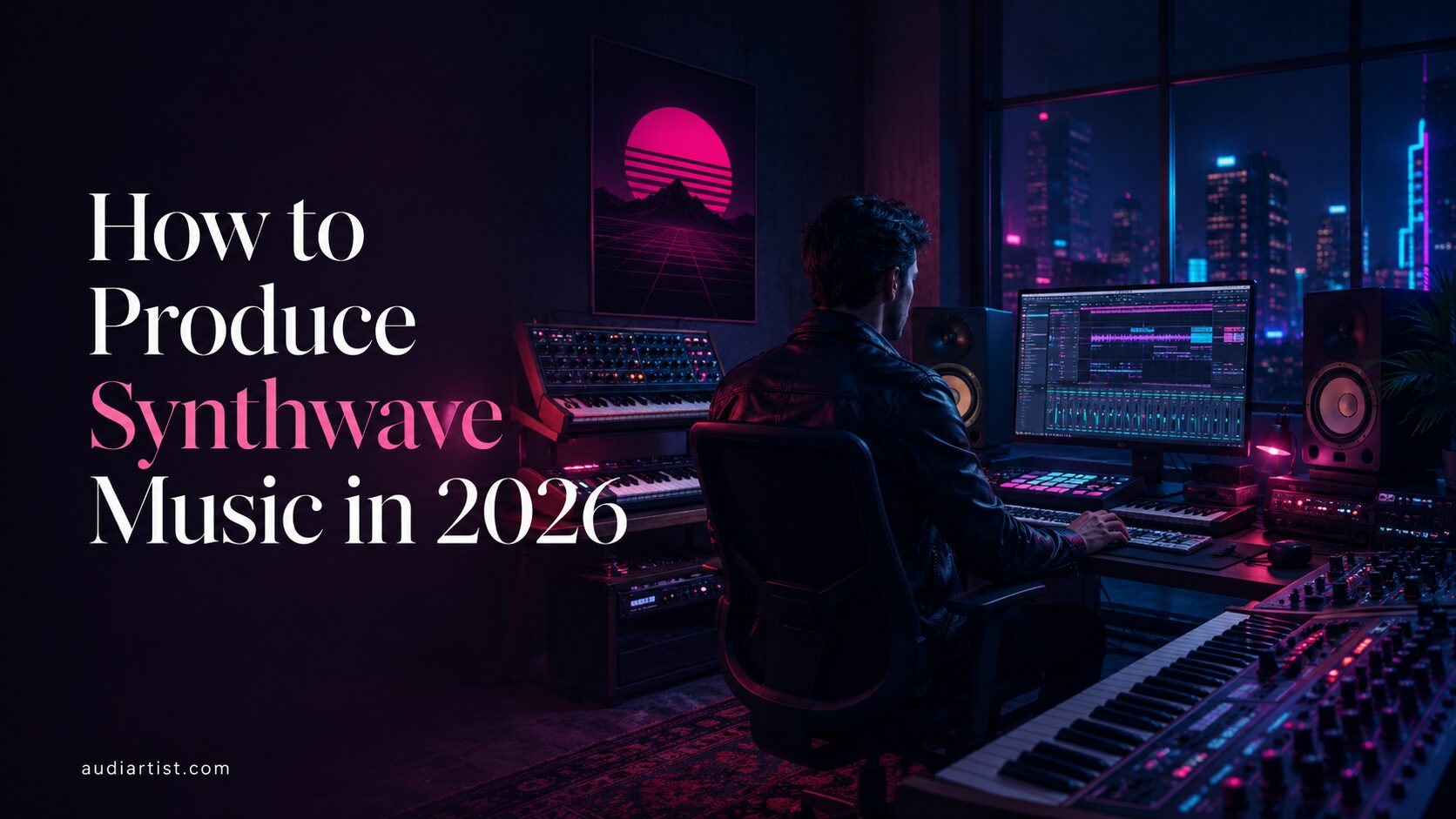

Synthwave music production in 2026 is no longer limited to recreating the 1980s with vintage synthesizer presets and gated drums. The genre now combines retro analog character, cinematic composition, modern low-end control and contemporary mixing techniques.
You do not need an expensive collection of vintage synthesizers to produce convincing synthwave. A carefully selected group of free VST instruments and effects can cover warm pads, pulsing basslines, bright arpeggios, analog-style drums, tape coloration and polished mixing.
This guide explains the history of synthwave, its essential musical elements and the best free VST plugins for producing professional synthwave tracks in 2026.
A Short History of Synthwave Music
Synthwave emerged during the 2000s as electronic producers began revisiting the sounds and visual language of 1980s films, video games, synthesizer music and television soundtracks.
The genre was strongly influenced by composers such as John Carpenter, Vangelis, Giorgio Moroder, Tangerine Dream and Jan Hammer. It also borrowed from Italo Disco, synth-pop, new wave, early electronic dance music and the soundtracks of arcade and home-console games.
During the late 2000s and early 2010s, artists such as Kavinsky, College and Miami Nights 1984 helped define the modern synthwave aesthetic. The soundtrack of the 2011 film Drive brought the style to a much larger audience, while later artists developed darker, heavier and more cinematic variations.
In 2026, synthwave includes several connected styles:
- Outrun: Fast, energetic music inspired by driving, arcade games and neon highways.
- Dreamwave: Softer pads, emotional melodies and nostalgic atmospheres.
- Darksynth: Aggressive basses, distorted leads and horror soundtrack influences.
- Cyberpunk: Futuristic sound design, industrial rhythm and digital textures.
- Synthpop and vocal synthwave: Retro electronic production built around pop songwriting and vocals.
- Cinematic synthwave: Wider arrangements influenced by film scores, trailers and ambient music.
Audiartist has already explored the genre in greater historical detail in its guide to the history of synthwave.
The Essential Elements of a Synthwave Track
A convincing synthwave production usually contains several recognizable elements:
- Analog-style pads and brass chords
- Arpeggiated synthesizer patterns
- Pulsing basslines
- Electronic drums inspired by classic drum machines
- Large snares with gated or plate reverb
- Chorus, tape saturation and modulation
- Simple but memorable melodies
- Cinematic transitions and atmospheric effects
The objective is not to reproduce every technical limitation of the 1980s. Modern synthwave works best when vintage tone is combined with present-day editing, arrangement and low-frequency control.
Best Free Synth VST Plugins for Synthwave in 2026
Vital: Modern Wavetable Sound Design
Vital is one of the strongest free synthesizers for modern synthwave production.
Its visual modulation system makes it easy to create animated basses, evolving pads, bright leads and synchronized arpeggios. While Vital is more modern than the analog synthesizers normally associated with the genre, it can produce convincing retro sounds when simple waveforms, controlled unison and subtle modulation are used.

For an analog-style pad, begin with sawtooth oscillators, reduce the filter cutoff and assign a slow envelope to the filter. Add moderate chorus, delay and reverb, but avoid using excessive unison on every layer.
Official download:
Vital Audio
Surge XT: The Complete Free Synthwave Workstation
Surge XT is a free open-source hybrid synthesizer capable of handling almost every synthwave role.
It includes virtual analog oscillators, wavetable synthesis, FM, filters, modulation and a large internal effects section. Surge XT can produce warm pads, sync leads, plucked sequences, digital bells, basses and cinematic textures inside one instrument.
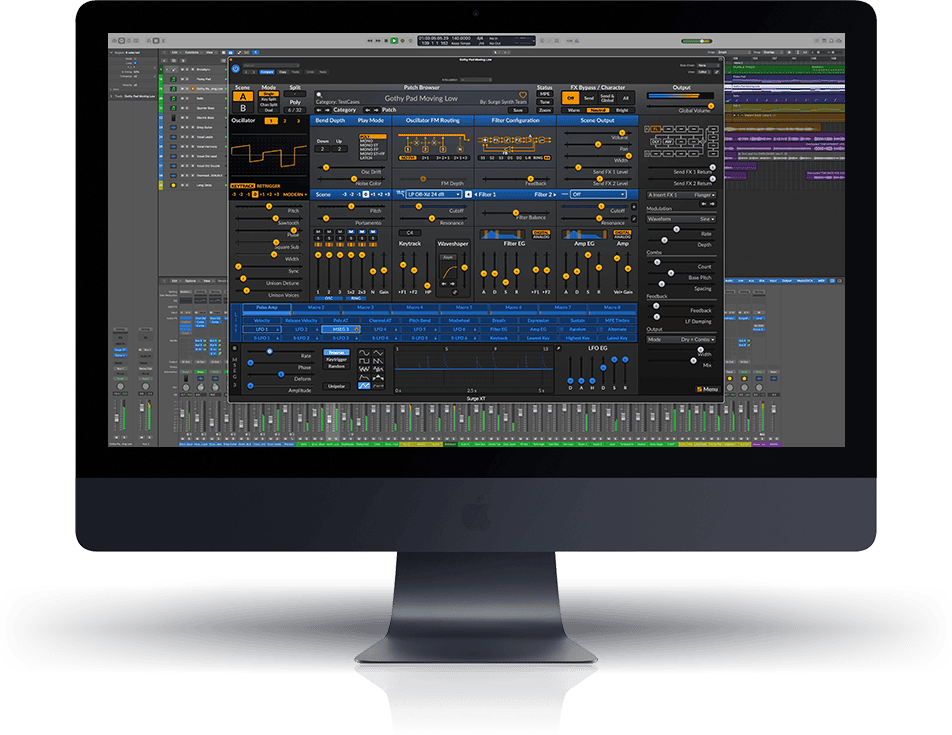
The synth is particularly useful for producers who want to build a complete track without installing several different instruments. Its extensive modulation system also makes it suitable for evolving cyberpunk and darksynth patches.
Official download:
Surge XT
Fury-68: Raw Analog-Style Bass and Leads
Fury-68 by Full Bucket Music is useful for more aggressive analog-style basses, leads and sequences.
Its raw oscillator character works particularly well for outrun basslines and darker synthwave sounds. Use short filter envelopes for rhythmic bass patches or increase resonance and modulation for sharper retro leads.
Official download:
Full Bucket Music
EightyEight: Free Jupiter-Style Synth Tones
EightyEight is designed around the character of a classic polyphonic analog synthesizer.
It is a strong choice for wide brass chords, vintage pads, synth strings and expressive lead sounds. These tones can provide the central harmonic identity of a synthwave production without requiring a complicated sound-design session.
Dexed: Digital Bells, Keys and FM Basses
Dexed is a free FM synthesizer inspired by the Yamaha DX7 architecture.
It complements analog-style instruments by providing electric pianos, metallic bells, digital basses and glassy keyboard sounds. These patches can add authentic 1980s digital colour to an otherwise analog-focused arrangement.
Official download:
Dexed
Programming Synthwave Drums
Synthwave drums are usually simple, powerful and highly processed. Begin with a clear kick, a large snare or clap, closed hi-hats and a small number of tom or percussion sounds.
A basic pattern can place the kick on every beat for dance-oriented synthwave or use a slower rock-inspired pattern for cinematic and darksynth tracks. The snare commonly lands on beats two and four.
Do not quantize every secondary percussion hit at exactly the same velocity. Small changes in level and timing can prevent the groove from sounding like a museum demonstration of a drum machine.
Creating the Classic Gated Snare
Send the snare to a bright plate or room reverb, then place a gate after the reverb. Adjust the release so that the tail stops abruptly before the next major drum hit.
A simpler alternative is to render the reverb to audio and shorten the tail manually. This offers precise control and avoids unnecessary processing during the mix.
Best Free Effects for Synthwave
FALA: Vintage BBD Chorus
FALA by Studio Kozak is a free BBD-inspired chorus effect designed to add analog movement, drift and stereo width.
Use it on pads, synth strings, clean guitars and background leads. Chorus is one of the defining synthwave effects, but too much width can weaken the centre of the mix. Keep bass frequencies mostly mono and apply stronger chorus to the midrange layers.
Valhalla Supermassive: Huge Reverb and Delay
Valhalla Supermassive is ideal for long atmospheric tails, modulated echoes and cinematic transitions.
Use it on an auxiliary channel rather than inserting it at full intensity on every instrument. Filtering the reverb return prevents low-frequency buildup and leaves more room for the kick and bass.
Official download:
Valhalla DSP
CHOW Tape Model: Analog Tape Colour
CHOW Tape Model is a free physical model of an analog tape machine. It can add saturation, compression, frequency coloration, wow and flutter.
For synthwave, use it subtly on drum buses, pads or the complete instrumental mix. Excessive tape processing can soften transients and remove clarity, so compare the processed signal with the original at a similar loudness.
Official download:
ChowDSP
YS Again & Again: Tape-Style Echo
YS Again & Again combines delay, harmonic coloration and darker tape-style feedback.
It works well on short synth leads, arpeggios and vocal fragments. High-frequency damping helps each repeat move farther into the background instead of competing with the original sound.
Free Mixing VST Plugins for Synthwave
TDR Nova: Dynamic EQ and Frequency Control
TDR Nova is a free dynamic equalizer that can solve several common synthwave mixing problems.
Use it to reduce harshness in bright leads, control muddy low-mid frequencies in pads or dynamically create space between a bassline and the kick.
A narrow cut should only be used when a genuine resonance exists. Removing frequencies simply because an analyzer looks busy often produces a smaller and less musical mix.
Official download:
Tokyo Dawn Records
TDR Kotelnikov: Clean Bus Compression
TDR Kotelnikov is a transparent compressor suited to drum buses and stereo mix processing.
For synthwave drums, use a moderate ratio, slow enough attack to preserve the kick and snare transients, and a release that returns naturally with the groove. One or two decibels of gain reduction may be enough.
Official download:
TDR Kotelnikov
FreeEQ8: Detailed Tone Shaping
FreeEQ8 combines parametric EQ, dynamic processing, Mid/Side control and spectrum analysis.
It can help reduce excessive stereo low end, soften aggressive synth resonances and shape effects returns without processing the entire mix equally.
LoudMax: Simple Final Limiting
LoudMax is a straightforward final limiter that can raise level while controlling peaks.
Do not use the limiter to repair an unbalanced mix. Reduce problematic drum peaks, resonant bass notes and excessive effects before attempting to increase the final loudness.
Official download:
LoudMax
How to Arrange a Synthwave Track
A practical synthwave arrangement can follow this structure:
- Intro: Atmosphere, filtered arpeggio or distant pad.
- Verse or first section: Bassline, restrained drums and a simple melodic motif.
- Build: Open the filters, introduce toms and increase delay or reverb automation.
- Main section: Full drums, lead melody, wider chords and stronger bass.
- Breakdown: Remove the kick and reduce the arrangement to pads, vocals or a cinematic texture.
- Final section: Return to the main theme with an additional harmony, counter-melody or drum variation.
Synthwave melodies are often more effective when they are simple. A memorable four-note motif with strong sound design is usually more convincing than a complicated line that never gives the listener time to remember it.
A Practical Free Synthwave Plugin Chain
A complete free synthwave production could use the following setup:
- Bass: Fury-68, Vital or Surge XT
- Chords and pads: EightyEight, Surge XT or Vital
- Digital keys: Dexed
- Arpeggio: Vital or Surge XT
- Chorus: FALA
- Delay and reverb: Valhalla Supermassive or YS Again & Again
- Tape coloration: CHOW Tape Model
- Corrective EQ: TDR Nova or FreeEQ8
- Bus compression: TDR Kotelnikov
- Final limiting: LoudMax
Final Mixing Advice
The largest synthwave mixing problem is often not a lack of power, but an excess of width, reverb and low-mid energy.
Keep the kick, sub bass and main bass foundation centred. Use chorus and stereo modulation on pads, leads and supporting textures rather than on every low-frequency element.
High-pass reverb and delay returns, automate effects between sections and leave enough headroom before limiting. A polished synthwave mix should feel wide and cinematic without turning into an attractive fog where the drums used to be.
Final Verdict
Producing synthwave music in 2026 does not require vintage hardware or an expensive plugin collection.
Vital and Surge XT provide modern sound-design depth, Fury-68 and EightyEight deliver analog-inspired character, Dexed adds classic FM colour, while FALA, Supermassive and CHOW Tape Model create the modulation, space and tape texture associated with the genre.
Combined with free mixing tools such as TDR Nova, FreeEQ8, TDR Kotelnikov and LoudMax, these plugins form a capable production environment for outrun, dreamwave, darksynth, cyberpunk and cinematic synthwave.
The important step is not collecting every retro plugin available. It is choosing a small number of instruments, learning them properly and writing a melody strong enough to survive when the neon lights are switched off.