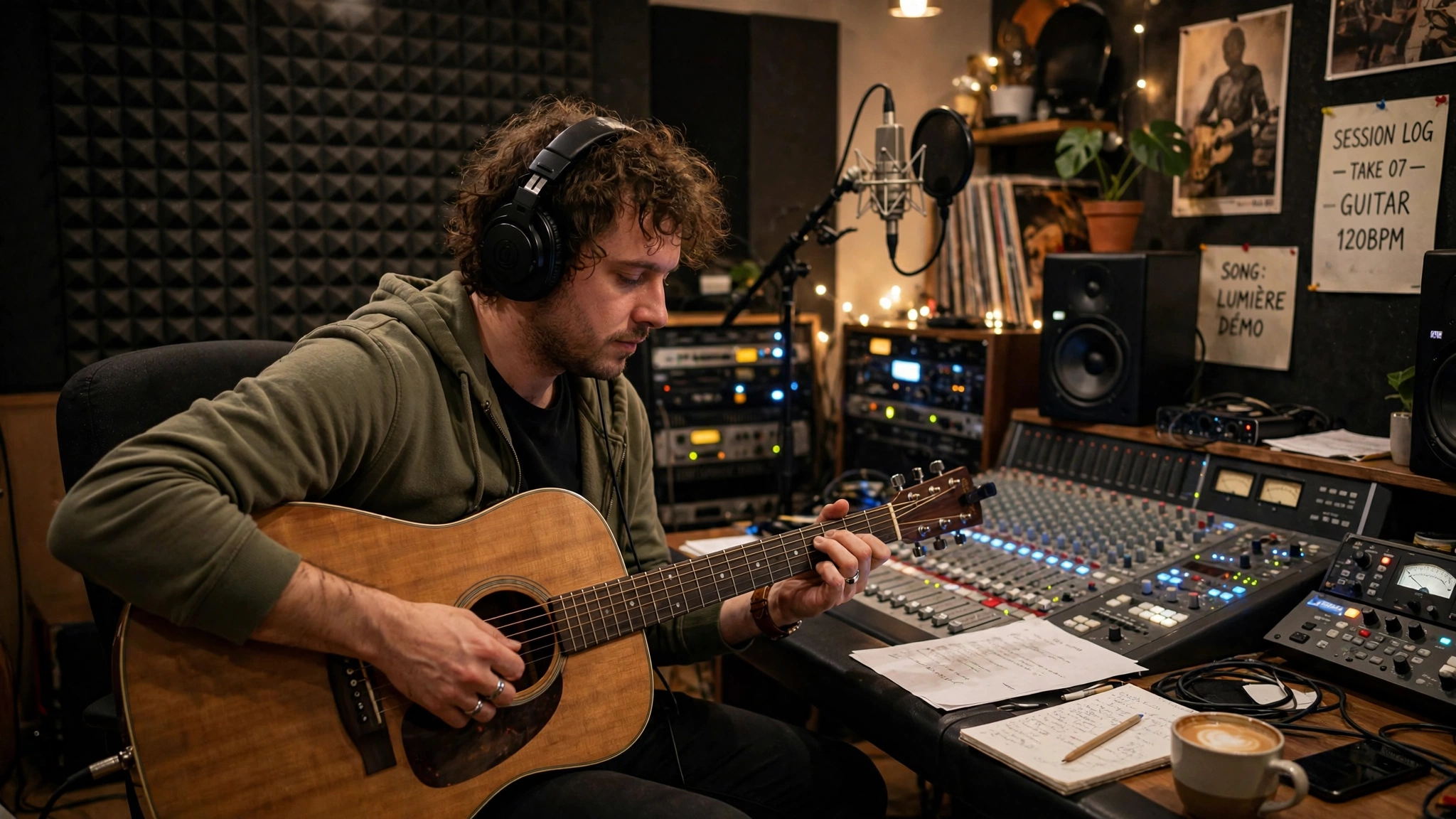

The new social media rules do not mean artists must become full-time influencers. They mean musicians need to treat promotion as an extension of their creative identity rather than an endless sequence of advertisements.
Music Promotion Has Entered the Originality Era
The most important change in social media promotion is the growing importance of original content.
Meta has made originality a major distribution signal across Facebook and Instagram. In January 2026, the company reported that 75 percent of Instagram recommendations in the United States were coming from original posts. Facebook has also updated its guidelines to give original creators greater reach while reducing the visibility of duplicated, lightly edited or copied material.
This does not mean musicians must invent an entirely new video concept every day. It means the artist should be clearly responsible for the creative value of the post.
An original music promotion video might include:
- A live performance recorded in the studio
- A breakdown of the track’s production
- The story behind a lyric or melody
- A demonstration of a synthesizer, guitar or vocal effect
- An alternative version of the chorus
- A rehearsal, soundcheck or recording session
- A direct explanation of what inspired the song
By contrast, repeatedly uploading a static cover image with the same audio excerpt gives the platform very little new information to recommend. The song may be different, but the content format appears almost identical.
Social platforms are not asking artists to publish more promotional material. They are asking them to publish more distinctive material.
Stop Posting the Exact Same Video Everywhere
Cross-platform promotion remains useful, but simple duplication is becoming less effective.
Each social network has its own audience behaviour, discovery system and preferred viewing experience. A video that performs well on TikTok may feel too abrupt on YouTube, while an Instagram Reel designed around aesthetics may not provide enough context for Facebook users.
The solution is not to create four completely separate campaigns. Artists can start with one central idea and adapt it for each platform.
For example, a musician promoting a new single could create:
- TikTok: a fast opening question followed by the strongest musical moment
- Instagram Reels: a polished visual sequence with a clear emotional narrative
- YouTube Shorts: a slightly more informative version explaining how the track was made
- Facebook: a video accompanied by a personal story that encourages discussion
The music remains the same, but the presentation changes according to the platform.
This approach also reduces audience fatigue. Fans who follow an artist on several networks should not feel that they are seeing the same advertisement four times in a row.
Instagram Now Gives Smaller Artists More Opportunities
Instagram has gradually changed how Reels are recommended, with the stated goal of giving smaller original creators a better chance of reaching new audiences.
Instead of immediately showing a recommended Reel to a huge audience, Instagram can begin by testing it with a smaller group of viewers who are likely to be interested. Videos that receive positive signals can then be distributed more widely.
For musicians, this means account size is not the only factor determining reach. The first reactions to a Reel can be more important than the number of followers already attached to the profile.
Instagram’s Trial Reels feature is particularly useful for music promotion. It allows eligible creators to show a Reel to non-followers before deciding whether to share it more broadly with their existing audience.
An artist can therefore test several promotional angles:
- The first verse against the chorus
- A performance video against a production video
- A direct introduction against a more mysterious opening
- A vocal section against an instrumental drop
Instead of arguing for three days about which fifteen-second extract is best, the artist can let actual audience behaviour answer the question. A rare occasion when the algorithm can settle a studio debate without asking for a producer credit.
The First Seconds Matter, but Retention Matters More
The opening of a short video remains extremely important. However, the objective is not simply to shock viewers into stopping their scroll.
A strong opening must create a reason to continue watching.
Common music promotion openings include:
- “I almost removed this section from the song.”
- “This sound started with a broken guitar pedal.”
- “Which version of the chorus should I release?”
- “Here is what the vocal sounded like before mixing.”
- “I wrote this track after receiving one sentence in a message.”
The next part of the video must quickly deliver on that promise. Misleading hooks may generate an initial pause, but they often produce poor retention and weak audience trust.
Artists should study where viewers leave the video. If most users stop watching before the music begins, the introduction is probably too long. If they watch the performance but ignore the final call to action, the promotional message may be unnecessary or badly placed.
Watch time is not just a statistic. It is editorial feedback.
TikTok Views Are No Longer the Final Objective
TikTok remains one of the most influential music discovery platforms, but the value of a campaign should not be judged by views alone.
In April 2026, TikTok announced that its Add to Music App feature had generated more than six billion track saves during the previous year. The feature allows listeners to save music discovered on TikTok directly to supported streaming services.
This creates a much clearer path between a short video and long-term listening:
Discovery video → sound page → track save → streaming platform → repeat listening
A video with 20,000 views and hundreds of saves may be more valuable than a video with 500,000 passive views that produces no meaningful listening activity.
Musicians should therefore pay attention to:
- The number of videos created with their sound
- Track saves
- Profile visits
- Shares
- Completion rate
- Traffic to streaming platforms
- Growth in listeners after a video performs well
The goal is not simply to make people hear a fragment of the song. It is to make them want to hear the complete version.
Use TikTok for Artists as a Decision-Making Tool
TikTok for Artists gives certified artist accounts access to daily information about songs, posts and followers. Available data includes video views, post creation numbers, engagement, completion rates and audience information.
These statistics can help artists identify which part of a song is connecting with listeners.
For example, if videos using the second verse receive better completion rates than videos using the official chorus, the campaign should adapt. The section originally considered secondary may actually be the strongest promotional asset.
Artists should use analytics to answer practical questions:
- Which extract creates the highest retention?
- Which video format generates the most shares?
- Are listeners responding to the lyrics, production or personality?
- Which countries are beginning to discover the track?
- Does the audience watch performance videos longer than studio content?
Analytics should guide creative decisions, not replace them. A spreadsheet can identify the strongest video, but it cannot write the next chorus. At least, not one anybody should be forced to hear.
YouTube Is Targeting Repetitive and Mass-Produced Content
YouTube’s monetization policies require videos and Shorts to be original and authentic. In July 2025, the platform renamed its “repetitious content” policy as “inauthentic content” to clarify that repetitive or mass-produced videos may be ineligible for monetization.
This rule is especially relevant to music channels built around hundreds of nearly identical uploads.
A channel that repeatedly publishes the same visual template, automated description and minimal creative variation may struggle to demonstrate original value, even when the uploader owns the music.
Copyright ownership and content originality are separate questions. Owning a track does not automatically mean every video format built around it will satisfy YouTube’s monetization standards.
Musicians can strengthen their YouTube content by adding:
- Live sessions
- Official visualisers created specifically for each song
- Production commentary
- Track breakdowns
- Behind-the-scenes footage
- Music videos with an identifiable artistic concept
- Alternative arrangements
- Short documentaries about the project
A static image upload can still serve a purpose, particularly for catalogue availability, but it should not represent the entire editorial strategy of a music channel.
AI Disclosure Is Becoming a Promotion Requirement
Artificial intelligence is also changing the rules of social media communication.
YouTube requires disclosure when meaningfully altered or generated content appears realistic. This includes making a real person appear to say or do something they did not do, altering footage of a real event or generating a realistic scene that never occurred.
For musicians, the issue is not limited to fully generated songs. It may also apply to:
- Realistic AI-generated music videos
- Cloned artist voices
- Synthetic interviews
- Fake concert footage
- Digitally generated appearances by real musicians
- Realistic scenes presented as genuine events
Transparency does not automatically reduce the quality or reach of a creative project. Misleading the audience, however, can damage both platform eligibility and artist credibility.
Artists should clearly distinguish between artistic fiction and false representation. A surreal animated visual does not normally pretend to document reality. A photorealistic video showing an artist performing at a festival they never attended creates a very different issue.
Facebook Is Fighting Copycats and Promotional Spam
Facebook has increased its focus on original Reels and has taken action against accounts that rely on copied content, impersonation and spam-like publishing tactics.
Meta reported that views and watch time for original Facebook Reels approximately doubled during the second half of 2025 compared with the same period in 2024.
This makes Facebook more relevant to independent artists than many promotional guides suggest. The platform still has large communities built around genres, local scenes, instruments, production techniques and music history.
However, simply dropping a streaming link into multiple groups is rarely an effective strategy. A better Facebook post provides a reason to interact before presenting the link.
For example:
- Explain how the track was recorded
- Ask a precise production question
- Share a personal story connected to the lyrics
- Discuss the musical influences behind the release
- Show an unusual instrument or recording method
Facebook promotion works best when the post can start a conversation even before anyone clicks the streaming link.
Music Rights Still Matter on Social Platforms
Artists should never assume that every track available inside a social media application is cleared for every commercial use.
TikTok recommends using its Commercial Music Library when a post promotes a brand, product or service. Music outside that library may not be covered for commercial use unless the creator owns the necessary rights or has obtained the appropriate licences.
This distinction can affect sponsored posts, brand partnerships, advertisements and certain professional account activities.
Independent artists using their own music should still maintain organised proof of ownership, including:
- Distribution records
- Publishing information
- Licensing agreements
- Split sheets
- Master ownership details
- Written permissions from collaborators
A distributor delivery receipt is useful, but it does not resolve every possible ownership dispute. Clear documentation becomes particularly important when several writers, singers, producers or sample creators are involved.
Followers Are Not the Most Important Music Promotion Metric
Follower count remains useful, but it can create a misleading impression of success.
An account with 100,000 followers and little interaction may generate fewer streams than a smaller community of 5,000 engaged listeners.
The most useful promotional metrics depend on the campaign objective.
For awareness
- Unique viewers
- Non-follower reach
- Video completion rate
- Shares
For engagement
- Comments with meaningful responses
- Saves
- Profile visits
- Direct messages
- User-generated videos
For music conversion
- Track saves
- Streaming link clicks
- Playlist additions
- New listeners
- Repeat listeners
- Follower growth on streaming platforms
These figures should be compared over time. A single viral video can create a temporary spike, while a consistent series of smaller videos may build a more durable audience.
How to Promote One Song for 30 Days
A strong release campaign does not end on release day. One song can support several weeks of original content without forcing the artist to repeat the same message.
Week 1: Introduce the story
- Explain where the idea came from
- Present the main lyric or melody
- Share an early demo
- Introduce the artwork or visual identity
Week 2: Show the creative process
- Break down the instrumental
- Show the vocal recording
- Compare the demo and final mix
- Present one important production decision
Week 3: Build participation
- Invite listeners to choose between two versions
- Encourage creators to use the official sound
- Share audience reactions
- Publish a live or acoustic version
Week 4: Extend the song’s life
- Release an alternative edit
- Discuss the campaign results
- Share playlist or radio support
- Connect the track to the next release
This approach turns promotion into an evolving story. The audience discovers not only the finished song, but also the person, decisions and creative process behind it.
A Practical Social Media Strategy for Independent Artists
Independent musicians do not need to publish every day on every platform. They need a repeatable system that protects enough time for music creation.
A realistic weekly structure might include:
- One strong performance video
- One production or behind-the-scenes post
- One personal or story-based post
- One community interaction or response video
- Several short Stories or informal updates
One recording session can produce several pieces of content. A complete studio performance can become a full YouTube video, two Shorts, three Reels, a TikTok edit and several photographs.
The important difference is that each version should be edited with a clear purpose rather than exported automatically with the same caption.
The New Rules of Music Promotion in 2026
The modern social media environment can be summarised through several essential principles:
- Create original content instead of repeating promotional templates.
- Adapt each idea to the platform where it will be published.
- Measure retention, saves and conversions rather than views alone.
- Use analytics to identify the strongest part of a song.
- Give the audience a reason to interact before asking them to stream.
- Disclose realistic AI-generated or altered material when required.
- Keep clear records of music ownership and licensing.
- Build long-term listeners instead of chasing temporary viral attention.
Final Thoughts
Music promotion in 2026 is becoming more demanding, but it is also creating new opportunities for independent artists.
Platforms are increasingly capable of recommending content beyond an artist’s existing follower base. A musician with a small audience can still achieve meaningful reach when the content is original, well presented and capable of holding attention.
The artists who benefit most will not necessarily be those who publish the greatest number of videos. They will be the ones who understand how to transform a song into a series of genuine stories, performances and conversations.
Social media should not replace the music. It should provide more ways for listeners to enter its world.
Official Sources
- Meta: Rewarding Original Creators on Facebook
- Meta: 2026 AI Drives Performance
- Instagram: Recommendations and Originality
- Instagram: Trial Reels
- TikTok for Artists
- TikTok: Add to Music App Track Saves
- TikTok: Commercial Use of Music
- YouTube Channel Monetization Policies
- YouTube: AI Content Disclosure and Labels
![[ODESA] - OFFICIAL FREE SAMPLE PACK VOL.1](https://www.audiartist.com/wp-content/uploads/2026/08/uhmup1lv86cuaa18kcaom931ko1s-200x200.jpg)