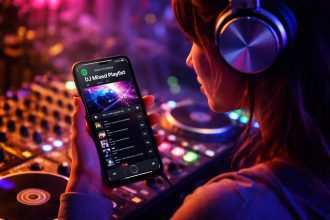
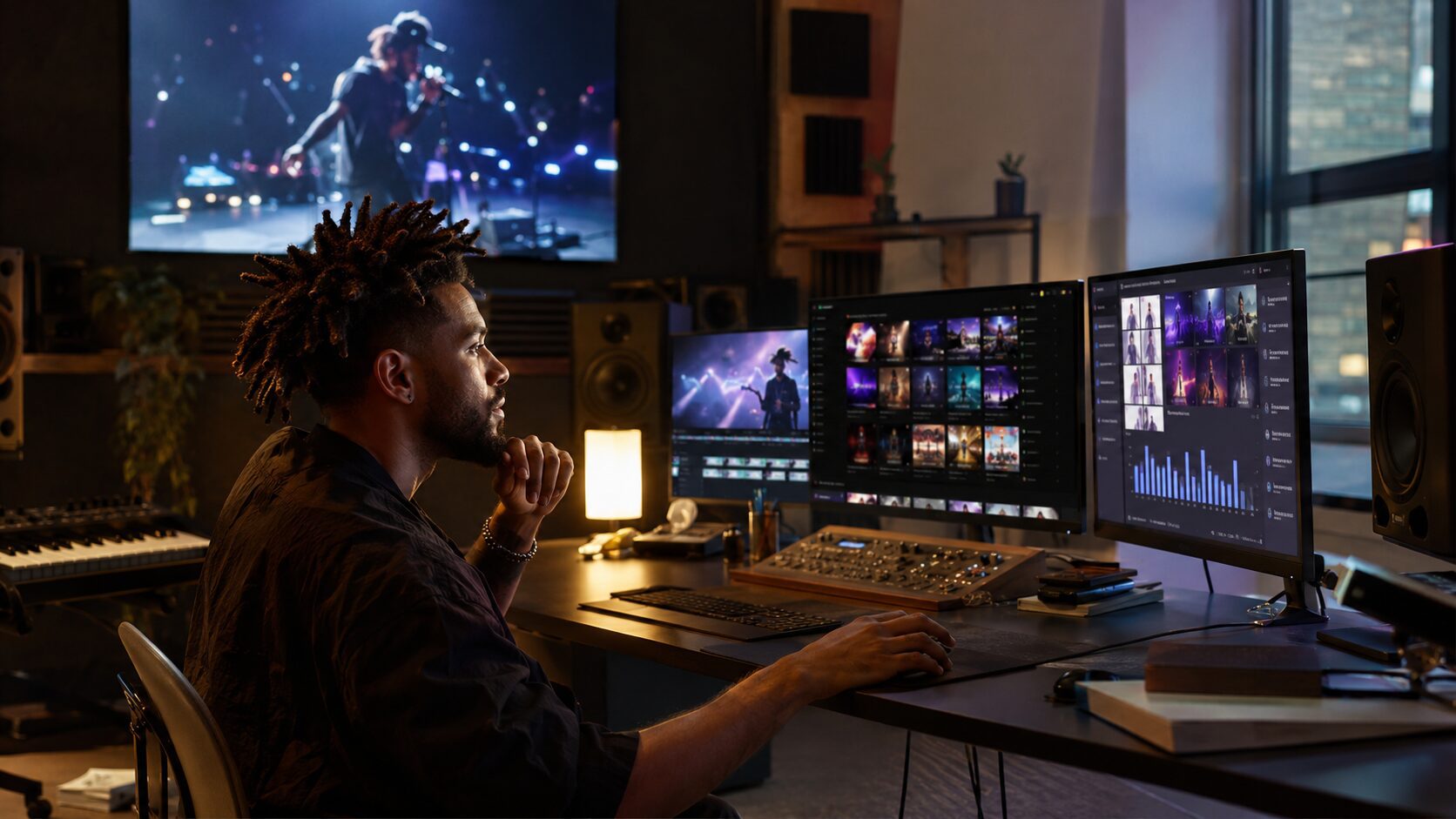

This shift is not cosmetic. It marks a structural change in the way listeners discover songs, follow artists and build trust with platforms. The next generation of music streaming will not be defined only by who has the biggest library. It will be defined by who controls the most complete experience around the song.
The End of Audio-Only Streaming
Streaming began as a simple promise: access almost every song, instantly, from anywhere. That promise changed the music industry forever, but it also created a new problem. When every platform offers a similar catalog, differentiation becomes harder. A song available on Spotify is usually available on Apple Music, Deezer, YouTube Music, Amazon Music and other services. In that environment, the catalog alone is no longer enough to create loyalty.
This is why the major platforms are expanding beyond passive listening. They are building ecosystems where music becomes a complete media experience. A track is no longer just a file in a database. It can be part of a short-form video strategy, a live concert broadcast, a fan campaign, a playlist narrative, a documentary format, a social moment or an artist identity system.
For listeners, music discovery is becoming more visual, more contextual and more emotional. For artists, this creates both opportunity and pressure. A strong song still matters, but the environment around that song now plays a decisive role in how far it travels.
YouTube Turns Music Discovery Into a Stage
YouTube has one of the strongest positions in this new landscape because it already understands how music, video and culture interact. The platform is not simply a place where fans listen to songs. It is where they watch performances, discover interviews, react to music videos, follow Shorts, explore live sessions and develop a more personal connection with artists.
The launch of exclusive concert formats such as Music Nights confirms this direction. YouTube is positioning itself as a place where fans can get closer to the live experience without leaving the platform. This is important because live performance has always carried a different emotional weight from recorded audio. It reveals the artist, the room, the energy, the audience and the moment.
For YouTube, live music content strengthens its advantage over pure audio platforms. It gives the platform a way to connect official music, fan culture, short-form discovery and premium performance in one ecosystem. A listener can discover an artist through a short clip, watch a full performance, explore interviews and then move toward the artist’s catalog. That journey is powerful because it feels natural.
The deeper meaning is clear: YouTube wants to own the music discovery journey before, during and after the song. It does not want to be only the place where a music video lives. It wants to become the visual home of artist culture.
Spotify Wants to Defend the Center of Music Consumption
Spotify remains the dominant reference point for many listeners, artists and industry professionals when it comes to streaming behavior. Its playlists, algorithmic tools and user habits have shaped the modern music economy. But Spotify also faces a strategic challenge: if music discovery becomes more visual and more live-driven, the platform must expand its identity.
This is why Spotify’s reported interest in live video content matters. The company has already built enormous power through playlists, algorithmic recommendations, editorial placement and personalized listening habits. But the future of streaming may require more than smart recommendations. It may require event-based content, video performance, ticketing access, fan segmentation and a closer connection between streaming behavior and real-world music culture.
Spotify has already moved in that direction through video podcasts, artist clips, Canvas visuals, music videos in selected markets and tools designed to deepen fan engagement. The next logical step is live music video. If Spotify can integrate live performances, festival content or exclusive concert moments into its existing discovery engine, it could transform the way fans move from listening to engagement.
That would also change the value of a stream. A platform that knows what you listen to, which artists you repeat, which concerts you might attend and which exclusive video moments you might watch becomes more than a streaming app. It becomes a music behavior platform.
Deezer Builds Its Strategy Around Trust
While YouTube and Spotify expand toward video and live experience, Deezer is taking another route: transparency. Its aggressive stance on AI-generated music has become one of the most important platform strategies in the current streaming market.
Deezer’s AI music detection efforts matter because artificial intelligence is no longer a small side issue. The volume of AI-generated tracks entering streaming platforms has become a serious concern for artists, labels, curators and listeners. The question is not only whether AI music should exist. The real issue is whether listeners know what they are hearing, whether artists are protected from royalty dilution, and whether platforms can maintain a trustworthy catalog.
By developing detection tools and applying a clearer policy around AI-generated tracks, Deezer is trying to position itself as the platform of transparency. This is a smart move. In a streaming world flooded with content, trust becomes a competitive advantage. Listeners want discovery, but they also want authenticity. Artists want visibility, but they also want a fair environment. Curators want to recommend music without accidentally promoting synthetic catalog spam.
Deezer’s strategy suggests that the future of music discovery will not only be about finding more songs. It will also be about filtering better. The platforms that can separate meaningful music from mass-uploaded noise will become more valuable to both listeners and professional users.
Apple Music Shows the Power of Editorial Context
Apple Music has long leaned into editorial identity, human curation and cultural positioning. Its strategy is less aggressive in the algorithmic race than Spotify’s and less naturally visual than YouTube’s, but it has a strong advantage in premium editorial framing.
The use of large themed playlists connected to Apple TV content shows how music can extend a fictional universe, a series, a film or a cultural moment. This is not just playlisting. It is world-building. When a playlist becomes part of a broader story, the music gains context. It becomes attached to characters, emotions, scenes and audience memory.
That kind of editorial approach is increasingly important because listeners are overwhelmed by choice. A playlist with a clear identity can guide attention better than a random collection of tracks. In the new streaming economy, context is a form of promotion. A song placed inside the right narrative can become more memorable than a song placed in a generic mood playlist.
The Real Battle Is Music Discovery
The most important fight in streaming is no longer access. Access has already been won. The real battle is discovery.
Every platform wants to answer the same question: how does a listener find the next song, the next artist, the next obsession? Spotify answers through personalization and data. YouTube answers through video culture and recommendation behavior. Deezer answers through curation, transparency and trust. Apple Music answers through editorial taste and ecosystem integration.
Each model reflects a different vision of the future. Spotify wants to make discovery feel automatic. YouTube wants to make it visual and social. Deezer wants to make it cleaner and more transparent. Apple Music wants to make it curated and culturally framed.
For the listener, this competition may create richer experiences. For artists, it raises the standard. A release strategy can no longer be limited to uploading a song and waiting for the algorithm to notice. The modern artist must think like a media brand, a performer, a storyteller and a community builder.
What This Means for Independent Artists
Independent artists are directly affected by this shift. The streaming environment is more open than ever, but also more crowded than ever. A great track can still break through, but it needs more signals around it. Platforms reward activity, consistency, audience behavior and recognizable identity.
This does not mean every independent artist needs a huge budget or a professional marketing team. It means every release should be supported by a clear ecosystem. The song needs a visual identity. The artist needs a story. The release needs short-form content. The playlist strategy needs to be credible. The communication must feel human. The audience needs a reason to care beyond the first listen.
In practical terms, an independent artist should now prepare a release campaign that includes more than the audio file. A strong campaign may include a short artist statement, vertical videos, behind-the-scenes content, playlist pitching, editorial angles, fan messages, live session clips, visualizers, platform-specific posts and a clear call to action. The music remains the center, but the surrounding content gives it movement.
The old question was: is the song good enough? The new question is: can the song travel?
Video Is Becoming a Discovery Engine
Short-form video has changed how people encounter music. A listener may now hear a track first through a reel, a reaction video, a lyric moment, a studio clip, a DJ transition, a live excerpt or a fan-made edit. In many cases, the visual moment comes before the full song.
This is why YouTube, TikTok, Instagram, Spotify Clips and other video-driven formats matter. They create the first emotional contact. A chorus, a drop, a vocal line or a visual mood can become the entry point into the full release. For independent artists, this is an opportunity. A small but well-executed video idea can sometimes do more than a traditional promotional post.
However, video should not be treated as decoration. It must be connected to the identity of the music. A dark electronic track needs a different visual language from a lo-fi single, an afro house release, a pop ballad or a cinematic instrumental. The strongest campaigns are not necessarily the loudest. They are the most coherent.
Trust Will Become a Premium Feature
The rise of AI-generated music is forcing platforms to define what trust means in the streaming age. For years, the main concern was fake streams. Now the industry also faces synthetic catalogs, cloned voices, artificial artist profiles and mass-uploaded tracks designed to exploit recommendation systems.
This creates a major challenge for music discovery. If listeners feel that playlists are polluted by anonymous or synthetic content, they may lose confidence. If artists feel that royalty pools are diluted by industrial-scale uploads, they may question the fairness of streaming. If curators cannot easily identify AI-generated music, their credibility can suffer.
Trust is therefore becoming a platform feature. A streaming service that can offer cleaner discovery, better labeling and stronger transparency may gain an advantage, especially among serious listeners, professional curators and artists who care about authenticity.
Playlists Are Becoming Editorial Media
Playlists are no longer simple collections of tracks. The best playlists now operate like media channels. They have a mood, a target audience, a visual identity, a rhythm of updates and a sense of editorial direction. This is true for platform playlists, independent curator playlists and brand-driven music selections.
For independent artists, playlist placement remains useful, but the quality of the playlist matters more than the number of followers. A small playlist with real listeners, a clear genre identity and active engagement can be more valuable than a large playlist with passive or suspicious traffic. The future of playlisting will reward credibility over inflated numbers.
This also means artists should look at playlists as part of a larger visibility chain. A playlist add can generate discovery, but the artist still needs strong profiles, good visuals, consistent social activity and reasons for listeners to return. A playlist can open the door. It cannot build the whole house, even if the algorithm occasionally pretends to be an architect.
The Future Belongs to Complete Artist Ecosystems
The strongest artists in the next era of streaming will not necessarily be the ones who release the most music. They will be the ones who build the most coherent worlds around their music. Sound, visuals, message, live energy, fan relationship and platform strategy will work together.
This is already visible across genres. Electronic artists use visualizers, DJ clips and immersive artwork. Pop artists build character-driven campaigns. Hip-hop artists turn interviews and short-form content into discovery engines. Lo-fi artists rely on atmosphere, animation and mood consistency. Rock and metal acts use live energy, community storytelling and performance identity.
The lesson is simple: every genre needs its own discovery language. There is no universal formula. A campaign that works for a techno producer may fail for a singer-songwriter. A visual that fits a cinematic composer may look absurd for a street rap artist. The platform strategy must serve the music, not flatten it.
Conclusion: Streaming Is Becoming a Full Media Ecosystem
The future of music streaming will not be audio-only. It will be visual, live, editorial, transparent and community-driven. YouTube is turning music discovery into a stage. Spotify is defending its central role by expanding beyond listening. Deezer is building trust through AI transparency. Apple Music continues to show the power of editorial context.
For independent artists, this is a turning point. Releasing music is no longer enough. Artists must build visibility systems around their songs, with clear visuals, credible playlist strategy, short-form content, direct fan communication and a strong sense of identity.
The platforms are no longer fighting only for the catalog. They are fighting for the listener’s attention, trust and emotional connection. In this new era, the song remains the heart of everything. But around that heart, artists need a body, a face, a story and a pulse.