
The difference is not always talent. Sometimes it is preparation.
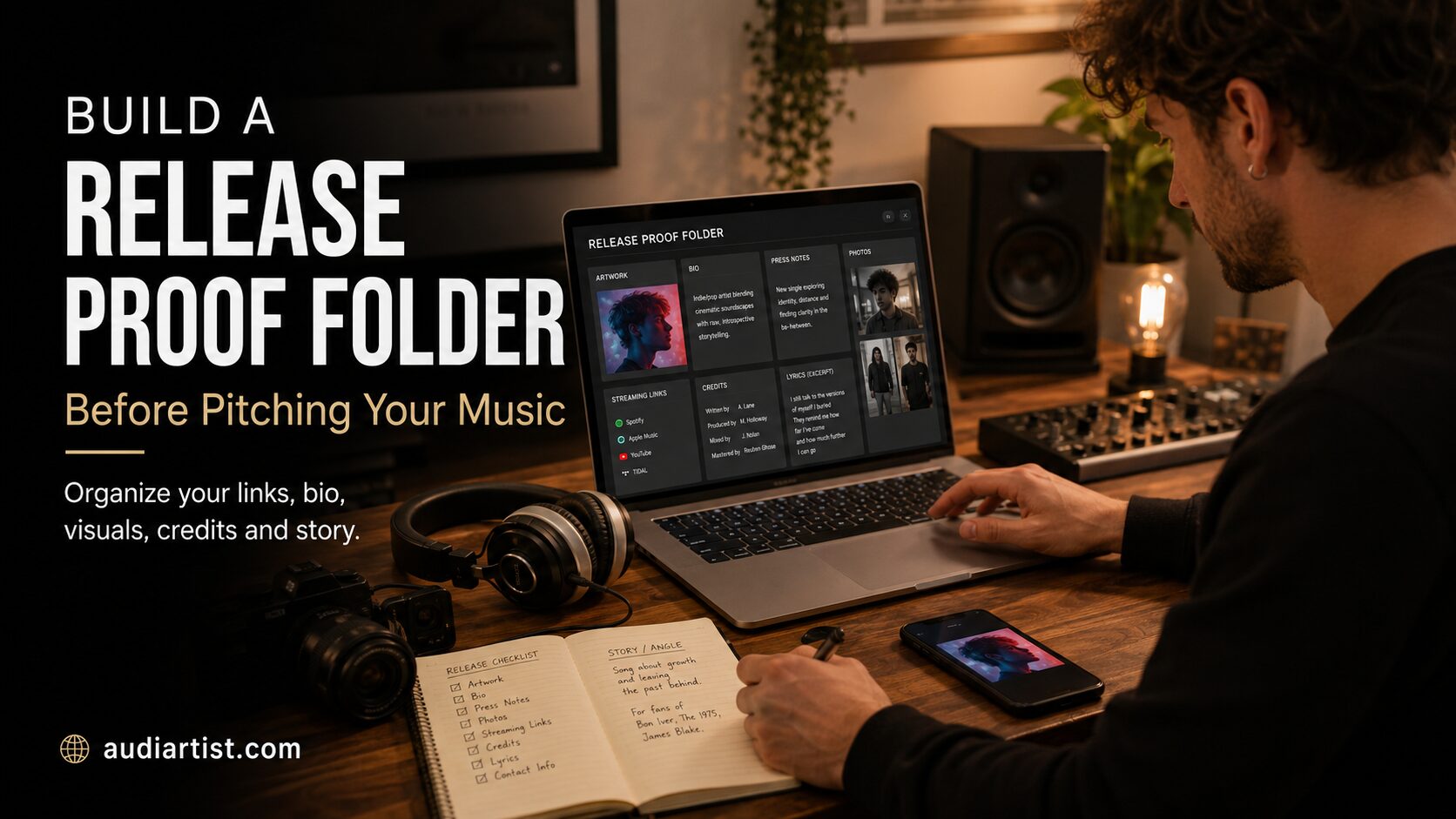
This is where the release proof folder becomes essential. It is a simple, organized folder that contains everything an artist needs before pitching a song. It helps curators understand the track faster. It helps journalists write about the artist without chasing missing details. It helps radio hosts, playlist owners, collaborators, and promoters take the release seriously. Most importantly, it helps the artist stop improvising every pitch from scratch.
A release proof folder is not a luxury reserved for labels. It is one of the most practical tools an independent artist can build. It turns a song into a complete campaign asset, ready to be shared, presented, reviewed, and promoted with confidence.
Why a Release Proof Folder Matters
Music promotion often fails because the artist makes the recipient work too hard. A curator has to ask for the right link. A blogger has to search for the artist bio. A radio host needs the clean file but only finds a streaming page. A playlist owner wants to know the genre, mood, and release date, but the pitch says only, “new single out now.” Each missing detail creates friction.
Friction kills opportunities. Not because people are cruel, but because attention is limited. When someone receives hundreds of submissions, the easiest music to process often has an advantage. A professional package does not guarantee support, but it reduces the reasons for someone to move on.
The release proof folder solves this problem by gathering every important asset in one place. It shows that the artist respects the recipient’s time. It also shows that the release is more than a random upload. It has an identity, a story, a visual world, and a clear promotional direction.
For independent artists, presentation can influence perception before the first note plays. A strong folder does not make a weak song great, but it gives a good song a cleaner chance to be heard.
The Folder Is Not Just for Professionals, It Makes You Professional
Many emerging artists think they should wait until they have management, a label, or a PR team before organizing professional release assets. That mindset slows them down. A release proof folder is not something artists earn after success. It is one of the tools that helps them move toward it.
Professionalism is not only about budget. It is about clarity, consistency, and readiness. An artist who can send a clean package quickly is easier to support. If a blog asks for a photo, the artist has one ready. If a curator wants a private link, it exists. If a radio show needs a short intro, it is already written. If a collaborator asks for credits, they are organized.
This matters because opportunities often arrive with limited time. A playlist may be updated today. A blog post may need assets before the end of the week. A radio slot may require a file quickly. A social media page may want a visual immediately. If the artist has to start searching, editing, writing, exporting, and renaming files at the last minute, the opportunity can disappear.
The release proof folder turns preparation into speed.
Start With the Core Release Information
The first element of the folder should be a simple document containing the essential release details. This is the factual base of the campaign. It should be clear enough that anyone opening it can understand the release in less than a minute.
The document should include the artist name, song title, release date, genre, mood, language, label or independent status, distribution link, streaming links, private listening link if the track is unreleased, and contact information. It should also include the main pitch sentence: a short description of what the track sounds like and why it matters.
This sentence is more important than many artists realize. A pitch that says “new single out now” gives no direction. A pitch that says “a hypnotic Afro house track built around deep percussion, warm vocal textures, and late-night club energy” immediately creates context. The recipient knows what world they are entering.
The release information document should not be overloaded. It is not a biography, diary, or full press release. It is the clean reference sheet that keeps every important detail in one place.
Include a Short Bio and a Longer Bio
Every artist should have at least two bio versions ready: a short bio and a longer bio. The short bio is for quick pitches, playlist submissions, social posts, and situations where space is limited. The longer bio is for blogs, press features, interviews, websites, and more detailed editorial use.
The short bio should usually be between 50 and 80 words. It needs to explain who the artist is, what kind of music they make, and what defines their sound. It should avoid empty phrases like “unique artist with a passion for music.” The more specific the language, the stronger the impression.
The longer bio can give more background: artistic journey, influences, style, previous releases, creative direction, scene, location, and future plans. Even then, it should stay focused. A bio is not a life story. It is a professional introduction designed to help people understand the artist’s world.
A strong bio saves time for everyone. It gives media contacts usable language and helps curators remember the project beyond one song.
Prepare High-Quality Visual Assets
Visuals are no longer secondary in music promotion. Many people discover songs through images, thumbnails, reels, stories, posts, banners, and video previews before hearing the full track. A release proof folder should include clean visual assets that match the identity of the song.
At minimum, the folder should include the official artwork in high resolution, a square social version, a landscape banner, a vertical story or reel format, and one or two artist photos if available. These files should be properly named. A file called “finalfinalcovernew3.png” does not inspire confidence. A file called “ArtistName_SongTitle_Artwork_3000x3000.jpg” is far more useful.
The visuals should also be consistent. If the track is dark, cinematic, and atmospheric, the promotional assets should not feel like a generic sunny pop campaign. If the song is energetic dance music, the visuals should communicate movement. If it is intimate lo-fi, the design should feel warm, calm, and personal.
Good visuals do not need to be expensive. They need to be coherent. They should help the song become easier to recognize.
Add Streaming Links and Private Listening Links
A release proof folder should make listening effortless. If the song is already released, include links to the main streaming platforms and a smart link that gathers everything in one place. If the song is not yet released, include a private listening link that does not require complicated access.
Private links are especially important for pre-release pitching. Bloggers, curators, and radio contacts often need to hear the song before it goes public. If the artist waits until release day to pitch, many opportunities are already late. A private link allows the campaign to begin earlier.
The link should be tested before being shared. This sounds obvious, but broken links are surprisingly common. A link that requires permission, opens the wrong file, leads to an unfinished upload, or expires too early can kill the pitch instantly.
The artist should also decide which link is the main one. Too many links in a pitch can create confusion. The folder can contain everything, but the pitch itself should guide the recipient toward the most useful listening option.
Include the Lyrics When Relevant
If the song has lyrics, include them in the folder. Lyrics are useful for journalists, playlist curators, radio hosts, content creators, and fans. They can help someone understand the emotional core of the track, quote a line correctly, or identify the strongest phrase for a caption or post.
The lyric document should be clean and easy to read. It should include the song title, artist name, and final lyrics. If there are explicit words, the artist can also mention whether a clean version exists. If the song is in another language, a short translation or explanation can be valuable, especially for international pitching.
Lyrics can also reveal the story behind the song. A curator may focus mostly on sound, but a journalist may find the editorial angle in one line. A social content creator may identify a hook that works visually. A listener may connect more deeply when the words are accessible.
For vocal music, lyrics are part of the promotional material. They should not be an afterthought.
Prepare the Credits Properly
Credits matter. They show professionalism, respect collaborators, and prevent confusion later. A release proof folder should include a clear credits document with the names of everyone involved: artist, featured artists, producers, songwriters, composers, lyricists, mix engineer, mastering engineer, label, distributor, artwork designer, video director, and any other relevant contributors.
This document is useful for press, radio, metadata checks, publishing, and future opportunities. It also protects relationships. Collaborators want to be credited correctly. A missing producer name or misspelled artist credit can create unnecessary tension.
Credits also help tell the story of a release. A collaboration, special production process, guest musician, or notable engineer can become part of the campaign angle. But that only works if the details are ready.
Independent artists should treat credits with the same seriousness as the song file. A clean release is not only heard properly. It is documented properly.
Add a One-Paragraph Pitch
The folder should include a one-paragraph pitch that can be adapted for emails, forms, and DMs. This paragraph is not a full press release. It is the compact version of the campaign: what the song is, what it sounds like, why it fits, and why it matters now.
A strong pitch paragraph should be specific. It should name the genre or sound world, describe the mood, mention the strongest musical element, and give a reason for the release. It can also include one relevant detail about the artist, but it should not drift into autobiography.
For example, a pitch might say that the song is a deep electronic single built around hypnotic percussion, warm synth textures, and a late-night atmosphere, designed for listeners who enjoy melodic club music with emotional depth. That gives the recipient a clear frame before listening.
The pitch should be easy to copy, edit, and personalize. It is a base, not a mass message. Every serious outreach still needs adjustment depending on the recipient.
Create Platform-Specific Descriptions
Different platforms need different descriptions. A blog pitch, Spotify playlist submission, YouTube description, Instagram caption, TikTok post, radio intro, and email subject line should not all sound identical. The release proof folder can include several adapted versions to save time.
The Spotify-style pitch should focus on sound, mood, audience, instrumentation, and context. The blog description should include more story and editorial angle. The YouTube description can include credits, links, and a stronger narrative. Social captions should be shorter, more immediate, and written for attention. Radio text should be clean, direct, and easy to read aloud.
This does not mean changing the identity of the song. It means presenting the same release in the language each platform understands.
A prepared artist does not send one generic paragraph everywhere. They build a flexible kit that can move across channels without losing coherence.
Organize Everything With Clear File Names
A folder is only useful if people can navigate it. Poor organization creates confusion, especially when files are shared outside the artist’s own computer. The structure should be simple and obvious.
A practical folder might include separate sections for audio, artwork, photos, bio, press text, links, lyrics, credits, and social assets. Each file should be named with the artist name, song title, asset type, and format when relevant. This makes the folder easier to use for media contacts and collaborators.
Clear file names also help the artist avoid mistakes. When several versions of artwork, masters, edits, and captions exist, confusion can happen quickly. Sending the wrong file to radio, uploading an old cover, or sharing an outdated bio can weaken the campaign.
Organization may not feel creative, but it protects the creative work from unnecessary chaos.
Include a Clean Audio File When Needed
Streaming links are useful, but they are not always enough. Radio shows, DJs, podcasts, video editors, and certain media contacts may need a downloadable audio file. The release proof folder can include a high-quality WAV file, a clean MP3 version, and an instrumental or radio edit if available.
Artists should be careful with access. Public folders should not expose files meant to remain private before release. If downloadable files are included, permissions should be managed properly. The artist should know who can view, stream, or download each file.
If the song contains explicit lyrics, a clean version can be useful for radio and public programming. If the track is electronic, a DJ-friendly version or extended mix may be relevant depending on the genre. If the song is pitched for sync or video use, instrumental versions can sometimes open more doors.
The goal is not to overload the folder with every possible export. The goal is to provide the versions that match the campaign’s real opportunities.
Add Social Proof, But Keep It Honest
If the release already has early support, include it. Social proof can help people understand that the song is moving. This might include playlist adds, radio support, blog mentions, listener reactions, chart movement, strong save rates, notable territories, or a meaningful social clip performance.
The key is honesty. Do not inflate numbers, exaggerate support, or present weak signals as massive breakthroughs. A simple statement such as “early listener activity has been strongest in France, Germany, and the United States” can be more credible than a dramatic claim about global impact.
Social proof works best when it is specific and relevant. A curator may care that the track has been added to personal playlists. A journalist may care that the song connects to a larger story. A radio host may care that the artist has local momentum. A content creator may care that one clip is already generating engagement.
Proof should support the pitch, not replace the music.
Make the Folder Easy to Share
A release proof folder should be accessible, but not messy. Artists can use cloud storage, a private webpage, a press kit page, or a shared folder. The important thing is that the link works, the permissions are correct, and the recipient does not need to request access.
Few things slow down a pitch faster than a locked folder. If someone clicks and sees “request access,” the moment may be gone. Always test the folder in a private browser or from another account before sending it.
The folder should also avoid overwhelming the recipient. A full media kit can contain many files, but the pitch should guide people to what they need first. A short message can say: “The release folder includes the private listening link, artwork, short bio, credits, and press text.” That tells the recipient what to expect.
Ease of access is part of professionalism. The smoother the process, the more likely the music is to receive attention.
Do Not Wait Until Release Day
The release proof folder should be ready before the campaign begins, not after the song is already public. Many artists lose opportunities because they organize assets too late. By the time the artwork, bio, links, and pitch are ready, the release window has already passed.
For playlist pitching, blog outreach, radio support, and content planning, preparation should begin weeks before release when possible. Even if the artist is working independently, the campaign needs time. Curators need time to listen. Bloggers need time to plan. Video assets need time to be made. Social content needs time to be tested.
A release proof folder gives the artist a starting line. Once it is ready, outreach becomes faster, cleaner, and more consistent.
Release day should not be the day the artist starts looking for the bio, exporting images, correcting links, and writing the first pitch. That is not promotion. That is emergency administration wearing headphones.
Use the Folder After Release Too
The folder is not only useful before release day. It should continue to evolve during the campaign. After the song is out, the artist can add new links, playlist support, press mentions, updated visuals, live clips, social performance notes, and listener reactions.
This makes follow-up easier. If a curator replies late, the artist can send updated context. If a blog asks for assets after the release, everything is ready. If a radio show wants to feature the track two weeks later, the artist does not need to rebuild the package.
The release proof folder can also support the 30-day release audit. By keeping campaign assets, performance notes, and promotional updates in one place, the artist can review what worked and prepare better for the next single.
Over time, each release folder becomes part of the artist’s professional archive.
A Strong Folder Makes Every Pitch Stronger
The release proof folder does not replace good music. It does not guarantee playlist support, press coverage, radio play, or viral attention. But it gives the song a better chance to move through the music ecosystem with less friction.
For independent artists, that matters. A curator should not have to search for the correct link. A journalist should not have to guess the genre. A radio host should not have to ask for a clean file three times. A collaborator should not have to chase credits. A listener should not land on a confusing profile with no clear identity.
Preparation is not glamorous, but it is powerful. It makes the artist easier to support. It makes the campaign easier to manage. It makes the release easier to understand. It also helps the artist feel more confident because the material is ready before opportunity arrives.
In modern music promotion, the artists who look prepared are often the artists who get taken seriously faster.
A song may open the door. A release proof folder helps it walk through properly.
Discover more independent music promotion strategies, artist resources, and playlist insights on Audiartist.