
Session Musicians Want a Share of Warner and Universal’s AI Money
The American Federation of Musicians is escalating its legal fight with Universal and Warner over AI deals involving Suno and Udio, arguing that session players deserve compensation when recordings they performed on are licensed for new AI uses.
Key facts
- The AFM originally sued Universal and Warner in federal court in New York on June 5, 2026.
- The union says recordings made by its members were licensed to Suno and Udio without required compensation or credit.
- The dispute centers on the « new use » provision of the Sound Recording Labor Agreement.
- Universal and Warner dispute the union’s interpretation and have moved toward dismissal arguments.
- The AFM filed an amended complaint in late July and has urged the court to let the case proceed.
- Suno and Udio are central to the dispute but are not defendants in the AFM case.
The AI music licensing boom has created a new fight inside the traditional music industry: labels may be securing new revenue from artificial intelligence, but session musicians want to know where their share is.
The American Federation of Musicians of the United States and Canada is pursuing Universal Music Group and Warner-related defendants over licensing agreements connected to Suno and Udio.
The union’s argument is not primarily that the labels had no right to negotiate AI deals. It is that the recordings involved were created with performances by AFM musicians and that using those recordings in a new AI context should trigger additional contractual compensation.

Photo: Anna Pou / Pexels
What the AFM Is Claiming
The case centers on the Sound Recording Labor Agreement, the collective bargaining contract that governs important parts of the relationship between major labels and union musicians.
The AFM argues that the agreement contains a « new use » provision requiring compensation when previously recorded performances are commercially used in new ways.
According to the union, licensing those sound recordings to generative AI companies should qualify as exactly that kind of new use.
The labels disagree. Their position is that the contract does not create the payment obligation claimed by the union for these AI licensing arrangements.
Why Suno and Udio Are at the Center
Universal and Warner were among the major rights holders that sued AI music companies over alleged unauthorized use of recordings for model training.
Over time, parts of that conflict shifted toward settlements and licensing partnerships. Udio reached licensing arrangements with both Universal and Warner, while Warner also settled with Suno and moved toward a licensed future with the company.
Those deals are strategically important because they turn AI companies from legal opponents into potential revenue partners.
But that transition created a second question: when labels monetize recordings in AI partnerships, do the musicians who performed on those recordings receive additional money?
Why it matters: This case is about more than one payment dispute. It could help define whether traditional music labor contracts automatically extend into the generative AI economy.
The Case Has Escalated Since June
The AFM filed its original lawsuit on June 5 in the Southern District of New York.
By July, Universal and Warner were challenging the case and preparing arguments aimed at dismissal. The union responded by urging the court to allow the lawsuit to continue, arguing that the relevant contract language supports its claim and that the dispute should proceed into discovery.
Later in July, the AFM filed an amended complaint. The updated filing adjusted the Warner defendants and maintained the core allegation that musicians were not properly paid or credited for the AI-related licensing use of recordings on which they performed.
There has not yet been a final ruling deciding the central contractual question.
Who Are Session Musicians?
Session musicians are often heard on recordings without being the headline artist.
They may play drums, bass, guitar, strings, brass, keyboards or other instruments during recording sessions. Their performances can become part of commercially successful masters owned or controlled by record companies.
Unlike featured artists, session players frequently receive compensation under collective agreements and structured payments rather than owning a major share of the master recording.
That makes contract language especially important when a new technology creates a new commercial use for an old recording.
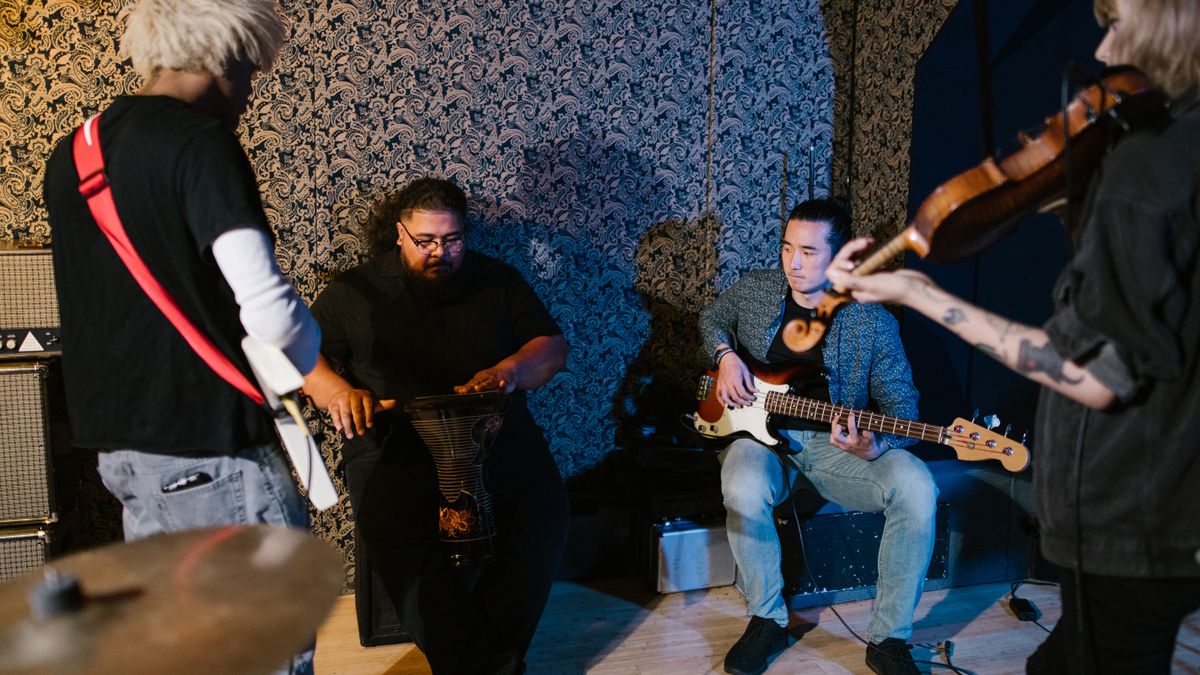
Photo: RDNE Stock project / Pexels
The « New Use » Question Could Be Crucial
The union’s case depends heavily on how the labor agreement’s new-use language is interpreted.
If the court accepts the AFM’s reading, AI licensing could become another category of commercial reuse that requires payments to union musicians.
If the labels prevail, they could have greater freedom to license recordings into new AI products without triggering the specific additional payment mechanism claimed by the union.
That outcome would matter far beyond the current contracts because labels are actively building new licensing models with AI companies.
The Labels Say They Are Protecting Artists
Universal has argued publicly that it has been at the forefront of protecting artists and songwriters in the age of AI, including through licensing agreements, legislation and legal action against unauthorized uses.
Warner has similarly framed licensed AI as a way to create new opportunities while giving artists greater control over their names, voices, likenesses and music.
The AFM’s lawsuit challenges that narrative from another direction. The union is effectively asking whether creator protection can be considered complete if the musicians inside the recordings do not share in the new revenue.
Audiartist analysis
The first phase of the AI copyright battle asked whether technology companies should pay labels and publishers. The next phase is becoming more complicated: once the money reaches the music industry, which creators and performers are entitled to receive a share?
Suno and Udio Are Not the Defendants
It is important to separate this case from the copyright lawsuits that targeted the AI companies directly.
Suno and Udio are part of the factual background because the disputed licenses involve their technology, but the AFM’s case is directed at the music companies and the contractual obligations they allegedly owe union musicians.
The central legal question is therefore not whether generative AI training itself is lawful. It is whether the labels’ agreements with those AI companies triggered duties under an existing labor contract.
Why This Could Shape Future AI Deals
If labels know that certain AI licenses automatically create additional obligations to session musicians, that cost will become part of future negotiations with technology companies.
It could affect how catalogs are priced, how revenue is divided and how rights holders document which performances are included in licensed training or generation systems.
It may also increase pressure for better attribution technology. A label cannot easily compensate performers for AI uses if it cannot identify which recordings, stems or performances are part of the licensed process.
Conclusion
The AFM dispute highlights a problem that will become harder to ignore as AI licensing grows.
Major labels are building a future where generative AI can become a new revenue stream. But recordings are not created by corporations alone. They contain performances by singers, instrumentalists, producers and session musicians whose contractual rights may not fit neatly into new technology business models.
The legal fight is now asking a simple but consequential question: if AI generates new money from old performances, who deserves to be paid?