
Spotify’s new “Verified by Spotify” badge is more than a visual update. It represents a strategic shift in how streaming platforms define trust, artist identity, and credibility in an era increasingly shaped by artificial intelligence, mass uploads, and synthetic music personas.
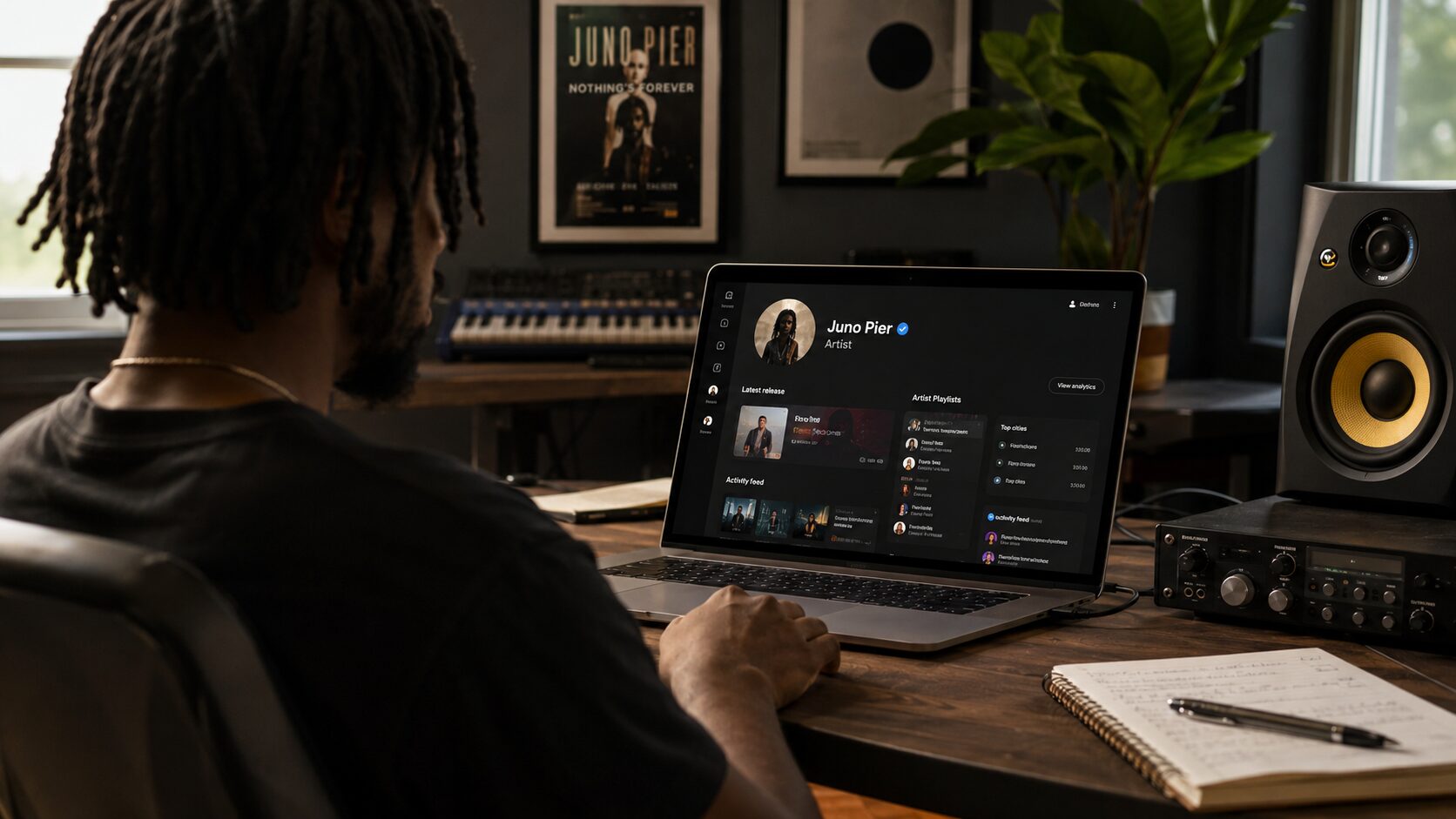
Spotify’s Verified by Spotify badge answers that question by adding a new layer of context to artist profiles. It is designed to signal that an artist profile has been reviewed and meets defined standards around authenticity, platform trust, and real artist presence. In practical terms, it gives listeners a clearer visual marker that the profile they are discovering represents a legitimate artistic identity, not a faceless content farm, impersonation attempt, or AI persona built only to feed the algorithm.
A New Trust Signal in the Age of AI Music
The timing is significant. AI-generated music is no longer a futuristic discussion, it is already part of the daily reality of streaming platforms. Thousands of tracks can now be produced, uploaded, repackaged, and distributed at industrial speed. Some of them are harmless experiments, some are creative tools used by real artists, and others are clearly designed to exploit recommendation systems with low-effort catalogues.
This creates a trust problem. Listeners want to connect with real artists. Curators want to support music with a genuine identity behind it. Independent musicians want to avoid being buried under automated releases. Labels and distributors need clearer signals to separate authentic projects from artificial volume strategies.
Verified by Spotify arrives in this context. It does not simply reward popularity. It attempts to identify artists who demonstrate consistent listener interest, respect platform policies, and show recognizable signs of real-world artistic activity.
What Spotify Is Really Looking For
The badge is based on several key indicators. First, Spotify looks at consistent listener activity and engagement over time. This is important because a one-time spike does not necessarily prove cultural relevance. A track can go viral for a week, be pushed through artificial methods, or benefit from unusual algorithmic movement without representing a stable artist presence.
Second, the artist must be in good standing with Spotify’s platform policies. This means the profile and its content must respect the rules of the platform. In an environment where streaming fraud, impersonation, metadata abuse, and suspicious delivery practices remain major issues, compliance becomes part of the artist’s credibility.
Third, Spotify looks for signals of a real artist behind the profile. This includes elements such as linked social media accounts, concert dates, merchandise, public activity, visible career development, and a coherent identity outside the platform. In other words, the artist profile should not exist in isolation. It should connect to a broader artistic ecosystem.
Why AI Personas Are Not Eligible at Launch
One of the most important details is Spotify’s position on AI personas. At launch, profiles that primarily represent AI-generated artists or AI-persona projects are not eligible for the Verified by Spotify badge.
This does not mean that every artist who uses AI tools is excluded. There is a clear distinction between an artist using technology as part of a creative process and a profile built mainly around artificial identity, synthetic output, or automated catalogue production. That distinction matters.
Modern music production has always used tools. Drum machines, samplers, autotune, digital audio workstations, virtual instruments, and generative features are all part of the evolution of recorded music. The issue is not technology itself. The issue is whether there is an identifiable artist, creative intention, and accountable identity behind the music.
For independent musicians, this distinction is crucial. Using modern tools does not erase artistic legitimacy. But hiding behind a fake persona, flooding platforms with disposable AI tracks, or presenting synthetic catalogues as organic artist projects may increasingly limit visibility and trust.
Why This Matters for Independent Artists
For serious independent artists, this badge could become more than a small icon. It may become a credibility marker across the discovery journey. When a listener finds an artist through search, playlist placement, algorithmic recommendation, or a shared link, the verified signal can reinforce confidence.
That confidence matters because attention is fragile. A listener decides in seconds whether an artist feels real, professional, and worth following. A clean profile, strong visuals, consistent branding, complete biography, linked social channels, active release history, and visible audience interaction now carry more weight than ever.
Independent artists often focus on the music first, which is natural. But in the streaming economy, the artist profile has become a public identity hub. It is not just a page with songs. It is a storefront, a press kit, a reputation signal, and a discovery engine at the same time.
Profile Hygiene Is Now a Strategic Asset
The arrival of Verified by Spotify should encourage artists to take profile hygiene seriously. Every detail contributes to the perception of authenticity. A profile with no biography, no social links, generic artwork, inconsistent naming, no audience activity, and no external presence can look unfinished or suspicious, even if the music itself is legitimate.
Artists should treat their Spotify profile as part of their professional infrastructure. The biography should be clear, human, and specific. The visuals should be coherent from release to release. Social media links should be active and aligned with the artist identity. The release schedule should make sense. The overall presentation should help listeners understand who the artist is, what world they belong to, and why they should care.
This is especially important for artists operating in crowded genres such as lo-fi, EDM, house, trap, ambient, cinematic music, and functional background music. These categories are heavily exposed to high-volume uploads and AI-assisted production. A strong identity can help separate a genuine project from anonymous catalogue noise.
The Curator Perspective
For playlist curators, the badge could become a useful additional signal. It will not replace listening, taste, or editorial judgment, but it may help curators quickly assess whether an artist profile appears credible. In a market flooded with submissions, every trust indicator matters.
Curators are already dealing with fake engagement, AI-generated tracks, poor metadata, unrelated submissions, and artists sending music to the wrong playlists. A verified profile may not guarantee quality, but it can support the idea that the artist has a real presence, a history of listener interest, and a cleaner relationship with platform standards.
This also means artists should stop thinking of playlist pitching as a simple transaction. Curators are more likely to support artists who present themselves professionally, understand their genre, provide useful links, and show a real commitment to their project. The badge fits into that broader ecosystem of credibility.
Verification Will Not Replace the Music
Of course, a badge will never replace a great song. Verification does not make a weak track stronger, and it does not guarantee emotional connection, replay value, or artistic impact. The music still has to work. The mix still has to be solid. The identity still has to be memorable. The release still has to reach the right audience.
But in a saturated environment, trust can influence discovery. A listener who sees a verified artist may be more willing to explore the catalogue. A curator may be more comfortable considering the submission. A journalist may find it easier to confirm the artist’s legitimacy. A fan may feel that there is a real creative world behind the track.
That is the deeper value of Verified by Spotify. It does not only separate human artists from AI personas. It pushes the industry toward a more transparent model where context matters almost as much as content.
What Artists Should Do Now
Independent artists should not wait passively for a badge to appear. The smartest move is to build the conditions that make verification easier and more meaningful.
Start with the basics: claim and manage the Spotify for Artists profile, update the biography, use professional visuals, link active social accounts, keep artist names consistent across platforms, and avoid confusing metadata. Build a real presence outside Spotify through a website, press articles, interviews, live content, videos, newsletters, or community activity.
Artists should also be careful with AI-related positioning. If AI is used as a creative tool, transparency and artistic responsibility matter. If the entire identity is artificial, the project may face growing limitations as platforms introduce more verification, disclosure, and trust systems.
The future of streaming will not only reward those who upload the most music. It will increasingly reward those who can prove identity, maintain quality, build trust, and create a recognizable artistic universe.
A Badge That Reflects a Bigger Industry Shift
Spotify’s Verified badge is not just a product feature. It is a sign of where the streaming market is heading. The next phase of music discovery will be shaped by authenticity, transparency, and human connection.
For real independent artists, this is not bad news. It is an opportunity. While anonymous AI catalogues and synthetic personas fight for volume, artists with a clear identity can build something more durable: trust.
In the streaming age, being heard is difficult. Being recognized is even harder. Verified by Spotify suggests that the platforms are beginning to understand the difference.