The Big Nessie by Abbey Road Is a Free Kontakt Sound Design Library With a Truly Experimental Edge
The Big Nessie is a free Kontakt library created by Abbey Road Studios in collaboration with British fashion house Charles Jeffrey LOVERBOY. It is not a conventional orchestral library, piano instrument or clean pop production toolkit. It is stranger than that, and that is exactly why it stands out.
Built for the free Kontakt 8 Player, The Big Nessie brings together field recordings, Studio Two sessions, prepared piano inspiration, drums, bass, melodic fragments, percussion and unusual sound effects. For producers and composers looking for a free Kontakt sound design library with personality, this is a rare kind of instrument: free, official, Kontakt Player compatible and creatively specific.
What this free Kontakt library is
The Big Nessie is a free sampled Kontakt instrument from Abbey Road Studios and Charles Jeffrey LOVERBOY. It was created as a sonic extension of LOVERBOY’s Spring/Summer 2026 collection, Prepared Piano, a concept inspired by the experimental prepared piano tradition associated with John Cage.
Instead of presenting a standard piano library, Abbey Road shaped the idea into a playful, raw and textural Kontakt instrument. The sounds come from two creative sources: field recordings captured inside the LOVERBOY workshop at Somerset House, and recording sessions in Abbey Road’s Studio Two with Charles Jeffrey, musical director Tom Furse and the Abbey Road team.
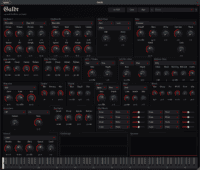
The result is a free Kontakt instrument designed for experimentation. It is part sample library, part beatmaking tool, part sound design playground and part visual art object. The interface carries the same offbeat identity as the sound: colourful, strange and deliberately unconventional.
Video Demo
Why this Kontakt instrument matters for producers and composers now
Free Kontakt libraries often fall into predictable categories: small pianos, simple strings, basic drums or cinematic pads. The Big Nessie moves in a different direction. It gives producers a library that feels designed around process, texture and unexpected musical accidents.
That makes it useful in a modern production environment. Many independent producers are not only looking for clean, realistic instruments. They also need character sounds that can make a track feel less generic. A weird percussive loop, an odd tonal fragment or a warped bass texture can do more for a cue than another perfectly polished preset.
For cinematic scoring, game music, experimental pop, electronic music and beatmaking, The Big Nessie offers material that can start an idea rather than simply decorate one. It is the kind of free Kontakt library that can push a session into a more distinctive direction, which is always useful when every producer has access to the same obvious sounds.
What is included in the library
The Big Nessie is divided across five octave regions inside Kontakt. Each region focuses on a different musical role, allowing the instrument to behave like a compact multi-instrument rather than a single patch.
- Loops: ready-to-play loops mapped from C-2 to B-1, with tempos listed across 90 BPM, 100 BPM, 110 BPM and 120 BPM ranges.
- Drums: kick, snare, toms, percussion and additional rhythm-section sounds mapped from C0 to B2.
- Bass: two bass sounds mapped from C3 to B4, offering a choice between percussive and synth-style vibes.
- Melodic: two melodic sounds mapped from C5 to B6, including an atmospheric synth pad and a lead sound with guitar-like characteristics.
- Sound Effects: quirky, odd and playful effects mapped from B7 to G8.
This structure makes the instrument easy to understand. It does not ask the user to browse hundreds of patches. Instead, it gives each keyboard range a role, which encourages performance, sketching and fast experimentation.
Sound, style and creative direction
The sound of The Big Nessie is deliberately raw. It is built from material captured in real creative spaces, then sculpted into a Kontakt instrument that feels tactile and slightly unstable in a good way.
The prepared piano concept is important here, but this is not simply a prepared piano library. It is closer to a free Kontakt sound design library shaped by the attitude of prepared piano: tampering with familiar sound sources, making them behave differently, and turning process into musical material.
Expect experimental rhythms, percussive textures, tonal fragments, odd effects and hybrid sounds that can sit between electronic production and cinematic scoring. This is not the instrument to choose when you need a traditional grand piano or realistic orchestral samples. It is the instrument to choose when the track needs a strange pulse, a crooked texture, a left-field hook or a bit of controlled chaos.
Most important sounds and creative controls
The five-region layout is one of the strongest parts of The Big Nessie. It makes the library feel immediate. Producers can use the lower octave regions for rhythmic ideas, move into drums and bass for groove construction, then use the melodic and effects regions for colour.
The loop section is useful for starting ideas quickly. Because the loops are tempo-labelled, they can function as rhythmic anchors for experimental beats, film cues, idents, transitions or sound design sketches. They are not presented as generic construction kit loops, which helps the library feel more like a creative instrument than a folder of recycled patterns.
The drum and percussion regions are likely to be the most useful areas for beatmakers. Kicks, snares, toms and unusual percussion can be layered under hip-hop, electronic, industrial, alt-pop or cinematic drums. Used subtly, they can add texture. Used boldly, they can become the identity of a track.
The bass region adds another practical layer. Having percussive and synth-style bass options gives the instrument more range than a pure effects library. It can support rhythmic sketches, create odd low-end motifs or add movement under atmospheric productions.
The melodic region is where The Big Nessie becomes especially interesting for composers. The atmospheric synth pad can work as a background texture for cinematic scoring, ambient production and game music, while the guitar-like lead sound can create hooks that feel unusual without becoming overly polished.
The sound effects region is the eccentric corner of the instrument. For sound designers, trailer editors and game composers, this section may be the one that adds the most personality. Odd effects can work as transitions, accents, impact sweeteners, ear-candy moments or strange details hidden inside a mix.
The instrument also includes a set of sound-shaping effects with character-driven names. The official installation guide describes these as reverb, bit crusher, spreader, low pass filter, tremolo, saturation, brightness and distortion. That selection makes sense for a library built around transformation: space, grit, movement, width, tone and aggression are all available without leaving the Kontakt interface.
Kontakt compatibility and technical requirements
The Big Nessie works with the free version of Kontakt 8 Player. That is an important distinction. This is not a library that simply opens in Kontakt Player demo mode for a short period. It is presented as a Kontakt Player instrument and can be used through Kontakt 8 Player.
Installation is handled through Native Instruments Native Access. After registering on the official Abbey Road product page, users receive a serial number, add it in Native Access and install the instrument from there. The instrument can then be opened in Kontakt 8 Player as a standalone app or inside a compatible DAW.
Abbey Road lists compatibility with major DAWs, automation and NKS integration. The FAQ also mentions use inside DAWs including Logic, Ableton, Pro Tools, Cubase, Reaper and FL Studio.
The official materials describe The Big Nessie as a Kontakt Player instrument delivered through Native Access. Abbey Road does not publicly list individual internal library file formats such as NKI, NKC, NKR, WAV or snapshots on the product page, so those should not be assumed.
Who should use this Kontakt library
The Big Nessie is ideal for producers who want something less predictable than a standard sample pack. It is especially useful for electronic producers, beatmakers, experimental pop artists, sound designers, game composers and film scorers who need raw textures with a strong identity.
Hip-hop and trap producers can use it for unusual intros, percussive layers, strange melodic hooks and darker transitions. Electronic producers can use it to build glitchy grooves, atmospheric breakdowns or distorted rhythm beds. Film and game composers can use it for tension cues, quirky scenes, abstract transitions and hybrid sound design.
It is also a strong choice for home studio users who want a free Kontakt library that feels professionally built but not overly conventional. The workflow is simple, but the sound has enough character to avoid sounding like another safe preset bank.
Best use cases for producers, beatmakers, composers and sound designers
- Experimental beatmaking: unusual drum layers, warped loops and strange rhythmic starts.
- Cinematic scoring: textural transitions, atmospheric pads, odd effects and tension details.
- Game music: quirky sound cues, characterful ambience, menu textures and stylized percussion.
- Electronic music: glitch elements, lo-fi processing, distorted movement and abstract hooks.
- Alt-pop production: unexpected melodic fragments, playful textures and off-centre sonic details.
- Sound design: raw source material for further processing, resampling and arrangement experiments.
License, usage rights and download details
The Big Nessie is available for free from the official Abbey Road website. Users need to register with an email address, verify the email and receive a serial number. Abbey Road states that serial numbers are limited, one per person, and that users must be 18 or older.
The license grants a perpetual, non-exclusive, non-transferable and non-sublicensable license to use the sampled instrument as a creative audio tool for making music or sound-based works, including personal, educational and commercial purposes, royalty-free.
There are restrictions. Users must not extract, copy, sell, rent, lease, loan, sublicense or distribute the sampled instrument or its components as standalone content. The serial number must not be transferred. The instrument is licensed, not sold, and the underlying content remains protected by Abbey Road and its licensors.
For music makers, the practical meaning is straightforward: The Big Nessie can be used in your own productions, including commercial music and sound-based works, but the instrument content itself cannot be redistributed, extracted or turned into a competing sample product.
Visit the official The Big Nessie page
Download The Big Nessie from Abbey Road
Listen to the official The Big Nessie audio examples
Why this type of free Kontakt library matters
The Big Nessie is a useful reminder that a free Kontakt library does not need to imitate expensive orchestral products to be valuable. Sometimes the best free instruments are the ones with a narrow, memorable creative idea.
By turning field recordings, Studio Two material and a fashion-led concept into a Kontakt Player instrument, Abbey Road and Charles Jeffrey LOVERBOY have created something that sits outside the usual freebie lane. It is not just a simplified version of a larger paid product. It feels like a specific artistic object, translated into a playable sample library.
That matters for independent producers because originality is often found in unusual source material. A library like this can give a track a sound that is harder to trace, harder to classify and much easier to remember.
What happens next
Because The Big Nessie uses a serial-based download system with a limited allocation, producers who want it should get it directly from Abbey Road while it remains available. Once activated, it is managed through Native Access like other registered Kontakt Player instruments.
In use, the best approach is to treat it as an idea generator. Open it early in a session, play across the different keyboard regions, build a rhythm from the lower sections, then add bass, melodic colour and effects. The library rewards curiosity more than technical overthinking, which is a polite way of saying: poke the monster and see what happens.
Final verdict
The Big Nessie is one of the more distinctive free Kontakt instruments available for producers who want experimental textures, raw percussion, offbeat melodic fragments and creative sound design inside Kontakt 8 Player.
It will not replace a traditional piano, drum library, synth or cinematic scoring toolkit. That is not its job. Its strength is personality. It gives composers, beatmakers and home studio producers a compact instrument with a strong visual identity, unusual source material and a clear creative purpose.
For anyone building a legal and useful collection of free Kontakt libraries, The Big Nessie is absolutely worth adding. It is free, official, Kontakt Player compatible and genuinely different. In the world of safe presets, that already gives it teeth.