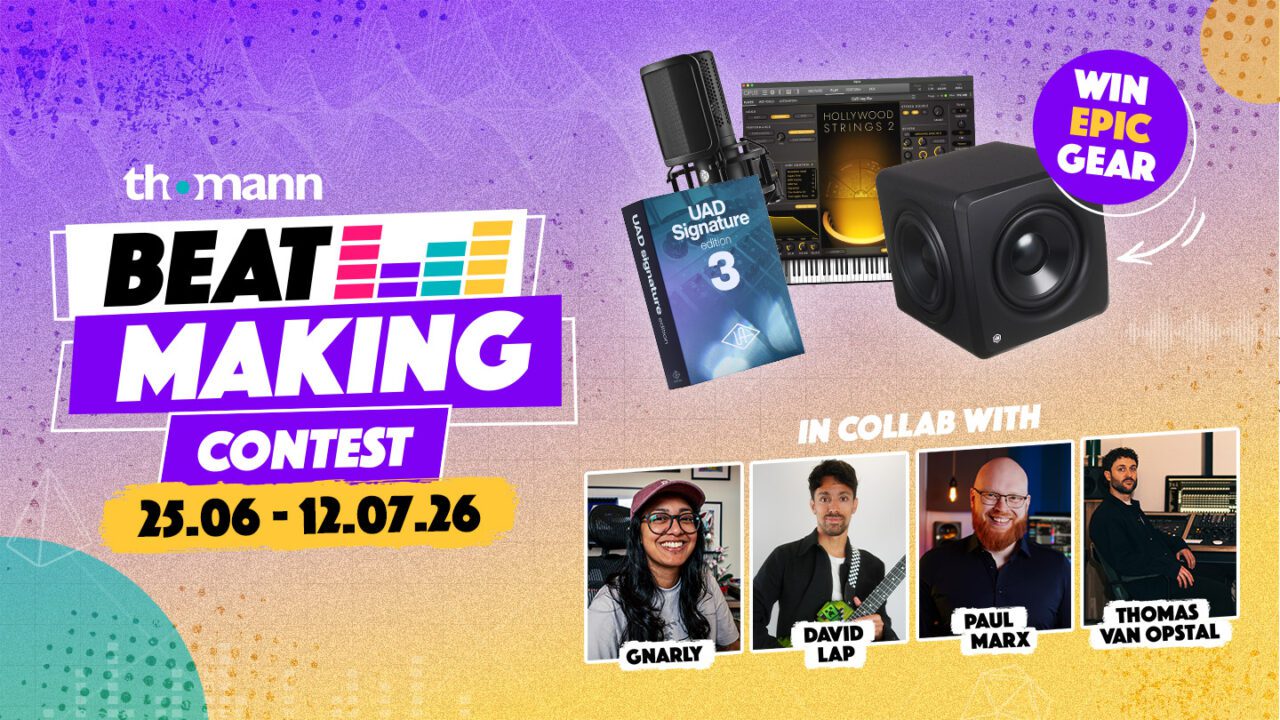
Thomann has released an exclusive free sample pack created for its 2026 Beatmaking Contest, bringing together live instruments, field recordings, performances and unusual textures recorded inside its Treppendorf facilities.
Created with Paul Marx, Thomas van Opstal, Olha Violinist, Gustavo Strauss, David Lap and Gnarly, the collection provides flexible source material for Boom Bap, Trap, House, Lo-Fi, Drill and experimental music production.
What Is the Thomann Sample Pack 2026?
The Thomann Beatmaking Contest Sample Pack is an official free collection released on June 25, 2026.
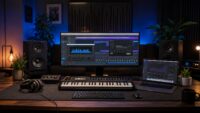
The sounds were recorded inside Thomann’s renovated Studio and Recording and String Instruments departments. Instead of focusing on one genre, the pack combines acoustic performances, unusual recordings and flexible sound design material.
Producers can use the sounds to build rhythms, melodies, atmospheric layers and experimental textures inside their preferred DAW or sampler.
Created With Six Artists and Musicians
The official collection features recordings created with:
- Paul Marx
- Thomas van Opstal
- Olha Violinist
- Gustavo Strauss
- David Lap
- Gnarly
This collaborative approach gives the pack a broader identity than a conventional drum kit or melody loop collection.
Live Instruments and Field Recordings
The free sample pack includes material built from live instrument recordings, performances, textures and field recording techniques.
These sounds can be chopped into one-shots, stretched into atmospheric layers or resampled into new instruments. Producers can also combine several recordings to create loops and musical ideas that move far beyond the original source.
Suitable for Multiple Genres
Thomann designed the pack for open-ended beatmaking rather than one specific style.
- Boom Bap
- Trap
- House
- Lo-Fi
- Drill
- Experimental electronic music
- Cinematic sound design
The recordings can also work in ambient music, soundtrack production and creative resampling sessions.
Creative Ways to Use the Samples
The official contest rules encouraged producers to manipulate the material freely during the competition.
- Chop recordings into rhythmic patterns
- Stretch sounds into drones and atmospheres
- Reverse samples for transitions
- Change pitch and timing
- Layer several recordings
- Add effects and distortion
- Resample the processed results
A short instrumental recording can become a melody, percussion layer, texture or completely new sampler instrument after processing.
The Beatmaking Contest Has Ended
The Thomann Beatmaking Contest ran from June 25 to July 12, 2026.
The submission period is now closed, but the official article and sample pack download link remained accessible when this article was prepared.
Producers can still explore the sounds for learning, experimentation and personal beatmaking while the download remains available.
Important License Information
The official contest rules allowed participants to create and publicly submit original beats containing at least three sounds from the pack.
However, the published terms do not clearly provide a general royalty-free license covering unrestricted commercial music releases outside the contest.
Producers planning to distribute or monetize music made with the samples should request confirmation from Thomann before assuming broader commercial rights.
How to Download the Thomann Sample Pack
The free collection can be accessed from the official Thomann Beatmaking Contest article.
Visit the official Thomann Beatmaking Contest 2026 page
Download the official Thomann Sample Pack 2026
Final Verdict
The Thomann Sample Pack 2026 is an interesting free resource for beatmakers looking for original live recordings, instrumental material and experimental textures.
Its multi-genre approach makes it useful for Hip-Hop, House, Trap, Lo-Fi and sound design, while the field recordings provide raw material for deeper editing and resampling.
The main limitation is licensing. Although the sounds were officially provided for public contest submissions, unrestricted commercial use outside the competition is not clearly confirmed in the published terms.