
For years, musicians were told that uploading their work to major platforms was the first step toward visibility. Put your song on YouTube. Feed the algorithm. Build an audience. Let the internet do what the internet does best: turn small sparks into global signals.
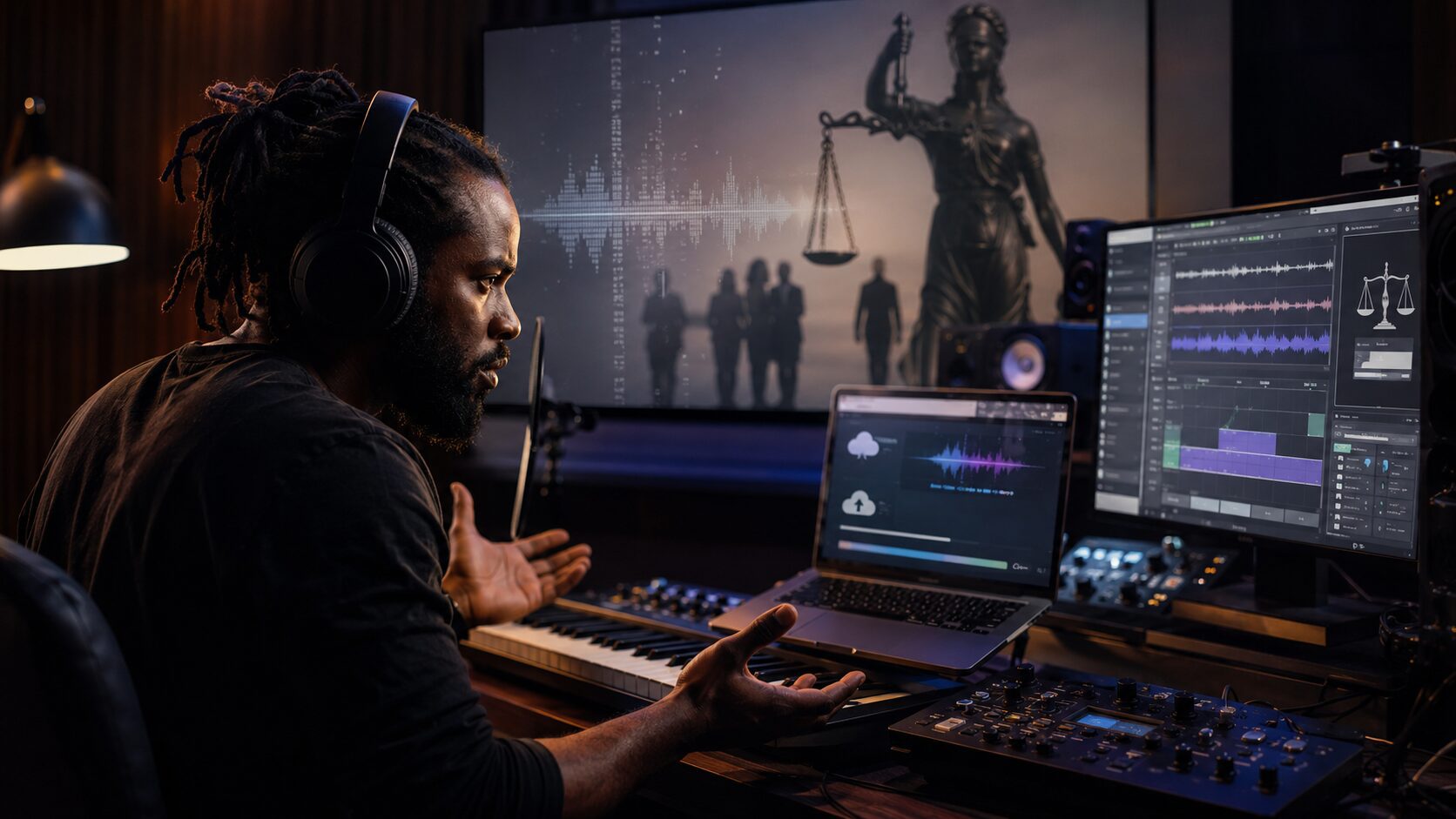
A group of independent musicians has brought a lawsuit against Google, alleging that songs uploaded to YouTube were used to train Lyria 3, Google DeepMind’s music generation model. Google has responded by asking the court to dismiss the case, arguing that YouTube’s Terms of Service already grant the company broad rights to use uploaded content for operating, promoting and improving the service.
At first glance, this may look like another technology copyright dispute, another legal battle buried somewhere between Silicon Valley ambition and the fine print nobody reads. But for the music industry, the stakes are far larger. This case touches the heart of a question that every artist, label, distributor and streaming platform now has to confront: when a musician uploads a song to a platform, what exactly are they giving away?
A Lawsuit Built on a Simple but Explosive Question
The central allegation is direct. The musicians claim that Google used copyrighted music from YouTube to train Lyria 3 without proper permission, compensation or transparency. Lyria 3 is presented by Google as a high-fidelity music generation system capable of creating tracks from text, images and creative prompts. In Gemini, users can generate short songs, while Lyria 3 Pro expands the experience toward longer, more structured musical pieces.
Google’s defense does not simply deny the broader debate around training data. Instead, the company’s motion leans heavily on the contractual relationship between creators and YouTube. When users upload content to YouTube, they grant the platform a worldwide, non-exclusive, royalty-free, transferable and sublicensable license to use that content for the purpose of operating, promoting and improving the service.
That sentence, usually ignored by creators racing to publish a video before the algorithm gets bored and goes for coffee, may become one of the most important pieces of language in modern music rights.
The legal question is not only whether a platform can host, stream, recommend or monetize uploaded content. The deeper question is whether “improving the service” can include training powerful music generation systems that may eventually compete with the same creators who uploaded the original works.
Why This Case Matters Far Beyond Google
The music business has already survived format wars, piracy, the iTunes economy and the streaming reset. Each transformation arrived with a familiar promise: more access, more tools, more reach. Each one also rewired the balance of power between artists and platforms.
This case may become part of the next major shift. Streaming platforms are no longer passive libraries. They are recommendation engines, data companies, advertising networks, creator marketplaces, video hubs and increasingly, music creation environments. The platform that once distributed music can now analyze it, categorize it, reproduce its patterns and build new products from the behaviors and content inside its ecosystem.
That is why the YouTube and Lyria 3 dispute matters. It is not just about one model, one company or one lawsuit. It is about whether user-uploaded music can become industrial training material by default, simply because it passed through a platform built for exposure.
The Fine Print Becomes the Front Line
For independent artists, the most uncomfortable part of this story is not the technology. It is the contract.
Most musicians do not treat platform terms as a serious rights document. They treat them as an obstacle between the upload button and the release date. The reality is less poetic. Terms of Service are not decoration. They define what platforms can do, what creators accept and how far a company may be able to stretch its rights once a work enters its infrastructure.
Google’s argument places the YouTube license at the center of the dispute. If a court accepts that the language is broad enough to cover training music generation systems, the decision could send a powerful signal to other platforms. If the court rejects that interpretation, the industry may be forced to draw a sharper line between hosting content and using content to build generative products.
Either outcome would be significant. A broad reading could strengthen platform power. A narrow reading could push technology companies toward clearer licensing deals, opt-in frameworks and direct compensation models for training data.
Lyria 3 and the New Music Creation Economy
Google describes Lyria 3 as a system designed for musical expression, experimentation and high-quality output. The official product pages present it as a creative tool for users who want to generate songs from prompts, images or ideas. The language is friendly, accessible and deliberately non-threatening. It frames music creation as instant, playful and open to everyone.
That is exactly what makes the debate so sensitive.
For casual users, a tool like Lyria 3 can feel like a harmless creative toy. For professional musicians, composers, session players and independent artists, it raises a more complicated concern. If a model learns from existing music and then generates new tracks at scale, who benefits from the value of the original works? Who receives credit? Who receives payment? Who carries the risk when synthetic music floods an already overcrowded streaming economy?
The music industry is not afraid of technology in the abstract. Producers use digital audio workstations, virtual instruments, samples, loops, vocal processors and mastering tools every day. The concern is not innovation. The concern is extraction without consent, scale without accountability and products that turn artistic labor into invisible raw material.
The Streaming Platforms Are Watching Closely
Every major streaming platform has a stake in the outcome of this dispute. Spotify, Apple Music, YouTube Music, Deezer, Amazon Music, Tidal, Qobuz, SoundCloud and Bandcamp are all navigating the same storm from different angles.
Some platforms are moving toward controlled partnerships around generative music. Others are focusing on detection, tagging and restrictions. Deezer has taken an especially aggressive stance by identifying and limiting the visibility of large volumes of machine-generated uploads. Bandcamp has positioned itself more firmly around human-made music and artist-first principles. Spotify has been exploring licensed, opt-in models around fan-made remixes and covers.
YouTube sits in a more complex position. It is both a global music discovery engine and one of the largest repositories of user-uploaded audio and video in the world. That makes it incredibly powerful, but also legally exposed. If YouTube content is treated as a training reservoir, the implications stretch across covers, live performances, independent releases, lyric videos, remixes, demos, podcast music beds and countless unofficial uploads.
Independent Artists Face a New Risk
For major labels, the future will likely involve negotiation. Catalog owners can demand terms, structure licensing deals and threaten litigation at scale. Independent artists do not have the same leverage. Their work often enters platforms through distributors, aggregators, content management systems and promotional uploads, sometimes with limited understanding of how each layer handles rights.
This creates a dangerous asymmetry. Independent musicians need platforms for visibility, but they may not have enough control over how their music is used once it becomes part of a massive digital ecosystem. The very act of seeking exposure could place their work inside systems that are later used to automate parts of the creative market.
That does not mean artists should disappear from YouTube or avoid streaming platforms. That would be unrealistic and commercially self-defeating. It does mean artists need to become more careful, more informed and less passive about rights language.
What Artists Should Pay Attention To Now
Artists should pay closer attention to upload terms, distributor agreements and platform licenses. They should keep clean ownership records, register works properly, maintain metadata, document release dates and preserve proof of authorship. For musicians releasing original compositions, especially outside major label structures, rights management can no longer be treated as boring admin work. It is part of survival.
The same applies to curators, music blogs and independent media platforms. The more synthetic content enters the ecosystem, the more valuable human verification becomes. A real artist profile, a coherent visual identity, live footage, interviews, press kits and transparent credits are no longer just promotional assets. They are trust signals.
The Word “Improving” May Decide a Lot
The phrase “improving the service” sounds harmless in a platform agreement. It suggests better recommendations, smoother playback, stronger moderation, faster search and more reliable tools. But in the age of music generation systems, that phrase becomes much heavier.
If training a generative music model is considered a normal way to improve a platform, then the boundary between service optimization and product creation becomes blurry. A song uploaded to reach listeners could become part of a system designed to create new songs. A performance uploaded to gain fans could help train a tool that offers instant musical output to users who never hire a musician, license a beat or pay a composer.
This is why the case feels bigger than a single copyright complaint. It is really about the hidden economy of platform data. Music is not only being streamed, recommended and monetized. It may also be studied as material, broken into patterns and used to develop future products.
The Music Industry’s Trust Problem Is Getting Worse
The streaming era already has a trust problem. Artists question royalty rates. Curators fight fake submissions and bot-driven campaigns. Listeners struggle to distinguish real releases from mass-produced filler. Distributors face pressure to police fraud, duplicate content and artificial streaming. Add generative music systems to that environment, and the tension intensifies.
The danger is not only that synthetic music exists. The danger is that listeners, platforms and artists lose confidence in the authenticity of the ecosystem. When every upload could be human, assisted, synthetic, cloned, scraped, repackaged or algorithmically manufactured, trust becomes a premium asset.
For platforms, this creates a strategic dilemma. They want the efficiency and scalability of new creation tools, but they also need artists to believe the system is fair. If musicians begin to see platforms as extraction machines rather than distribution partners, the relationship becomes unstable.
A Turning Point for Consent and Compensation
The future of music technology will not be decided by slogans. It will be decided by consent, compensation and control.
Consent means artists know how their work may be used and can make meaningful choices. Compensation means the value of music used to train commercial systems is not treated as free industrial fuel. Control means creators can manage permissions, opt out where appropriate and protect their identity from imitation or misuse.
The YouTube and Lyria 3 lawsuit could push the industry toward clearer standards. Platforms may need to define whether uploaded music can be used for training. Distributors may need to provide better rights guidance. Artists may demand new clauses that separate streaming distribution from generative system development. Labels may insist on licensing structures that treat training data as a monetizable use, not a side effect of upload culture.
What Happens Next
The court has not yet settled the core issue. Google’s motion to dismiss is an early but important move. If the case is dismissed, platforms may feel more confident relying on broad Terms of Service language. If it proceeds, discovery could become highly significant, especially if it forces more detailed discussion of training data, internal practices and how music datasets were assembled.
That possibility is one reason this case is being watched so closely. Transparency is often the missing piece in music generation debates. Companies speak about safety, creativity and innovation, but they rarely provide full clarity on the catalogs, recordings and rights frameworks behind their systems. Litigation has a way of making private processes less private.
For independent musicians, the waiting period is uncomfortable. They are not simply watching a dispute between artists and a technology company. They are watching a possible definition of their future bargaining power.
The Bigger Picture: Streaming Is Becoming a Rights Battlefield
The first streaming revolution was about access. The second is about power.
Music platforms now sit at the intersection of distribution, data, creation, promotion and monetization. They know what listeners skip, what they repeat, what moods they search for, what genres grow fastest and which sounds travel across borders. That information is valuable. Combined with music generation systems, it becomes even more powerful.
In that environment, rights are no longer just about who owns a recording. They are about who controls the information surrounding music, who can analyze it, who can build from it and who profits when the creative process itself becomes platform infrastructure.
The YouTube music lawsuit is important because it exposes a fault line that has been forming for years. Artists need platforms. Platforms need music. But the balance between visibility and exploitation is becoming harder to ignore.
Why Artists Should Not Ignore This Case
It would be easy for musicians to dismiss this as a legal fight happening somewhere far above their daily reality. Most independent artists are busy finishing mixes, pitching playlists, building visual content, chasing press coverage and wondering why their distributor dashboard looks like a vending machine designed by a tax office.
But this case belongs to them.
Every artist who uploads music to a platform is participating in a rights environment that is changing fast. The rules that once seemed designed for hosting and streaming may now be tested against systems that can generate, imitate, remix and scale musical ideas in ways the original agreements never clearly imagined.
The lesson is not fear. The lesson is awareness. Artists should keep releasing music, building audiences and using platforms intelligently. But they should also read the terms, protect their catalogs, document their work and treat their creative rights with the same seriousness they bring to production, mixing and promotion.
A Defining Moment for the Platform Era
The YouTube and Lyria 3 dispute may not deliver a simple answer. Courts rarely move at the speed of technology, and the music business has a long history of finding temporary solutions to permanent problems. Still, this case could help define the next chapter of digital music.
If platforms can use broad upload licenses to train music generation systems, the streaming economy may tilt further toward the companies that control the infrastructure. If courts demand clearer permission, the industry may move toward more transparent and artist-centered licensing models.
Either way, the old relationship between artists and platforms is no longer enough. Uploading a song is not just an act of distribution anymore. It may be a data transaction, a licensing event and a legal decision hidden behind a button that says “publish.”
For musicians, that realization may feel uncomfortable. But it may also be necessary. The future of streaming will not only belong to whoever has the biggest catalog or the smartest recommendation engine. It will belong to the platforms that can prove they respect the people behind the music.
And for artists, the message is clear: visibility matters, but ownership matters more.