
Great music rarely stands still. Even the simplest productions contain subtle motion that keeps the listener engaged from the first bar to the last. This sense of evolution — the feeling that the track is constantly breathing and transforming — is rarely accidental. It is often the result of one of the most powerful tools inside any digital audio workstation: automation.
Automation allows producers to control how parameters change over time. Instead of a sound remaining static throughout a track, automation introduces variation, energy shifts, and emotional progression. It is the invisible force that turns loops into living compositions.
For beginner and intermediate producers, understanding automation can dramatically elevate the quality of their productions. It is not simply a technical feature buried inside a DAW. It is a creative language that shapes tension, release, and musical storytelling.
Turning Static Sounds into Dynamic Performances
In the early days of digital production, many beginner tracks suffered from a common problem: everything stayed the same from beginning to end. A synth pad would enter the mix and remain unchanged for three minutes. A lead sound would play without variation. Even effects like reverb and delay would remain locked at a constant level.
Automation solves this problem by allowing producers to control virtually any parameter over time.
A filter cutoff can gradually open during a build-up. A reverb tail can swell dramatically at the end of a vocal phrase. A synth’s resonance can slowly increase, creating tension before a drop.
These movements may be subtle, but they give the track life. The listener senses evolution rather than repetition.
All modern DAWs include powerful automation systems. Platforms such as Ableton Live, FL Studio, Logic Pro, and Studio One provide intuitive automation lanes that allow producers to draw curves or record parameter changes in real time.
https://www.ableton.com
https://www.image-line.com/fl-studio/
https://www.apple.com/logic-pro/
https://www.presonus.com/products/studio-one
Once producers begin exploring automation, they quickly realize that almost every element of a mix can evolve throughout a track.
Building Energy with Filter Automation
One of the most recognizable automation techniques in modern music production involves filter automation. Filters allow producers to remove or emphasize certain frequencies within a sound, and when these filters change gradually, they create a powerful sense of motion.
During a build-up, producers often automate a low-pass filter to slowly open. At the beginning of the section, the sound may appear distant and muffled because the high frequencies are filtered out. As the filter opens, the sound becomes brighter and more intense.
This gradual transformation increases anticipation. When the filter fully opens at the moment of the drop, the track suddenly feels explosive and full.
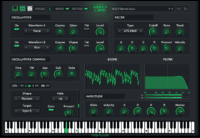
Many software synthesizers make filter automation particularly expressive. Instruments like Vital, a powerful free wavetable synth, allow producers to map filters directly to automation or modulation controls.
Another industry-standard synth used for dynamic automation is Serum by Xfer Records, widely respected for its flexible modulation system and expressive filter controls.
https://xferrecords.com/products/serum
These tools give producers precise control over how sounds evolve throughout a track.
Automating Effects for Depth and Emotion
Automation also plays a major role in shaping spatial effects such as reverb and delay.
A vocal line, for example, might remain relatively dry during the main section of a song. At the final word of a phrase, the reverb level can suddenly increase, creating a dramatic sense of space.
Similarly, delay effects can be automated to appear only at key moments, adding echoes that enhance emotional impact without cluttering the mix.
This technique is common in professional mixing because it maintains clarity while still delivering expressive depth.
Plugins designed for creative effects often provide automation-friendly controls. Tools like Valhalla Supermassive, a free delay and reverb plugin used widely by producers, offer rich textures that respond beautifully to automation changes.
https://valhalladsp.com/shop/reverb/valhalla-supermassive/
Automating effect levels ensures that spatial processing enhances the track rather than overwhelming it.
Volume Automation and Mix Balance
While automation is often associated with dramatic sound design, one of its most important uses is much more subtle: volume automation.
Even well-recorded instruments can vary in intensity throughout a performance. Instead of relying entirely on compression, producers often automate volume to maintain consistent balance within the mix.
For example, a vocal phrase may need a slight boost during quieter moments and a small reduction when the singer reaches a louder section. These adjustments are usually small — often just one or two decibels — but they make the mix feel far more polished.
Volume automation is also useful for guiding the listener’s attention. A lead instrument can gradually increase in level as it becomes more important in the arrangement.
This technique allows producers to shape the narrative flow of the track.
Creating Transitions Between Sections
Automation becomes particularly powerful during transitions. Moving from a verse to a chorus, or from a breakdown to a drop, often requires more than simply adding or removing instruments.
Producers frequently automate parameters such as:
- filter sweeps
- reverb builds
- delay feedback
- noise risers
- stereo widening
These evolving elements guide the listener through the structure of the track. Instead of abrupt changes, the music flows naturally from one section to the next.
In electronic genres especially, automation-driven transitions help maintain excitement and momentum.
Automation as a Creative Instrument
Many producers eventually discover that automation is not just a mixing tool — it is a form of performance.
Automating synthesizer parameters can reshape a sound in real time. A bassline might gradually distort during a build-up, or a pad might shift its stereo width as the arrangement evolves.
Some DAWs even allow producers to record automation live using MIDI controllers or control surfaces. Devices such as the Novation Launch Control XL provide physical knobs and faders that make automation feel more like playing an instrument.
https://novationmusic.com/en/launch/launch-control-xl
This hands-on approach encourages experimentation and creative exploration.
The Art of Subtle Movement
One of the most important lessons producers learn about automation is that small changes often produce the biggest impact.
A filter opening slightly over sixteen bars can create tension without the listener consciously noticing the change. A gentle increase in reverb can add atmosphere without muddying the mix.
These subtle adjustments contribute to the overall emotional arc of a track.
When automation is used thoughtfully, the listener experiences a production that feels alive, evolving, and immersive.
Final Thoughts
Automation is one of the defining tools of modern music production. It transforms static sounds into dynamic elements and allows producers to guide the emotional flow of a track.
From filter sweeps and effect transitions to subtle volume adjustments, automation shapes how a mix breathes and evolves over time.
For beginner and intermediate producers, learning to use automation creatively is a turning point. It marks the moment when tracks stop feeling like loops and begin to feel like complete musical journeys.
And once automation becomes part of the workflow, every sound in a production becomes an opportunity for movement, expression, and storytelling.