

Why Your Bass and Kick Are Fighting — and How to Make Them Friends
In every genre of modern music — from house and techno to pop and trap — the relationship between the kick and the bass defines the foundation of your mix. Yet, it’s also one of the hardest dynamics to get right. When the two collide, your low end turns to mud. When they complement each other, your track suddenly feels powerful, clean, and alive. Let’s dive into how to stop this eternal conflict and make your kick and bass finally work together in harmony. Understanding the Clash: Frequency and Phase Before reaching for plugins, you need to know why your…


The Art of Templates: Build Once, Produce Faster Forever
In the fast-paced world of music production, time is both an ally and an enemy. Every producer knows the creative momentum that comes when ideas flow freely — and the frustration that comes when technical setup breaks that rhythm. This is where the true art of templates begins. By building a carefully structured session template, you’re not just saving time — you’re engineering creative freedom. Why Templates Are More Than Just a Shortcut A template isn’t merely a file you open to avoid starting from zero. It’s a personalized ecosystem that reflects your workflow, your tools, and even your artistic…
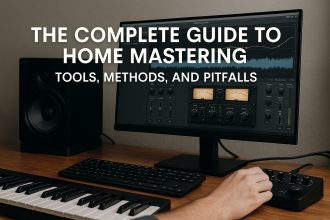
The Complete Guide to Home Mastering
Tools, Methods, and Pitfalls Mastering is often described as the “final polish” of a track. While mixing focuses on balancing the instruments, mastering ensures your music sounds consistent, powerful, and professional across every playback system—from car stereos to streaming platforms. For independent artists and producers, learning how to master at home can be both rewarding and challenging. This guide explores the essential tools, step-by-step methods, and common mistakes to avoid. What Is Mastering, and Why Does It Matter? Mastering is the final step in the music production chain. Its purpose is to: Optimize loudness without distortion. Balance frequency content. Ensure…

How to Smartly Backup Your Music Projects
And Avoid Losing 6 Months of Work Losing months of creative work due to a hard drive failure, corrupted files, or simply poor organization is every music producer’s nightmare. Whether you’re a beginner making beats in FL Studio or a seasoned pro in Studio One, backing up your projects smartly is as essential as EQing your mix. In this article, we’ll break down practical strategies to ensure your music is always safe: from cloud solutions and external drives to proper naming conventions and even plugins that can save your workflow. 1. Why Backups Matter in Music Production Your DAW (Studio…
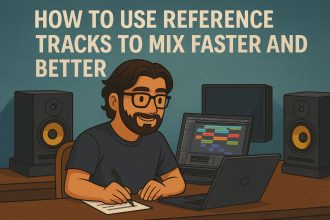
How to Use Reference Tracks to Mix Faster and Better
Introduction One of the most effective ways to improve your mixes is to compare them to professional reference tracks. Reference mixing is a technique where you use a finished, industry-level song as a benchmark to check your own work. By switching back and forth between your mix and a pro track, you quickly identify imbalances in frequencies, levels, and dynamics. This approach doesn’t just help you learn—it can also save hours by guiding your decisions and preventing endless trial-and-error. Why Use a Reference Track? Balance Awareness – Professional tracks show you how bass, mids, and highs should interact. Volume Levels…

How to Mix Vocals
From Bedroom Studio to Radio-Ready Introduction Vocals are the centerpiece of most songs. A great beat or instrumental can grab attention, but it’s the vocals that connect emotionally with listeners. That’s why mixing vocals properly is one of the most important skills in music production. Whether you’re working in a bedroom studio or aiming for a professional release, the right vocal mix can make the difference between sounding amateur and sounding radio-ready. In this guide, we’ll cover the essential steps and techniques to mix vocals with clarity, presence, and polish—along with some of the best VST plugins (free and…

How to Achieve a Good Mix in Your DAW
Essential Tips for Producers Mixing music inside a DAW (Digital Audio Workstation) is one of the most crucial steps in music production. It’s where raw tracks transform into polished songs ready for release. A good mix doesn’t just happen by accident—it requires technical knowledge, critical listening, and creative decisions. Whether you’re producing electronic music, hip-hop, pop, or rock, understanding the fundamentals of mixing will take your tracks from amateur to professional quality. In this article, we’ll break down the key steps and strategies to achieve a balanced, powerful mix in your DAW. 1. Start with a Clean Session Before touching…

🎛 The Perfect Producer Workflow
How to Save Time Without Killing Creativity Let’s be honest: music production can feel like juggling chainsaws while riding a unicycle. One second you’re vibing to the sickest bassline you’ve ever made, and the next you’re buried in plugin menus wondering where your creativity went. The secret weapon? A killer workflow that keeps you fast, focused, and inspired. Here’s how to save time in the studio without sucking the soul out of your tracks. 1. Clean up your playground A messy studio = a messy mind. Organize your sample folders (kicks, snares, FX… no, “Untitled123” is not a folder name).…
Do Struggling Music Producers All End Up Making Tutorials?
Is it just me, or do a lot of music producers who can't get listeners eventually turn to making tutorials? Let’s be real: building an audience is one of the hardest parts of being an artist. Getting regular listeners, people who truly follow you, takes time. A lot of it. And just like music itself, there are no shortcuts. The more you learn, the more your music improves — and with that, yes, eventually your streams might follow. But it takes commitment. It’s like the 10,000-hour rule — the idea that mastery in any field comes after thousands of hours…
